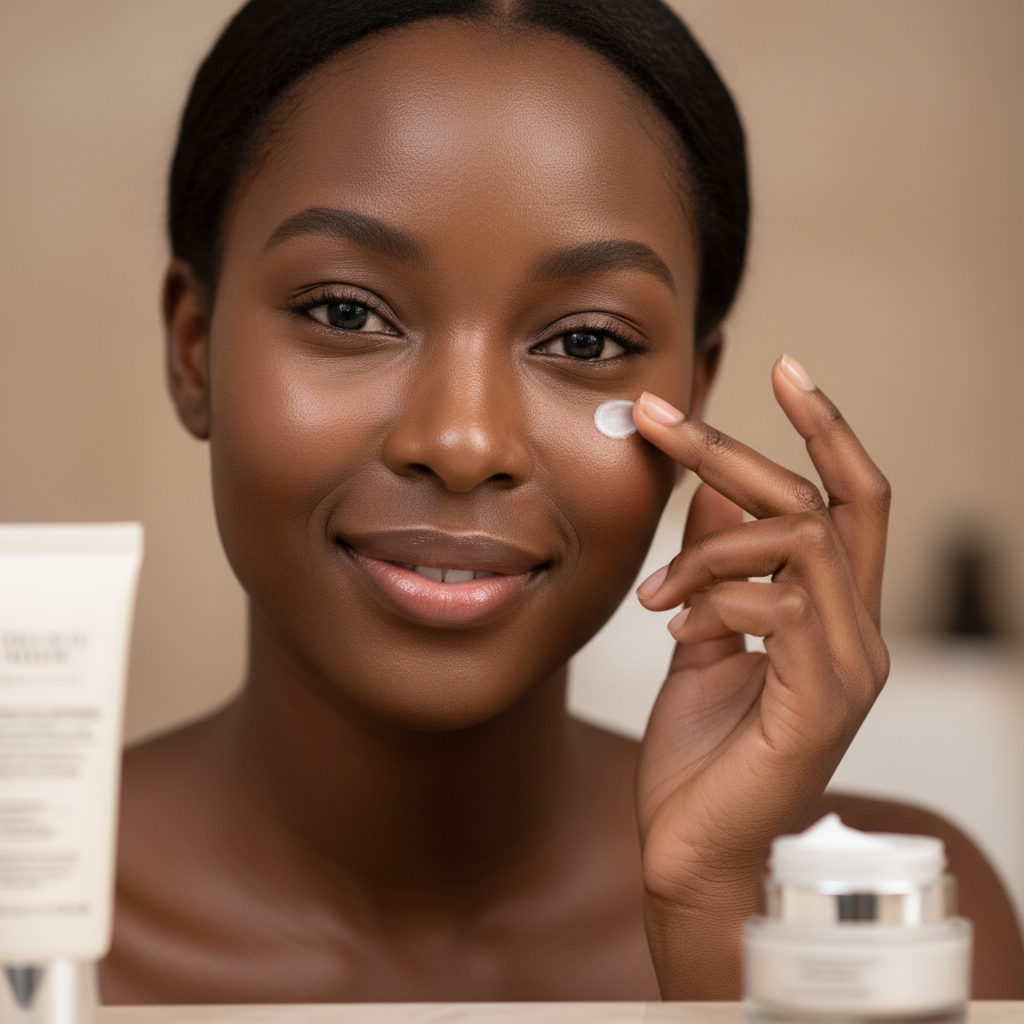
Dealing with the lingering marks of past breakouts can feel like an endless cycle. The key to treating acne scars naturally isn't about harsh treatments; it's about embracing a consistent, gentle approach rooted in the K-Beauty philosophy of supporting your skin's health. This means focusing on collagen stimulation, cellular turnover, and deep hydration to gradually rebuild and resurface your skin from the inside out.
Your Path to Smoother Skin Starts Here
Forget the promises of overnight fixes. The real journey to clearer skin begins with understanding what your skin truly needs. The Korean skincare philosophy doesn't aim to erase imperfections in a flash but to nurture the skin’s own incredible healing capabilities. This guide is built on that very principle, showing you how to treat acne scars naturally by creating the perfect environment for your skin to repair and regenerate.
Instead of turning to aggressive treatments that can strip your moisture barrier, we'll explore gentle, science-backed methods. This starts with identifying your specific scar type-whether it's the dark spots of post-inflammatory hyperpigmentation (PIH) or the indented texture of atrophic scars-and matching them with effective, naturally-derived ingredients.
The Science of Natural Healing
The idea of stimulating your body’s own repair mechanisms isn't just a philosophy; it’s backed by solid science. Research consistently shows that treatments mimicking the body's natural processes can dramatically improve how scars look and feel.
A groundbreaking 2014 study, for instance, revealed that 84% of patients with rolling acne scars saw a significant improvement from treatments that promote long-term, natural collagen production. You can learn more about these collagen stimulation findings and how they apply to modern skincare. This highlights the crucial takeaway for any natural scar treatment plan: success lies in encouraging your skin to heal itself.
The most effective path to reducing acne scars isn't about fighting your skin-it's about working with it. By providing the right nutrients and protection, you empower your skin's innate ability to rebuild, leading to a resilient and smoother complexion over time.
What You Will Learn
This guide will give you the knowledge to build a routine that delivers real, lasting results. We'll cover:
- Scar Identification: Learn to tell the difference between various scar types so you can choose the most effective treatments for your skin.
- Ingredient Deep Dive: We’ll explore which K-Beauty ingredients, like Snail Mucin and Niacinamide, are best suited for your specific concerns.
- Routine Building: Learn to construct a holistic routine that truly supports healing, from gentle cleansing all the way to essential sun protection.
By the end, you'll understand not just what to use, but why it works. This empowers you to make smarter decisions for your skin's long-term health and finally achieve the smooth, healthy complexion you deserve.
A Clear Guide to Identifying Your Acne Scars
Starting your journey to fade acne scars naturally means knowing exactly what you’re up against. Before you dive into K-Beauty ingredients or build a whole new routine, you have to figure out the type of mark you're dealing with. It's a common mistake to misidentify a scar, which leads to using the wrong products and feeling stuck when you don't see results.
Think of it this way: you wouldn't use a rich cream for dry skin to tackle an oily T-zone. The same logic applies here. Different acne scars have different structures under the skin, so they need unique approaches to really see a visible change. This guide will help you become your own skin detective, cutting through the confusing jargon to confidently pinpoint your concerns.
Differentiating Scars from Dark Marks
First, let's clear up a huge point of confusion. Not every spot a pimple leaves behind is a true "scar." Knowing the difference between texture changes and simple discoloration is the most critical first step.
- Post-Inflammatory Hyperpigmentation (PIH): These are the flat, dark spots-often brown, red, or even purplish-that linger long after a blemish has healed. PIH is not a true scar because there’s no damage to your skin’s collagen or texture. It’s purely a pigmentation issue triggered by inflammation.
- True Acne Scars: These involve an actual change in the skin's texture. They're either indented (atrophic) from a loss of collagen or, less commonly, raised (hypertrophic) from an overproduction of collagen as the skin tried to heal.
This simple infographic breaks down the core philosophy behind any good natural scar care plan.
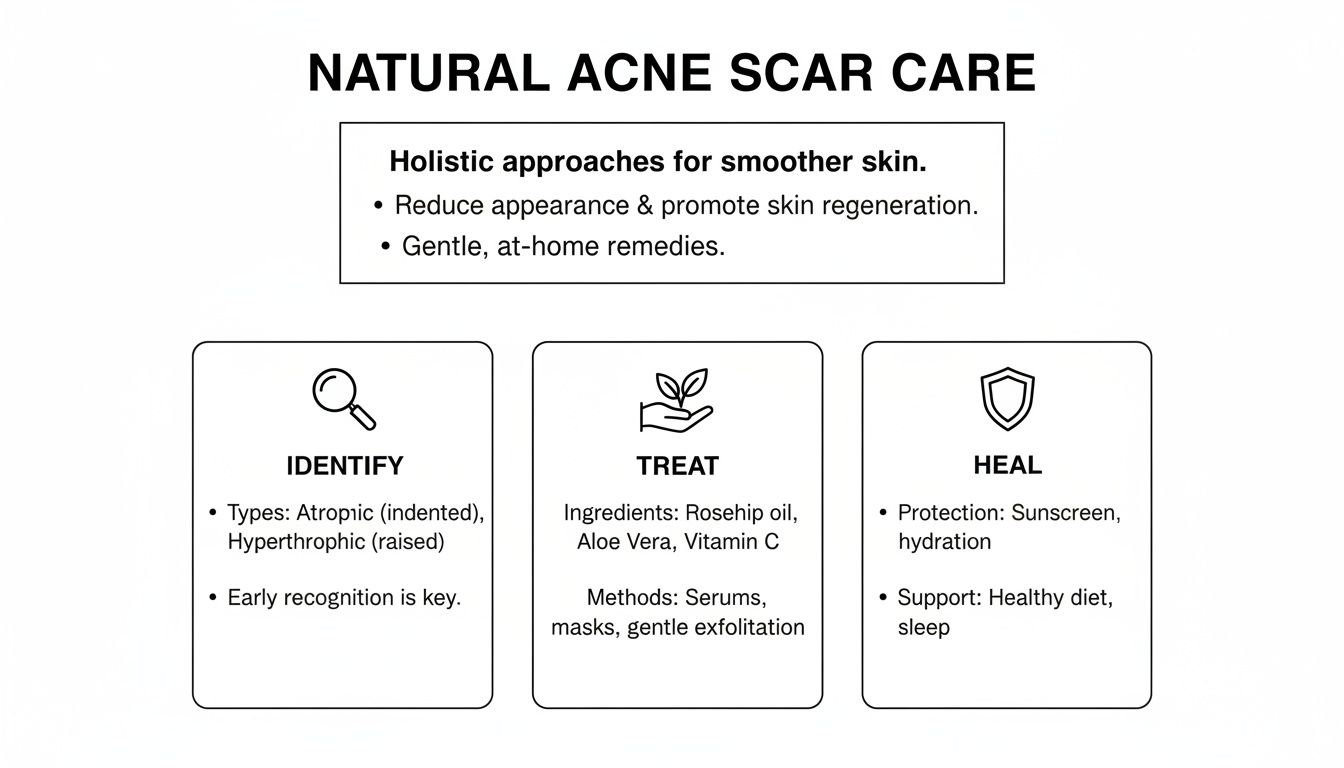
As you can see, it’s a simple but powerful three-stage approach: first, accurately identify the concern, then treat it with targeted natural ingredients, and finally, heal by supporting your skin's overall health for the long haul.
The Main Types of Atrophic Scars
Most acne scars fall into the atrophic category, meaning they form a depression in the skin. This happens when the body doesn't produce enough new collagen to fully repair the damage left by a deep inflammatory blemish. They generally fall into three main categories.
- Ice Pick Scars: These are deep, narrow, V-shaped pits, almost looking like the skin was punctured with a tiny, sharp object. Because of their depth, they are often the toughest to treat with topical products alone.
- Boxcar Scars: Wider than ice pick scars, these have more defined, sharp edges and look like a U-shape pressed into the skin. They can be either shallow or deep and often resemble old chickenpox scars.
- Rolling Scars: These create a wavy, uneven texture across the skin’s surface. They have sloped, undefined edges and are caused by fibrous bands of tissue under the skin that pull the top layer down, creating that "rolling" appearance.
Key Takeaway: The type of scar you have dictates your best natural treatment path. While PIH responds beautifully to brightening ingredients, atrophic scars need actives that focus on stimulating collagen and encouraging cell turnover to help "fill in" the indentations over time.
To make identifying your scars even easier, here’s a quick cheat sheet. Use this table to match your skin's appearance with the most effective natural strategies and the K-Beauty ingredients best suited to deliver results.
Comparing Different Types of Acne Scars
Use this table to identify your specific scar type and learn which natural strategies and K-Beauty ingredients are most effective for your concerns.
| Scar Type | Visual Appearance | Best Natural Approach | K-Beauty Ingredient Focus |
|---|---|---|---|
| PIH (Dark Marks) | Flat brown, red, or tan spots without texture change. | Brightening and gentle exfoliation to lift discoloration. | Vitamin C, Niacinamide, Licorice Root Extract, Mandelic Acid. |
| Ice Pick Scars | Deep, narrow, V-shaped pits. | Professional treatments are often needed. Topicals can soften edges. | Retinoids (like Bakuchiol), AHAs to improve surface texture. |
| Boxcar Scars | Broad depressions with sharp, defined edges. | Collagen stimulation and resurfacing to soften the edges. | Snail Mucin, Peptides, Bakuchiol, Glycolic Acid. |
| Rolling Scars | Wide depressions with sloping, undefined edges giving a wavy look. | Improving skin elasticity and boosting collagen production. | Hyaluronic Acid, Ginseng, Peptides, Centella Asiatica. |
| Hypertrophic Scars | Raised, firm bumps that stay within the original wound boundary. | Reducing inflammation and promoting controlled healing. | Green Tea Extract, Onion Bulb Extract, Silicone Sheets. |
Once you've confidently identified what you're working with, you can finally build a targeted routine that gives your skin exactly what it needs to heal.
Building Your K-Beauty Scar Healing Routine
Now that you know what you're working with, it’s time to build your action plan. An effective K-Beauty routine for acne scars isn't about buying a dozen different products; it's about smart, synergistic layering. The goal is to create the perfect environment for your skin to repair itself, using gentle yet powerful ingredients that work together.
Think of this routine as a foundational framework, not a rigid set of rules. We’ll build it around four core pillars: gentle cleansing, targeted treatments, deep hydration, and non-negotiable protection. Each stage supports the next, creating a cumulative effect that helps fade discoloration and smooth out texture over time.
Prepare Your Canvas with Gentle Cleansing
Every great skincare routine starts with a clean slate, but for scar healing, this step is absolutely critical. The wrong cleanser-one that’s harsh or stripping-can compromise your skin's moisture barrier. A damaged barrier leads to more inflammation and dehydration, which is the exact opposite of the healing environment you’re trying to create.
Your ideal cleanser will have a low pH (around 5.5) to match your skin's natural acidity. Look for sulfate-free formulas that contain calming, hydrating ingredients. K-Beauty favorites like Centella Asiatica or Green Tea are fantastic because they cleanse thoroughly without stripping away your skin’s essential lipids.
The goal here is not that "squeaky clean" feeling, which is usually a red flag for a compromised barrier. Instead, your skin should feel soft, balanced, and ready to absorb the powerful ingredients you apply next. This gentle start ensures your skin can focus all its energy on repair, not on recovering from a harsh wash.
Target Discoloration with Proven Actives
With your skin prepped, it's time to bring in the heavy lifters. This is where you’ll introduce targeted treatments-think essences, serums, or ampoules-packed with ingredients specifically chosen to tackle discoloration and kickstart collagen production. These concentrated formulas are the heart of your scar-fading efforts.
For anyone serious about treating acne scars naturally, a few ingredients are non-negotiable powerhouses.
- Vitamin C (Ascorbic Acid & Derivatives): This potent antioxidant is a superstar for a reason. It interrupts the process that creates excess melanin, which is what causes those stubborn dark spots (PIH). It’s also crucial for collagen synthesis, helping to repair the indented texture of atrophic scars over the long haul.
- Niacinamide (Vitamin B3): A true multi-tasker, Niacinamide is brilliant at blocking pigment from transferring within your skin cells, preventing dark spots from fully forming. It also strengthens the skin barrier, calms redness, and helps regulate oil-all of which lead to healthier, more resilient skin.
- Snail Mucin: A cornerstone of K-Beauty, Snail Mucin is rich in compounds like glycoproteins, hyaluronic acid, and glycolic acid. It's this unique cocktail that promotes skin regeneration, hydrates deeply, and soothes inflammation. For atrophic scars, its regenerative properties are invaluable for encouraging cellular repair and improving overall texture.
When layering these, always apply products from the thinnest to thickest consistency. For instance, a watery Vitamin C serum should go on before a slightly more viscous snail mucin essence. This helps each product penetrate properly without pilling.
Pro Tip: If you're new to using multiple actives, introduce them one by one. Try a Vitamin C serum for two weeks before you add Niacinamide into the mix. This allows you to observe how your skin responds and reduces the risk of irritation.
Deeply Hydrate to Support Skin Repair
Hydration is often underestimated in scar treatment, but it's the engine that powers your skin’s repair process. Think of it this way: dehydrated skin is stiff and brittle, making it incredibly difficult for healthy new cells to form and travel to the surface. Hydrated skin, on the other hand, is plump, flexible, and efficient.
Everything from cellular turnover to collagen production happens more effectively in a well-hydrated environment. This is where K-Beauty’s emphasis on layering hydration really shines. You'll want to look for products containing Hyaluronic Acid, a humectant that can famously hold up to 1000 times its weight in water.
Scan ingredient lists for toners, essences, and moisturizers that feature multiple molecular weights of Hyaluronic Acid. This allows hydration to penetrate different layers of the skin. Other fantastic K-Beauty hydrators include:
- Glycerin: A classic humectant that pulls moisture into the skin.
- Panthenol (Pro-Vitamin B5): Works as both a humectant and an emollient, so it hydrates and soothes irritated skin.
- Beta-Glucan: Often derived from mushrooms or oats, this ingredient is even more hydrating than Hyaluronic Acid and offers excellent antioxidant benefits.
Applying these layers of hydration doesn't just support the healing of old scars; it helps prevent future breakouts by keeping your skin's moisture barrier strong and balanced.
Shield Your Progress with Daily Sunscreen
Finally, we’ve arrived at the single most important step in any routine for treating acne scars: daily sun protection. If you skip this, you might as well undo all your hard work. It's not optional; it's the shield that defends every bit of progress you make.
Here’s why it's so critical:
- UV Rays Darken Scars: Sun exposure triggers melanin production. For post-inflammatory hyperpigmentation (PIH), this means those dark spots will only get darker and more stubborn.
- It Degrades Collagen: UV rays break down existing collagen and slow the production of new collagen, making it much harder for atrophic scars to fill in and improve.
- It Increases Inflammation: The sun is an inflammatory trigger, which can worsen post-acne redness and delay the entire healing process.
Choose a broad-spectrum sunscreen with an SPF of 30 or higher and apply it generously every single morning-even on cloudy days, and even if you're indoors. Korean sunscreens are world-famous for their elegant, lightweight formulas that sit beautifully under makeup without a white cast. They're a pleasure to use, which makes it easier to build the habit. Find one you love, and make it unbreakable. Your future skin will thank you.
Powerful Natural Ingredients for Scar Reduction
Once you have a solid foundational routine, you can start calling in the specialists. Think of potent, naturally-derived actives as the superchargers for your skin-healing efforts. These are the ingredients that work on a deeper level to speed up cell turnover, rebuild collagen, and fade discoloration without the harshness of many synthetic options.
For anyone committed to healing acne scars naturally, this is the next logical step. It’s all about working smarter by choosing ingredients with proven track records that respect your skin's delicate balance. This approach is pure K-Beauty-achieving incredible results through nourishment, not aggression.
Gentle Exfoliation for a Brighter Surface
The secret to diminishing scars-especially post-inflammatory hyperpigmentation and shallow atrophic types-is encouraging old, discolored skin cells to move on, making way for fresh, healthy ones. But please, step away from the aggressive physical scrubs. A common mistake is harsh scrubbing, which creates micro-tears and inflammation that will only set you back.
The focus should be on gentle, chemical exfoliation. This is where an ingredient like Mandelic Acid shines. It’s an Alpha Hydroxy Acid (AHA) derived from bitter almonds, but its molecular size is larger than other AHAs like glycolic acid. This means it penetrates the skin more slowly and evenly, making it far less irritating and a fantastic choice for sensitive or acne-prone skin.
Another great option is plant-based enzymes, like Papain from papaya or Bromelain from pineapple. These powerhouses work by dissolving the bonds that hold dead skin cells together on the surface, gently revealing brighter skin without disrupting your skin's pH.
Plant-Based Retinoid Alternatives
Retinoids are famous for speeding up cell turnover and firing up collagen production, but they can be notoriously harsh. Enter Bakuchiol, a game-changer from the Psoralea corylifolia plant. It’s often called a "natural retinol" because it delivers incredibly similar results-smoothing texture, fading dark spots, and boosting collagen-without the typical redness, peeling, and sensitivity.
It works through different biological pathways than traditional retinoids, but the outcome is remarkably close. This makes it perfect for anyone who wants those Vitamin A benefits without the downtime.
And we can't forget Rosehip Oil. This beautiful oil is naturally loaded with trans-retinoic acid (a form of Vitamin A) and essential fatty acids. That powerhouse combination helps regenerate skin cells and repair damaged tissue, making it a hero for improving the texture and color of both new and old scars.
Expert Tip: When you're introducing any new active, always patch-test first. Apply a tiny amount to your inner arm or behind your ear and wait 24-48 hours. It's a simple step that can save you from irritation and keep your healing journey on the right track.
The Power of Traditional Remedies
Long before we had high-tech labs, people turned to nature for skin healing, and many of those remedies have stood the test of time. For centuries, traditional remedies have used ingredients like lemon juice and honey to brighten skin. Modern studies now echo what was known all along, showing that chemical peels inspired by these natural acids can significantly improve scar appearance.
This concept of using natural acids for exfoliation is ancient. Today, a carefully diluted apple cider vinegar solution can mimic this effect. In fact, some user trials have shown a 25-40% reduction in scar visibility over eight weeks, thanks to its gentle acetic acid content. You can explore the history and science of these natural acids to see how they really work.
How to Integrate New Actives Safely
Adding these ingredients to your routine requires a smart, slow approach to avoid overwhelming your skin. Here’s a simple strategy we always recommend:
- Introduce One at a Time: Start with just one new product. Give it at least two to three weeks before you consider adding something else. This way, you’ll know exactly what’s working-and what might be causing a problem.
- Start Low and Go Slow: Begin by using the new active only two or three times a week. If your skin is happy, you can gradually work your way up. For instance, try a Mandelic Acid serum every third night to start.
- Alternate Your Actives: Avoid layering multiple strong actives in the same routine, especially at first. A good rhythm is to use a Vitamin C serum in the morning for its brightening and protective benefits, and a Bakuchiol treatment at night to focus on repair.
By carefully curating and introducing these natural powerhouses, you can elevate your routine and see more dramatic, lasting improvements in your skin's tone and texture.
How Your Lifestyle Supports Skin Regeneration
While a targeted K-Beauty routine is your frontline defense against acne scars, what’s happening inside your body is just as crucial. The Korean approach to skincare has always embraced a holistic view-what you see on the outside is a direct reflection of your internal health.
Think of your lifestyle choices as the essential support crew for your skincare. What you eat, how much you sleep, and even your stress levels can either accelerate healing or completely stall your progress. It's all about creating an internal environment that minimizes inflammation and lets your skin’s repair mechanisms do their job. This synergy is the real secret to achieving lasting change.
Nourish Your Skin from Within
Your skin is a complex organ, and it needs the right fuel to rebuild and repair itself. One of the most powerful tools you have is an anti-inflammatory diet. Chronic inflammation is the enemy of clear skin-it slows down collagen synthesis and can make discoloration even worse.
Focus on loading your plate with foods rich in antioxidants and vitamins known for their skin-supporting benefits.
- Antioxidant-Rich Berries: Blueberries, strawberries, and raspberries are packed with antioxidants that fight the free-radical damage that breaks down collagen.
- Healthy Fats: Foods like avocados, walnuts, and olive oil provide essential fatty acids that help maintain a strong, supple skin barrier.
- Vitamin C Powerhouses: Don't just rely on your serum. Get Vitamin C from citrus fruits, bell peppers, and broccoli. This vitamin is absolutely non-negotiable for producing healthy collagen.
Just as important is what you avoid. Sugary foods and highly processed snacks can spike your insulin levels, a known trigger for inflammation. Simply cutting back can make a noticeable difference in how well your skin heals.
Hydration and Sleep: The Ultimate Repair Duo
You already know to hydrate your skin topically, but what you drink matters just as much. Drinking enough water-aim for at least eight glasses a day-keeps your skin cells plump and functioning at their best. Good hydration ensures nutrients get delivered where they need to go and toxins get flushed out, creating the ideal conditions for regeneration.
At the same time, never underestimate the power of sleep. When you're resting, your body kicks into full-on repair mode. Blood flow to the skin increases, and the rebuilding of collagen and elastin hits its peak. Consistently getting 7-9 hours of quality sleep a night is one of the most effective things you can do for your skin.
The Impact of Stress on Scar Healing
Stress isn't just in your head; it shows up on your face. When you’re stressed, your body pumps out the hormone cortisol, which is highly inflammatory. Elevated cortisol can weaken your skin's barrier, slow down healing, and even trigger more breakouts-the very cycle you're trying to break.
Finding healthy ways to manage stress is a critical piece of the scar-fading puzzle. You don't need a huge time commitment; small, consistent practices can lower cortisol and give your skin a chance to recover.
- Mindful Moments: Just five minutes of deep breathing can calm your entire nervous system.
- Gentle Movement: A short walk or some simple yoga boosts circulation and melts away tension.
- Digital Detox: Putting your phone away an hour before bed can drastically improve your sleep quality and quiet your mind.
By bringing these wellness habits into your life, you're doing more than just treating scars. You're building a foundation of health that allows your skin to heal efficiently, which is the true heart of the K-Beauty philosophy.
Your Questions on Natural Scar Treatment, Answered
Diving into natural scar treatments can bring up a lot of questions. As you start building your routine, it's normal to wonder if you're on the right track or how to handle specific products and ingredients. Let's clear up some of the most common concerns we hear in the K-Beauty community.
Think of this as your go-to guide for getting the details right. These expert answers will help you move forward with a routine that’s both safe and effective.
How Long Does Natural Treatment Take to Show Results?
This is easily the most asked question, and the honest answer is: it depends on consistency and your scar type. When you’re working with your skin's natural healing cycle, patience is key.
For surface-level dark spots like post-inflammatory hyperpigmentation (PIH), you can often see visible fading in as little as 8-12 weeks with a diligent routine.
For atrophic scars, which involve a loss of collagen, the timeline is longer. Rebuilding your skin’s structure is a gradual process. You should plan for at least 6-12 months of consistent care before you see significant changes in texture.
Can I Combine Vitamin C and Niacinamide?
Yes, absolutely! This is a powerhouse K-Beauty pairing. An old myth that they cancel each other out still circulates, but modern, well-stabilized formulas have made this a non-issue. In reality, they work beautifully together to fight discoloration from different angles.
To get the most out of both without risking irritation, here’s how to do it right:
- Apply Vitamin C in the morning: This lets you take full advantage of its antioxidant powers to shield your skin from environmental damage during the day.
- Use Niacinamide at night: Applying it in your evening routine gives it the space to focus on repairing your skin barrier and calming inflammation while you sleep.
A great routine isn't just about powerful ingredients; it's about smart timing. Separating your actives between morning and night allows each one to perform at its peak without overwhelming your skin.
Will Natural Methods Work on Deep Scars?
Natural treatments are fantastic at improving discoloration and softening the look of shallow atrophic scars, like rolling or shallow boxcar types. Ingredients like Bakuchiol and Snail Mucin are brilliant for encouraging collagen production and improving overall skin texture.
However, for very deep, sharp-edged scars like ice pick scars, topical treatments alone usually aren't enough to completely smooth the skin. While your routine will definitely improve the surrounding skin tone and health-making the scars less obvious-you may need professional treatments for more dramatic results.
Even so, your natural K-Beauty routine will be essential for supporting your skin's healing and recovery post-treatment.
Ready to build a routine that truly supports your skin's healing journey? Mirai Skin offers a curated selection of authentic Korean skincare products, from gentle cleansers to powerful, targeted serums. Explore our collections and find the perfect partners to help you achieve a smoother, clearer complexion. Discover your ideal scar-fading solutions at https://miari-skin.com.