A breakout finally flattens. The tenderness is gone. The bump is gone. Then the mark stays.
That’s the part people hate most about post inflammatory hyperpigmentation, or PIH. The inflammation ends, but the reminder lingers as a brown, gray, or deeper-toned spot that seems to outlast the original acne by weeks or months. I see this constantly with readers who already know skincare ingredients, already own a cabinet full of serums, and still feel stuck.
The usual mistake is trying to scrub, peel, or “brighten” the spot into submission. That often backfires. PIH responds better to a calm, layered plan: reduce ongoing inflammation, slow down pigment production, support healthy turnover, and protect skin from light exposure every single day.
K-beauty is especially useful here because its strongest routines are built around consistency, barrier care, and gentle layering. That philosophy matters. Fading dark marks is rarely about one miracle product. It’s about using the right ingredients in the right order, with enough patience to let skin do the work.
The Frustrating Cycle of Dark Spots After a Breakout
You finally stop touching the pimple. It heals. Then a flat mark settles in on your cheek, jawline, or forehead and steals all the attention in the mirror.

That’s the cycle that makes PIH so frustrating. The original inflammation may only last a few days. The discoloration can stay much longer. For many people, it feels like acne never really ends because one blemish disappears and leaves behind another visible problem.
PIH is not the same as a true acne scar. A scar changes texture. PIH changes color. The skin often feels smooth, but the spot looks darker than the surrounding area because inflammation triggered excess pigment.
Why it feels harder than the breakout itself
A breakout feels active, so people expect to treat it. A dark mark feels passive, so people expect it to fade quickly. When it doesn’t, they start stacking acids, retinoids, vitamin C, scrubs, and spot treatments all at once.
That usually creates a second problem: irritation.
Practical rule: If your dark spots are getting redder, sting more, or seem to multiply after a new routine, your skin may be reacting to irritation rather than improving from treatment.
The better approach is more disciplined. You need a routine that fades pigment without restarting the inflammation that caused it.
What usually works better
A useful PIH plan tends to include:
- Inflammation control first: Active acne, eczema, or friction has to calm down or new marks keep forming.
- Targeted brightening next: Pigment inhibitors work better when skin isn’t constantly inflamed.
- Barrier support throughout: Hydrating toners, essences, and moisturizers help you stay consistent with stronger actives.
- Daily sunscreen without excuses: Without that step, the rest of the routine loses power.
If you’re searching how to treat post inflammatory hyperpigmentation, that’s the true answer. Not a shortcut. A system.
Understanding Why Your Skin Creates These Marks
PIH starts with inflammation. Acne is the most common trigger, but it can also follow eczema, ingrown hairs, scratches, burns, aggressive exfoliation, or cosmetic procedures.
When skin gets inflamed, it sends distress signals. Melanocytes respond by producing more pigment. That pigment can spread unevenly through the healing area and leave behind a visible stain long after the original problem has passed.
PIH is a pigment problem, not a dirt problem
PIH is a pigment problem, not a dirt problem. This distinction is important because many people still treat dark spots as if they need to be scrubbed off. They don’t.
PIH sits within the skin’s healing process. That means rough cleansers, gritty scrubs, and overuse of exfoliating pads can make things worse by keeping inflammation active. If you’re serious about fading marks, your routine has to get gentler, not harsher.
Here's a simple way to conceptualize it:
| Trigger | What the skin does | What you see later |
|---|---|---|
| Acne or irritation | Inflammation activates pigment pathways | A flat dark mark |
| Picking or friction | More inflammation and skin trauma | A darker, longer-lasting mark |
| Overuse of actives | Barrier disruption and repeated irritation | Slower fading or new discoloration |
Why darker skin tones need a different level of caution
Many PIH guides fall short in this area. They’ll mention hydroquinone, retinoids, or peels, but they won’t explain that skin of color often has more to lose from aggressive treatment.
PIH is more prevalent in melanin-rich skin and affects 65-70% of darker-skinned acne patients, with deeper peels and some lasers carrying a higher risk of causing new PIH if they’re used without careful priming and technique, according to this review on PIH in skin of color.
That doesn’t mean deeper skin tones can’t use actives or procedures. It means the margin for error is smaller.
What that changes in real life
If your skin is Fitzpatrick IV-VI, or you know you mark easily after even minor irritation, a safety-first plan matters more than a fast plan.
Use that lens when judging treatment advice:
- Gentle exfoliation beats aggressive resurfacing: Low-irritation turnover is usually safer than chasing instant results.
- Priming matters before procedures: A provider should think about barrier health and pigment risk before discussing peels or lasers.
- Inflammation control isn’t optional: If acne is still active, fading serums alone won’t solve the cycle.
- Patch testing is worth the time: A reaction on melanin-rich skin can leave another mark.
Darker skin doesn’t need weaker care. It needs more precise care.
The K-beauty advantage
This is why Korean skincare principles fit PIH so well. K-beauty tends to favor layered hydration, steady use, barrier support, and formulas that do more than one job at once. That’s useful when your goal is to reduce discoloration without provoking another inflammatory episode.
If you remember one thing from the science, let it be this: PIH is your skin over-responding to injury. Any routine that behaves like another injury is working against you.
Your K-Beauty Arsenal Key Ingredients for Fading PIH
The most effective PIH routines usually combine three jobs. They slow pigment formation, increase healthy turnover, and lower inflammation. K-beauty does this well because it offers those functions in textures people use consistently: watery toners, essences, ampoules, gel creams, sleeping masks, and daily sunscreens.

Pigment inhibitors that directly target discoloration
These are the ingredients I’d look at first when someone asks how to treat post inflammatory hyperpigmentation with a real plan instead of trial and error.
Niacinamide
Niacinamide earns its place because it’s useful, flexible, and usually easy to pair with other actives. It helps support the skin barrier and is often used in brightening routines aimed at uneven tone.
In K-beauty, you’ll commonly find it in:
- Serums: Good for daily use in both morning and night routines.
- Essences: Useful if your skin gets irritated easily and prefers lighter layers.
- Moisturizers: A practical option for people who already use too many separate actives.
Niacinamide is a strong choice if your skin is acne-prone, reactive, or both.
Tranexamic acid
Tranexamic acid has become a standout for uneven tone routines, especially in Asian skincare. It’s a strong fit for PIH because it’s often used in formulas designed to interrupt the processes that contribute to persistent discoloration.
Look for it in:
- Ampoules and concentrated serums
- Sheet masks meant for dullness or post-blemish care
- Spot-focused brightening treatments
It pairs well with barrier-supportive products, which is one reason it fits K-beauty routines so naturally.
Alpha arbutin and licorice root extract
These sit in the gentler-brightener category. They’re often useful for people who can’t tolerate a more aggressive routine or who want to add pigment control without overloading the skin.
Alpha arbutin is commonly chosen for targeted dark marks. Licorice root extract is especially nice in calming formulas because it supports brightening while also fitting sensitive-skin routines.
Advanced and clinically backed brightening options
Some ingredients deserve separate attention because they’ve shown particularly strong performance in hyperpigmentation care.
Thiamidol
A 2023 clinical trial found that Thiamidol significantly reduced the incidence of laser-induced PIH to 20.83% compared with 50.0% in the placebo group by Week 4, according to clinical practice insights on hyperpigmentation treatment. In the same body of evidence, Thiamidol also showed stronger improvement than comparator treatment in acne-induced PIH.
That matters because it confirms something practitioners already see: a targeted tyrosinase inhibitor can make a real difference when pigmentation is driven by inflammation.
You won’t find Thiamidol in every K-beauty lineup, but it’s worth knowing as an evidence-backed option when you’re comparing ingredient decks.
Azelaic acid
Azelaic acid is one of the most practical ingredients for PIH-prone skin because it sits at the intersection of brightening and calming. It’s often useful when acne and dark marks show up together.
It also tends to make sense for people who can’t tolerate a heavy acid routine but still want a treatment step that addresses discoloration and visible post-breakout redness.
Turnover ingredients that help marks lift more evenly
Pigment inhibitors help prevent excess color from building. Turnover ingredients help the skin move through its renewal process more effectively.
Retinoids and retinol
Retinoids remain central in PIH treatment because they encourage cell turnover. In simple terms, they help skin shed and renew more efficiently.
That said, retinoids are also one of the easiest ways to overdo a routine.
If you’re using a K-beauty retinol serum or retinal cream, keep these rules in mind:
- Start low and slow: A few nights per week is enough at first.
- Don’t stack everything: Retinoid night doesn’t need strong exfoliating acids too.
- Use moisturizer strategically: Sandwiching with moisturizer can help reduce irritation.
- Watch your skin, not hype: If your barrier is stinging, flaking heavily, or burning, your routine is too aggressive.
Gentle acids
K-beauty often handles exfoliation with more finesse than old-school “peel until it works” routines. Lactic acid, mandelic acid, and PHA-based formulas can help surface dull, uneven skin without the same irritation profile you get from harsh scrubs.
For PIH, the goal of acids is not to force peeling. It’s to support smoother turnover and improve penetration of your other products.
Anti-inflammatory support that keeps treatment on track
A lot of PIH routines fail because the treatment side is strong but the calming side is weak.
Centella asiatica
Centella is one of the classic K-beauty support ingredients for irritated or compromised skin. It won’t do the whole job of fading PIH on its own, but it helps people stay on stronger routines by reducing the chance that irritation pushes them off course.
Find it in:
- Soothing toners
- Ampoules
- Gel creams
- Barrier creams for retinoid nights
Snail mucin
Snail mucin is useful less as a direct pigment fighter and more as a recovery tool. If your skin gets tight, dry, or flaky from active ingredients, a snail mucin essence can add hydration and help the routine remain tolerable.
That matters because consistency beats intensity in PIH care.
Green tea, mugwort, and heartleaf
These are the kinds of botanical support ingredients that make K-beauty routines elegant. They help calm skin, reduce the look of irritation, and make brightening routines easier to maintain over time.
Vitamin C and where it fits
Vitamin C is still a valuable brightening ingredient, especially in the morning. It brings antioxidant support and can help overall radiance, but it’s not always the first product I’d choose for someone with a very reactive barrier and active breakouts.
In that case, I’d often start with niacinamide, tranexamic acid, or azelaic acid and add vitamin C later if the skin is stable.
Combination therapy works better than one-note routines
This is the part many shoppers miss. One ingredient can help. A well-built combination works better.
Combination topical approaches remain foundational in PIH care. A StatPearls review notes that hydroquinone 4% with tretinoin 0.05% and fluocinolone acetonide 0.01% remains a mainstay for epidermal PIH, with broader combination strategies reducing melanin and severity over a period of 4-12 weeks in skin of color, while daily broad-spectrum sunscreen remains the single most effective preventive step, as outlined in the StatPearls overview of postinflammatory hyperpigmentation.
Individuals at home typically won’t be using a prescription triple-combination cream exactly as written. However, the principle applies beautifully to K-beauty.
You want:
- A depigmenting step such as tranexamic acid, alpha arbutin, azelaic acid, or another brightening active.
- A turnover step such as retinoid or gentle exfoliation.
- An anti-inflammatory support layer such as centella, snail mucin, or a barrier cream.
- A sunscreen that you reapply.
Top K-Beauty Ingredients for Treating PIH
| Ingredient | Primary Action | Best For | Found In (K-Beauty Product Type) |
|---|---|---|---|
| Niacinamide | Supports barrier function and brightening routines | Acne-prone, combination, reactive skin | Serum, essence, moisturizer |
| Tranexamic acid | Targets uneven tone pathways | Persistent post-blemish marks | Ampoule, serum, spot treatment |
| Azelaic acid | Brightening plus anti-inflammatory support | Acne with PIH, sensitive skin | Cream, serum |
| Retinoid or retinol | Encourages cell turnover | Stubborn marks, texture concerns | Night serum, cream |
| Vitamin C | Antioxidant brightening support | Morning routines, dull tone | Serum, ampoule |
| Alpha arbutin | Gentle pigment-targeting support | Newer marks, sensitive routines | Serum |
| Licorice root extract | Calming and brightening support | Reactive skin, redness-prone routines | Toner, serum, cream |
| Centella asiatica | Soothes irritation and supports barrier | Retinoid users, sensitized skin | Ampoule, toner, cream |
| Snail mucin | Hydration and recovery support | Dry, irritated, over-treated skin | Essence, cream |
If you’re shopping a retailer assortment, use product pages like a filter. Don’t ask whether a serum is “for dark spots.” Ask whether it contributes one of the three jobs your routine needs.
Building Your Daily PIH-Fading K-Beauty Routine
A good PIH routine should feel boring in the best way. It should be easy to repeat, easy to adjust, and hard to mess up.

The most reliable structure is simple: protect in the morning, treat at night, and keep inflammation low all day.
A professional triple-combination approach succeeds because it combines a depigmenting agent, a cell-turnover agent, and an anti-inflammatory, anchored by daily SPF 50+ use. That model achieves 60-80% clearance in 12 weeks in the referenced protocol and can be adapted for at-home routines, according to DermNet’s overview of postinflammatory hyperpigmentation.
Morning routine that prevents marks from getting darker
Your morning routine has one main job. Stop the spot from being reinforced by daily light exposure and irritation.
Step 1 cleanse lightly
If your skin is dry or sensitive, a rinse or very gentle cleanser may be enough. If you wake up oily, use a low-stripping gel cleanser.
Don’t start your day with an acid cleanser just because it sounds productive. PIH-prone skin usually does better with less morning aggression.
Step 2 use a hydrating layer
A hydrating toner or essence helps the skin tolerate active serums better. Ingredients like glycerin, hyaluronic acid, panthenol, centella, heartleaf, and snail mucin fit nicely into this step.
Step 3 apply your pigment serum
Choose one main morning brightener. For many people that’s:
- Niacinamide
- Tranexamic acid
- Vitamin C if the skin barrier is steady
- A gentle arbutin-based serum
You don’t need all of them at once.
Step 4 moisturize based on your barrier, not your skin type label
Oily skin can still need barrier support. Acne-prone skin can still become dehydrated. Use a moisturizer that seals in hydration without making you dread the routine.
Step 5 sunscreen is the treatment
This is the step that decides whether the rest of the routine has a chance.
Choose a broad-spectrum sunscreen you’ll apply generously and reapply. In K-beauty, fluid and essence-texture sunscreens often make compliance easier because they feel lighter and sit well under makeup.
If you’re not using sunscreen daily, you’re not really treating PIH. You’re managing it halfway.
Night routine that fades marks without wrecking your barrier
Night is where turnover and deeper correction usually happen. But people get into trouble here by trying to use every active they own in one session.
Option A for beginners or sensitive skin
This is the version I’d start with if your skin is easily irritated.
- Gentle cleanse
- Hydrating toner or essence
- Tranexamic acid or niacinamide serum
- Centella or snail mucin layer
- Barrier-supportive moisturizer
This won’t feel dramatic. That’s why it works for so many people.
Option B for more established routines
If your barrier is stable and you’ve used actives before, rotate in a turnover step.
One example:
- Night 1: Retinoid serum, then moisturizer
- Night 2: Brightening serum, then calming cream
- Night 3: Recovery night with no strong active
- Repeat
That rotation often gets better results than forcing a retinoid every night and ending up too irritated to continue.
Here’s a useful visual primer on routine flow and product handling before you start mixing actives:
How to layer without creating your own irritation
Most PIH routines fail because the ingredients are wrong for the skin’s tolerance, not because the ingredients are useless.
Use these guardrails:
- Keep one main corrective serum per routine: Two if they’re proven compatible for your skin, but not five.
- Separate stronger actives by time or day: Vitamin C in the morning and retinoid at night is often easier than piling them together.
- Treat dryness quickly: Tightness, burning, and flaky patches are signs to reduce frequency.
- Use recovery nights on purpose: A barrier repair night is part of treatment, not a break from it.
A practical K-beauty template
If you want a shopping framework, build around these roles:
| Routine slot | What to look for |
|---|---|
| Cleanser | Low-stripping gel or cream cleanser |
| Hydration layer | Toner or essence with centella, panthenol, heartleaf, or snail mucin |
| Brightening step | Niacinamide, tranexamic acid, alpha arbutin, azelaic acid, or vitamin C |
| Turnover step | Retinol, retinal, or a gentle exfoliating serum used sparingly |
| Moisturizer | Barrier cream or gel cream with soothing support |
| Sunscreen | Broad-spectrum daily sunscreen with a finish you’ll reapply |
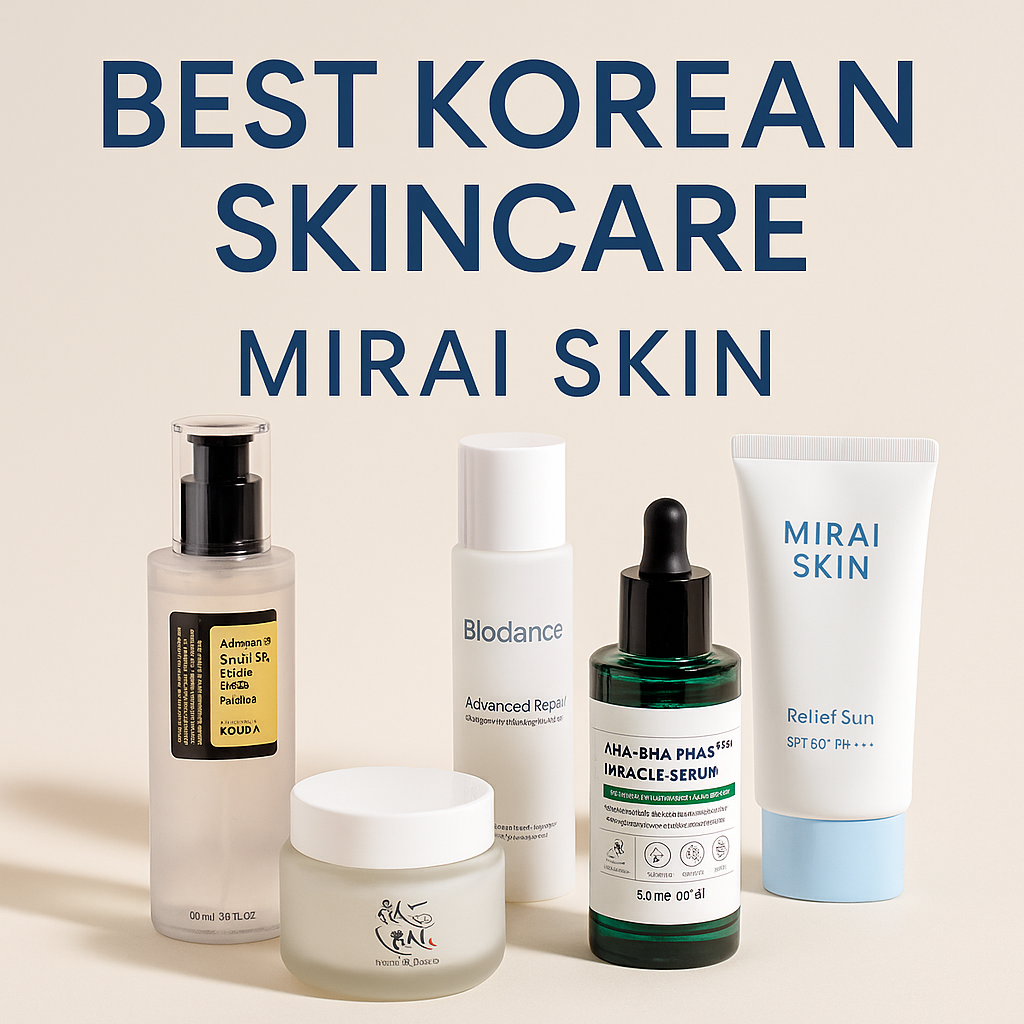
If you’re comparing authentic Korean skincare options in one place, Mirai skin is one retailer that groups many of these categories across different K-beauty brands, which makes it easier to build a routine by function rather than by trend.
When to Escalate to Professional Treatments
Some PIH responds well to home care. Some doesn’t. That doesn’t mean you failed. It usually means the pigment is more stubborn, deeper, or being fed by ongoing inflammation.

If your routine is disciplined and your skin is tolerating it well, but progress is minimal, that’s when a professional evaluation becomes useful.
What treatment escalation can look like
A good provider doesn’t jump straight to the most aggressive option. They decide based on skin tone, pigment depth, barrier health, acne activity, and your history of marking.
Common next steps may include:
- Gentle chemical peels: Usually chosen with care, especially for melanin-rich skin.
- Microneedling: Sometimes considered when texture and deeper discoloration overlap.
- Modern pigment-conscious lasers: These require a provider who understands PIH risk in darker skin.
- Prescription combinations: Especially when over-the-counter routines hit a ceiling.
The trade-off that matters most
The wrong procedure can create more pigment. That’s the central risk.
For Fitzpatrick IV-VI skin, or for anyone who develops dark marks easily, provider experience matters as much as the device or peel itself. Ask direct questions. How do they prep PIH-prone skin? How do they reduce inflammation afterward? How often do they treat patients with your skin tone?
A “stronger” treatment isn’t better if it leaves you with a darker problem than the one you started with.
Who should think about professional care sooner
A consultation makes sense earlier if:
- Your marks keep returning because acne is still active
- You suspect some spots are deeper and gray-brown rather than superficial
- You’ve become too irritated to continue home treatment
- You want procedure options but have melanin-rich skin and need a cautious plan
A thoughtful practitioner should be able to explain why they’re choosing a peel, microneedling, or a laser, and why they are not choosing another option.
The Long Game A Mindset for Prevention and Patience
PIH care gets easier when you stop treating it like an emergency.
Dark marks can improve, but they rarely respond to panic buying, over-exfoliation, or chasing a trend every two weeks. The skin clears more predictably when your routine stays steady long enough to work.
What patience looks like in practice
Patience doesn’t mean doing nothing. It means repeating the right basics without constantly restarting your skin.
That usually means:
- Treat the trigger: Acne, friction, picking, and irritation have to be controlled.
- Protect daily: Sunscreen isn’t optional if fading is the goal.
- Stay gentle enough to stay consistent: A routine you can tolerate will outperform a “strong” one you quit.
Prevention is part of treatment
This is the K-beauty mindset at its best. You’re not only trying to fade old marks. You’re trying to stop the next wave.
If your skin is easily inflamed, the biggest wins often come from better cleansing habits, less picking, fewer random actives, and more barrier support. That may sound less exciting than a dramatic peel, but it’s often what changes the pattern for good.
Clearer-looking skin usually comes from doing simple things correctly for long enough. That’s not glamorous. It is effective.
Frequently Asked Questions About PIH
What if my dark spots aren’t improving
If first-line topicals haven’t shown meaningful improvement in 8-12 weeks, it may suggest deeper, more treatment-resistant pigment. In those refractory cases, which account for up to 30-50% of instances, escalation to combination therapy, professional peels, or selected lasers such as picosecond devices may be appropriate, according to this overview of what to do when PIH doesn’t respond to topicals.
Can I use niacinamide, vitamin C, and retinoid together
Sometimes, yes. But that doesn’t mean you should start there.
A practical setup is vitamin C or niacinamide in the morning, then retinoid at night. If your skin is sensitive, alternate nights instead of stacking. The best routine is the one that keeps your skin calm enough to continue.
Is PIH the same as melasma or sun spots
No. PIH follows inflammation. Melasma is a different pigment condition and often appears in a more symmetrical pattern. Sun spots come from accumulated light exposure rather than a pimple, rash, or scratch.
That distinction matters because the trigger shapes the treatment plan.
Should I keep exfoliating if I’m not seeing results
Not automatically. More exfoliation is one of the most common ways people prolong PIH. If your skin feels raw, shiny, tight, or unusually reactive, pull back and rebuild your barrier before adding more corrective steps.
What’s the simplest starting routine
If you feel overwhelmed, start with:
- Gentle cleanser
- Hydrating toner or essence
- One brightening serum
- Moisturizer
- Daily sunscreen
At night, add a retinoid only when the rest of the routine feels stable.
If you’re building a PIH routine and want access to authentic Korean skincare across categories like brightening serums, barrier creams, calming essences, and daily sunscreens, browse Mirai skin and choose products by function: pigment control, gentle turnover, and barrier repair. That’s the combination that gives dark marks the best chance to fade without creating new ones.