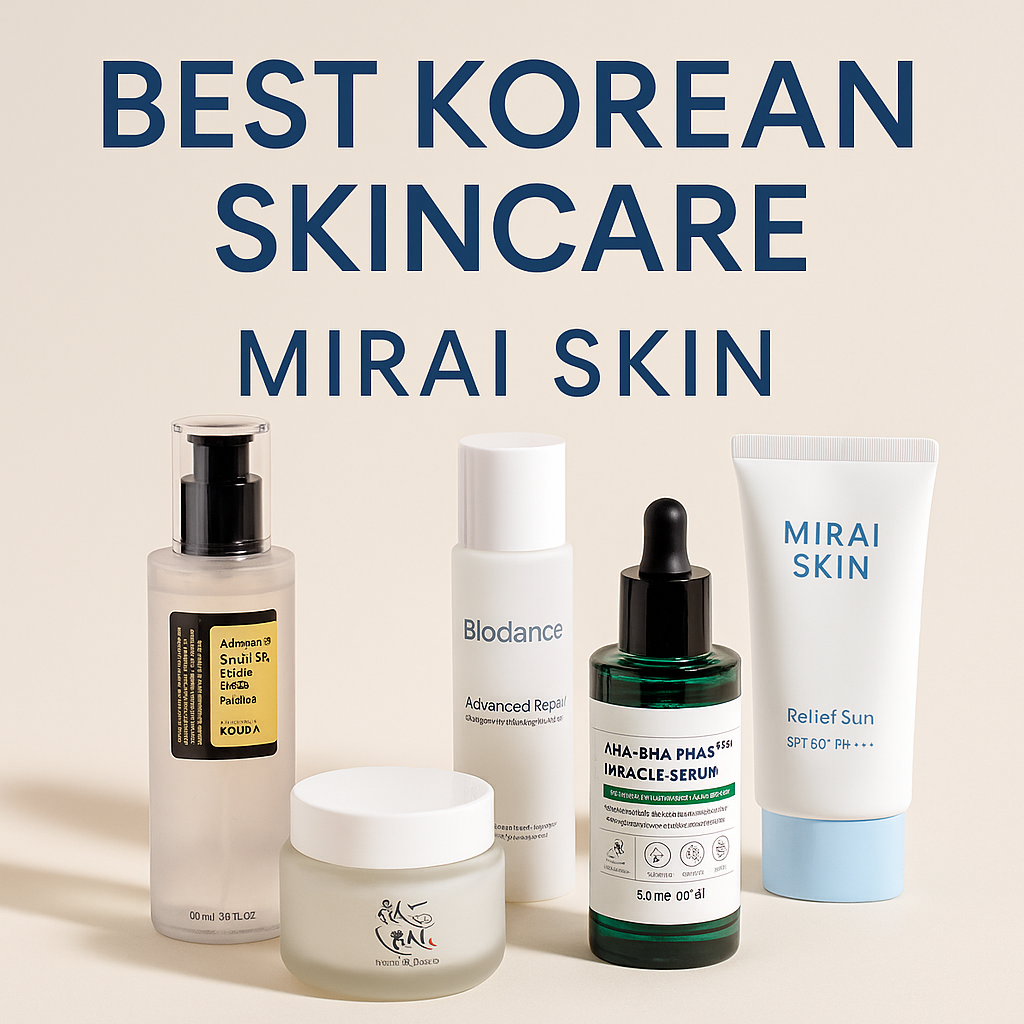
You're probably here for one of two reasons. Either you searched k discount beauty supply because you saw the name and wanted to know if it's a real store, or you're trying to buy Korean skincare at a lower price without ending up with a fake serum, stale sunscreen, or a mystery cream that wrecks your barrier.
Both are sensible reasons.
Discount K-Beauty is appealing because the category moves fast. A cleanser goes viral, a toner disappears, a serum shows up on three different sites at three very different prices, and suddenly “cheap” starts to feel less like a bargain and more like a puzzle. If you care about ingredients like niacinamide, retinol, centella, peptides, or snail mucin, you can't afford to treat authenticity as an afterthought.
The Lure of the K Discount Beauty Supply
The phrase k discount beauty supply is a little ambiguous, and that matters. It can refer to the general hunt for discounted Korean beauty products, but it also refers to a specific retail chain in Raleigh, North Carolina.
According to the K-Discount Beauty Supply store directory, K-Discount Beauty Supply is a chain of three physical stores in Raleigh with set hours, including 9:00 AM to 7:00 PM on weekdays. That tells us something important right away. This isn't just a random phrase floating around online. It's a real local retail name.
For local shoppers, that may be the whole answer. You may want store locations, phone numbers, and hours. For everyone else, the search usually means something broader: “How do I find Korean skincare deals without getting burned?”
Why the search term confuses people
A beauty supply store can carry many categories at once. Wigs, hair products, cosmetics, lash items, general skincare, and possibly some Korean beauty products can all sit under one roof. But that doesn't automatically mean the store is a specialized K-Beauty retailer.
That's where many shoppers get tripped up. They assume a store name with “K” in it means:
- Korean ownership or sourcing: It may or may not.
- A curated K-Beauty section: That isn't always clear.
- Staff trained in Korean skincare routines: Often not guaranteed.
- Authentic direct-brand supply: You need proof, not assumptions.
Practical rule: A low price and a familiar product photo are never enough. In K-Beauty, the real question is where the product came from and how it was handled before it reached you.
The real appeal of the discount hunt
Most shoppers aren't trying to be reckless. They're trying to be smart. If you already know the difference between a watery essence and a barrier cream, you don't want to overpay for basics. You also don't want to waste money on product that looks right but performs wrong.
That's why this topic deserves a more careful lens. A discount can be legitimate. It can also be a warning sign. The difference usually comes down to supply chain, storage, and seller credibility, not the price tag alone.
Understanding the World of K-Beauty Discounts
Some discount sellers are fine. Some are messy but not malicious. Some should be avoided completely. If you don't separate those groups, every listing starts to look the same.

Think of the market like a city
The easiest way to understand discount K-Beauty is to picture a city with different kinds of shops.
At one end, you have the official boutique. Products come from the brand or a verified distributor. Pricing may not be the lowest, but the chain of custody is clear.
A few streets over, you have a discount outlet. It may sell excess stock, older packaging, seasonal kits, or items bought in bulk through legitimate channels. This can still be a safe place to shop, but only if the seller can show where inventory came from.
Then you get to the murkier part of town. That's where gray market sellers and unauthorized resellers often operate. They may sell real products, but the route from manufacturer to shelf isn't transparent. Sometimes items are diverted from one market to another. Sometimes they've been stored poorly. Sometimes you can't tell.
And at the far end, you have the counterfeit stall. It borrows branding, mimics packaging, undercuts everyone on price, and counts on shoppers moving too fast to notice.
The main seller types to know
Here's a simple comparison.
| Seller type | What they usually offer | Main concern |
|---|---|---|
| Authorized retailer | Direct or verified distribution | Usually safer, often better product support |
| Legitimate discount seller | Overstock, clearance, older packaging, special buys | Needs proof of sourcing and freshness |
| Unauthorized reseller | Popular items at inconsistent prices | Hard to verify storage, origin, and handling |
| Gray market seller | Real or possibly real items through unofficial channels | Packaging, market version, storage, and traceability issues |
| Counterfeit seller | Extremely cheap versions of viral products | High risk of fake formulas and poor safety |
Where readers often get confused
A lot of shoppers use gray market, unauthorized, and fake as if they mean the same thing. They don't.
- Gray market doesn't always mean counterfeit. It usually means the product moved through unofficial channels.
- Unauthorized reseller doesn't automatically mean dangerous, but it does mean you have more homework to do.
- Counterfeit means the product itself is fake or deceptively represented.
If a seller can't clearly explain where a COSRX serum, Beauty of Joseon sunscreen, or ETUDE lip tint came from, the price stops being the interesting part.
The point isn't to panic. It's to stop thinking of discount K-Beauty as one big category. It's a mix of safe opportunities and avoidable risk.
The Supply Chain Secret Behind K-Beauty Prices
The biggest mistake shoppers make is assuming every low price must be suspicious. Some are. But some are the result of a better supply chain.

Why one serum can have wildly different prices
In traditional K-Beauty distribution, products often move through several hands before they reach the final retailer. According to knokglobal's analysis of Korean cosmetics distribution, traditional supply chains can add 200 to 400 percent to a product's cost by the time it reaches a retailer. The same source notes that sourcing directly from Korean brands or modern B2B platforms can cut intermediary costs by 40 to 60 percent.
That explains a lot.
A discounted cleanser or ampoule isn't automatically suspicious if the seller buys closer to the source. A leaner route from Korea to retailer can create legitimate savings without changing the formula at all.
A simple example
Let's keep it practical. Say a store wants to stock a popular snail mucin essence.
In a traditional model, that product may pass through a manufacturer, a master distributor, a sub-distributor, and then a retailer. Every layer adds margin, shipping complexity, and handling cost.
In a direct-sourcing model, the retailer gets much closer to the brand or approved wholesale platform. Fewer middlemen usually means a better buy price.
That doesn't guarantee quality by itself, but it does explain why one seller can price lower than another without doing anything shady.
Four common price paths
- Traditional distribution: More middle layers, more markups, less price flexibility.
- Brand direct sales: Cleaner sourcing, often stronger trust, pricing depends on the brand's own strategy.
- Overstock and seasonal clearance: Legitimate discounts when packaging changes or retailers need to move inventory.
- Unofficial channels: Sometimes cheap for reasons that should concern you, not excite you.
Industry reality: A believable discount usually has a business explanation. An unbelievable discount often has a product explanation, and that's where trouble starts.
What this means for shoppers
You don't need to memorize wholesale mechanics. You just need one habit: ask what kind of supply path would make this price possible.
If the answer is “direct sourcing” or “inventory clearance,” that can be reasonable. If the answer is “I have no idea, but it's cheap,” you're gambling with your face.
That's especially important with products where freshness and stability matter. Vitamin C serums, retinal formulas, sunscreen, and exfoliating acids don't just need to be authentic. They need to be stored and shipped properly.
Navigating the Risks of Discounted Korean Skincare
A bargain loses its charm the second it gives you a rash, stops working, or turns out to be fake. Discount shopping stops being a pricing game and becomes a skin safety issue at that point.

According to official K-Beauty wholesale guidance on authenticity and counterfeit risk, the global beauty market sees a counterfeit penetration rate of 20 to 30 percent in some premium segments. The same source says fake products can cause adverse skin reactions in up to 15 percent of users, often because active ingredients are missing or degraded.
Those numbers should reset how you think about deep discounts.
Counterfeit isn't the only problem
Many consumers hear “fake” and think of obvious knockoffs with spelling errors and cheap printing. Sometimes it is that obvious. Often it isn't.
The more common problems include:
- Fake formula in convincing packaging: The jar, bottle, or outer box looks close enough to pass a quick glance.
- Old stock sold as fresh: The product may be real, but oxidation, heat exposure, or age can reduce performance.
- Improper storage: Sensitive ingredients can degrade if they sit in hot warehouses or poor transit conditions.
- Tampered goods: Opened, resealed, or repackaged items can circulate in uncontrolled channels.
Why skin reacts differently
A fake or badly stored product doesn't have to look dangerous to be a bad bet. A niacinamide serum with degraded actives might do nothing. A counterfeit exfoliant might contain the wrong acid level. A sunscreen from a questionable seller may have packaging that looks perfect while the formula inside is compromised.
That's why “it arrived sealed” isn't enough reassurance.
Your skin doesn't respond to branding. It responds to the actual formula in the bottle and the condition that formula is in when you use it.
Products that deserve extra caution
Some categories are less forgiving than others. Be especially careful with:
| Product category | Why discount risk matters more |
|---|---|
| Sunscreens | Performance depends on formula integrity and proper handling |
| Vitamin C serums | Oxidation and heat can wreck stability |
| Retinol and retinal products | Potency and irritation risk change with age and storage |
| Acids and peels | Wrong concentration or counterfeit formulation can trigger irritation |
| Ampoules with active ingredients | Freshness affects both safety and results |
The hidden cost of the “cheap” buy
You don't just lose the purchase price when a product is wrong for the wrong reason. You may also lose weeks of progress while your skin barrier recovers. If you're treating acne marks, dehydration, sensitivity, or uneven tone, that reset is expensive in a way the checkout page never shows you.
That's why seasoned shoppers don't chase the lowest number. They look for the lowest-risk good deal.
A Smart Shopper's Guide to Authentic K-Beauty Deals
You don't need to avoid every discounted listing. You need a system. Good shoppers work like investigators. They verify the seller first, then the product, then the context around the deal.

One reason this matters is that general beauty supply stores often lack specialized K-Beauty knowledge, and staff may not be trained to advise on Korean skincare routines or ingredient benefits, as noted in the BBB profile discussing the K-Discount Beauty Supply service gap. That doesn't make every general store bad. It does mean you should be ready to do your own vetting.
Start with the seller, not the product
Many shoppers do the opposite. They fall in love with a viral essence or cream, then convince themselves the seller must be fine because the listing looks polished.
Flip that.
-
Check authorization claims
If a store says it's authorized, look for specific brand relationships or verified distributor language. If the claim is vague, treat it as marketing, not proof.
-
Look at the product mix
If the shop carries random trending items with no coherent curation, that's not ideal. A serious K-Beauty seller usually has some logic behind assortment, routine building, or brand selection.
-
Read reviews for operational clues
Don't just scan for “love it.” Look for mentions of batch inconsistency, broken seals, odd smell, old packaging, or unusual texture.
Then inspect the product details
A trustworthy listing should make it easy to answer basic questions.
- What version is this: Domestic Korean market version, export version, or unclear?
- Can you see packaging clearly: Front, back, and label details matter.
- Is batch information visible or available: If not, ask.
- Are ingredients explained accurately: Sloppy descriptions are a warning sign.
- Does the seller understand usage: Especially for retinoids, acids, and sunscreens.
Quick screen: If the seller can't explain how a product fits into a routine, can't discuss ingredients, and can't verify sourcing, that discount isn't worth the uncertainty.
Use your ingredient knowledge
If you're already comfortable with names like centella, propolis, adenosine, niacinamide, and retinal, use that advantage.
A few examples:
- A supposed calming serum packed with vague claims but no proper ingredient clarity deserves skepticism.
- A sunscreen listing with poor label photos and no confidence about market version should slow you down.
- A “miracle” snail cream sold by a general discount outlet with no storage or sourcing details isn't a smart impulse buy.
For a quick visual reference on how product pages and listings can shape trust signals, this short video helps frame what to look for before you click buy.
A practical checklist you can reuse
Before buying from any discount seller, ask:
- Who supplied this item
- How was it stored
- Does the seller specialize in K-Beauty or just stock it
- Can I verify packaging and batch details
- Do customer comments mention freshness and consistency
- Would I still buy this if the price were slightly higher
That last question matters more than people think. If the only reason to buy is the low number, that usually means trust is missing.
The Unmatched Value of Buying From Authorized Retailers
There's nothing wrong with liking a deal. The problem starts when price becomes the only filter.
Authorized retailers offer value in a way discount hunting often can't. You're not just paying for a product. You're paying for traceable sourcing, better storage standards, clearer customer support, and a much lower chance of getting something compromised. For ingredient-focused shoppers, that matters more than shaving a little off the total.
What “value” really means in skincare
A real bargain is a product that works as intended. If your retinal arrives fresh, your sunscreen is authentic, and your centella ampoule has been handled properly, you're getting what you paid for. That's value.
A cheap fake, an old oxidized serum, or a product sold by someone who can't explain what they're carrying isn't value. It's friction. It turns your routine into guesswork.
Why expertise matters
Specialized K-Beauty retail isn't only about having popular brands on the shelf. It's about understanding routines, textures, ingredient pairings, and who should avoid what.
That kind of knowledge helps shoppers make better decisions before purchase, not just troubleshoot after something goes wrong. It also helps you buy fewer products that miss the mark.
Buy discounts when the seller has earned your trust. Buy from authorized specialists when your skin, routine, and results matter more than the thrill of the deal.
If you're serious about Korean skincare, the safest long-term move is simple. Shop where authenticity is part of the business model, not an assumption you have to piece together from clues.
If you want the confidence of shopping from a specialist focused on authentic Korean skincare, explore Mirai skin. It's a practical option for shoppers who want verified products, thoughtful curation, and a routine built on trust instead of guesswork.