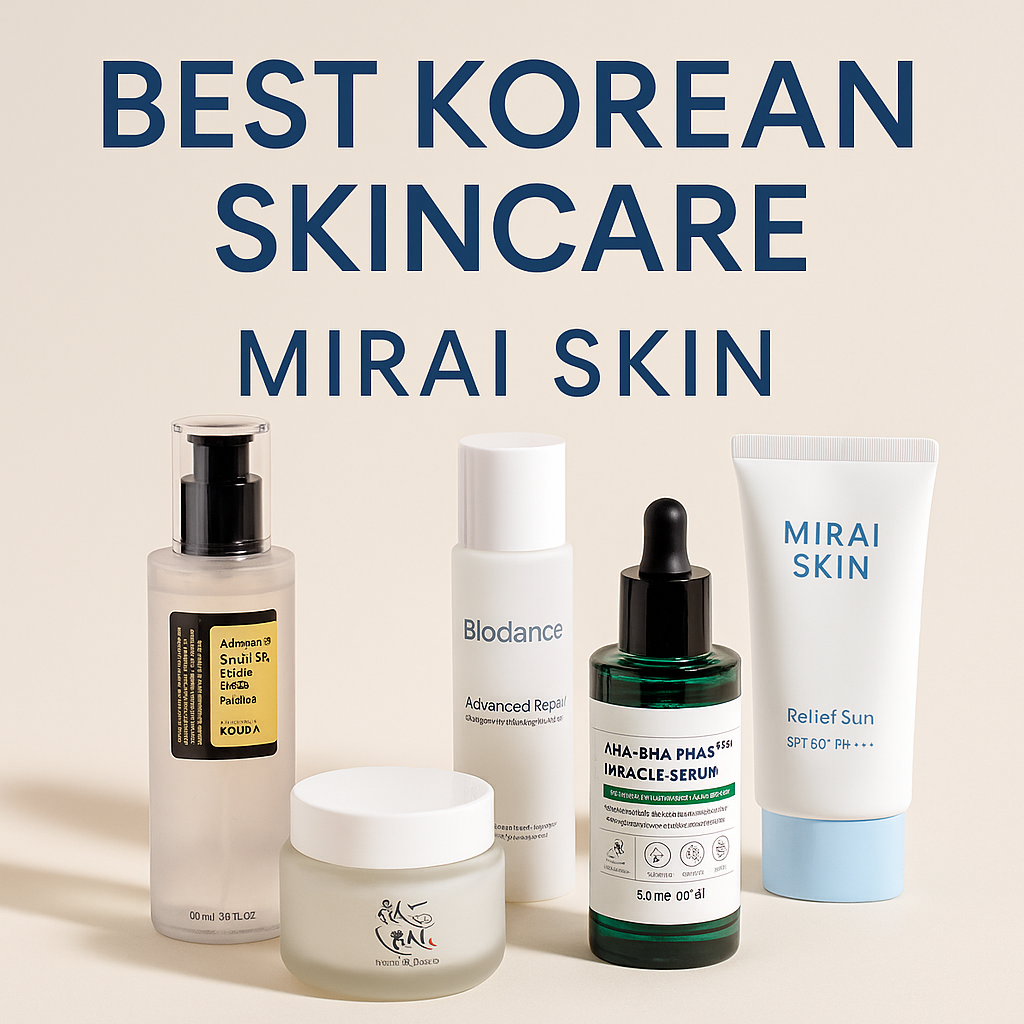
You've probably had this experience already. A Korean sunscreen, toner pad, or snail mucin serum shows up on your feed, the ingredient list looks promising, the reviews sound persuasive, and then the main question starts. Where do you buy it in the U.S. without ending up with an old batch, a gray-market import, or something fake?
That's the practical problem with Korean skincare in USA shopping right now. Access is much better than it used to be, but the retail environment is messy. Some stores are careful about sourcing and storage. Some aren't. Some products are made for broader export channels, while others show up through resellers with very little context.
For ingredient-savvy shoppers, the answer isn't to avoid K-beauty. It's to shop with a tighter filter. Korean skincare works best when you understand three things: where the product came from, whether the formula fits your skin and climate, and whether you're buying into a routine that makes sense for your life instead of a trend cycle.
The K-Beauty Boom in the United States
K-beauty isn't niche in the U.S. anymore. It's mainstream enough that confusion comes with the territory. More shoppers want Korean sunscreens, essences, cleansing balms, barrier creams, and sheet masks, but many are still navigating a fragmented mix of marketplaces, social sellers, import sites, and specialty retailers.
The size of the shift matters. The BBC reported that Americans spent as much as $1.7 billion in 2024 on Korean beauty products, and that the U.S. now imports more cosmetics from South Korea than any other country, according to the BBC-cited market coverage. That's not trend-chasing at the edges. That's a category with real depth, repeat purchasing, and broad retail pull.
Why U.S. shoppers keep coming back
Korean skincare landed well in the American market for reasons that go beyond packaging or novelty. A lot of formulas are built around hydration, barrier support, and textures that layer easily. That makes them especially appealing to people who are tired of routines that swing between over-exfoliation and irritation.
Many U.S. shoppers also like that K-beauty often treats skincare as a system. Instead of expecting one strong active to do everything, the routine usually spreads the workload across cleanser, toner or essence, serum, moisturizer, and sunscreen. Done well, that approach can feel calmer and more sustainable.
Korean skincare usually works better when you stop asking, “What's the one hero product?” and start asking, “What routine makes my skin less reactive over time?”
Why the boom created a buying problem
As demand rises, so does noise. Viral products move fast. Listings multiply. Retailers with very different sourcing standards can sell the same product image with very different actual inventory behind it.
That's why buying Korean skincare in USA now requires more judgment than enthusiasm. You need to know which sellers are authorized, how to read a listing, what signs suggest a fake, and when a product that's famous online isn't right for your climate or skin condition.
A smart K-beauty routine starts before checkout.
Where to Buy Authentic Korean Skincare in the USA
You find a sunscreen everyone swears by, but the same product appears on five different sites at five different prices. One seller ships from California. Another ships from overseas with no return policy. A third uses official-looking photos but says almost nothing about sourcing. For U.S. buyers, that is usually the actual shopping problem.
The right place to buy depends on what matters most to you: broad brand access, faster domestic delivery, fresher inventory, or direct confirmation that a seller works with authorized distributors. Online skincare sales keep growing in the U.S., according to this U.S. skincare market overview, so seller quality matters as much as product quality.

The three safest channels
| Buying channel | What it does well | What to watch for |
|---|---|---|
| Authorized online retailers | Broad selection, curated assortments, customer support, easier routine building across brands | You still need to confirm how they source, store, and rotate inventory |
| Brand official websites | High confidence in authenticity, direct access to new launches, clearer product information | Less convenient if you want to compare several brands in one order |
| U.S.-based physical stores | Immediate purchase, in-person texture testing, easier returns in some cases | Narrower selection, uneven staff training, and popular products can sit on shelves longer |
How each option works in practice
Authorized online retailers are usually the best fit for shoppers building a full routine instead of buying one viral product at a time. You can compare cleansers, essences, moisturizers, and sunscreens across brands in one cart, which is how most experienced K-beauty shoppers buy. The trade-off is that not every store with a clean website has disciplined sourcing. A retailer like Mirai Skin falls into the category of stores that focus on verified Korean skincare and curated brand selection, but the key standard is not branding. It is whether the seller can explain where stock comes from and how it reaches you.
Brand direct sites work well when you already know the exact formula you want and do not need alternatives. This route also helps when a brand releases a reformulation, limited edition, or shade variation that multi-brand retailers have not stocked yet. The drawback is simple: one order can turn into three if your routine spans multiple brands, and shipping costs add up fast.
Physical retail is useful for texture-led categories. Cleansing balms, sunscreens, and gel creams are easier to judge in person than on a product page. But U.S. shelf space for Korean skincare is still selective. Many stores stock what sells fastest, not what serves a damaged barrier, acne-prone skin, or a dry winter climate.
What separates a reliable seller from a risky one
A polished listing does not prove much. Strong sellers usually show their standards in small operational details.
- Clear seller identity. You should know who is shipping the product and where they are based.
- Complete product pages. Ingredient lists, usage directions, size, and batch or expiration details should be easy to find.
- Visible customer support. Real contact information and a stated process for damaged, incorrect, or suspicious items reduce your risk.
- Consistent inventory handling. Stores that specialize in skincare tend to do better with storage, turnover, and packaging than general marketplaces.
- No mixed-seller confusion. Large marketplace listings can pool multiple sellers under one product page, which makes quality uneven even if the photos look identical.
Practical rule: Buy from sellers that can answer three questions clearly: where the product was sourced, where it ships from, and what they will do if the item arrives damaged, expired, or questionable.
How to Verify Authenticity and Spot Counterfeits
Counterfeit risk is real in K-beauty because some formulas use distinctive ingredients and textures that attract copycats. PubMed notes that Korean cosmeceuticals increasingly use ingredients such as snail mucin and biotechnology-derived actives, which makes them attractive targets for counterfeiters who may replace them with cheap or harmful fillers, as discussed in this PubMed overview of Korean cosmeceuticals.
That matters because fake skincare doesn't just fail to perform. It can irritate skin, trigger breakouts, or expose you to badly handled formulations.

What to check before you open the product
Start with the outer packaging. Counterfeits often get the overall look right but miss the small details.
-
Compare the front label carefully
Look at font weight, spacing, logo placement, and color tone against official brand photography. Fake packaging often feels close, not exact. -
Check seals, batch codes, and scannable elements
Some brands include QR codes, hologram labels, or batch information. These details aren't decorative. They help track production and packaging. -
Study the seller listing again
If the listing uses stock images but says little about fulfillment, sourcing, or returns, that's a warning sign. Authenticity starts with the seller, not just the box.
A quick visual guide helps when you're comparing details side by side.
What to check after opening
The product itself should also make sense.
- Texture consistency. If a known gel essence suddenly feels waxy, gritty, separated, or unusually runny, stop using it.
- Scent profile. A formula that should be low-odor or lightly fragranced shouldn't smell harsh, sour, or chemical.
- Application behavior. A cleansing balm should emulsify as expected. A sunscreen should spread in a way that matches the formula family you bought. A mucin-style serum should feel coherent, not strangely sticky in a glue-like way.
Price is a clue, not proof
A very low price isn't automatic proof of a fake, but it should slow you down. Deep discounts happen. So do warehouse clearances. But when a sought-after product is priced far below what careful retailers usually charge, you need to ask why.
If the price looks unreal, inspect the seller before you inspect the bargain.
The safest habit is simple. Verify the seller first, then the packaging, then the product itself. Most fake-product problems become visible somewhere in that chain.
Navigating US Regulations Shipping and Import Rules
You place the same serum in two carts. One ships from California in three days. The other comes from overseas in three weeks, clears customs late, and arrives with slightly different labeling. That kind of mismatch is common in Korean skincare in USA shopping, and it does not automatically mean either product is wrong.
Korean brands often sell through more than one channel. A product intended for U.S. retail may have different label formatting, importer details, warning language, or packaging updates than one shipped through an overseas seller. The formula may be the same, slightly revised, or packed for a different market. The practical point is clear. Check what version you are buying before you pay.

Why U.S. availability keeps improving
North America accounted for 34.38% of the global K-beauty market in 2025, according to Grand View Research's K-beauty market report. That demand gives brands and distributors a reason to build U.S. stock, clearer product pages, and faster fulfillment.
For buyers, the upside is practical. Domestic inventory usually means shorter transit times, simpler returns, and fewer surprises around labeling.
What actually changes between U.S. stock and overseas orders
The biggest differences are usually operational, not glamorous.
| Issue | U.S.-based seller | Overseas fulfillment |
| | | |
| Shipping speed | Usually faster, with tracking that updates more consistently | Often slower, with longer gaps between scans |
| Returns and support | Easier to resolve if the order is wrong, damaged, or delayed | Harder to fix, especially across time zones |
| Labeling | Often includes importer details and formatting familiar to U.S. shoppers | May look different by export batch or sales channel |
| Storage and handling | More visible when the retailer explains warehouse conditions | Often unclear unless the seller is unusually transparent |
That last point matters more than many shoppers expect. Heat, freezing temperatures, and long transit times can affect texture, pump performance, and product stability, especially with sunscreens, exfoliants, and formulas with more delicate ingredients.
Why sunscreens and active products need extra attention
These categories cause the most confusion because claims and labeling standards can differ by market. A sunscreen sold through one channel may present different packaging details than the version a U.S. retailer carries. The same goes for products built around acids, retinoids, or brightening ingredients.
Read the full product page. Check the ingredient list, usage directions, size, country of origin, and who imported or fulfilled it. If a seller is vague about any of those basics, treat that as a real risk, not a small inconvenience.
How to avoid shipping and customs headaches
A few habits prevent most problems:
- Check where the order ships from. A U.S. warehouse usually means fewer delays and easier tracking.
- Read the shipping and return policy before checkout. Processing time and transit time are not the same thing.
- Be careful with summer and winter orders. Extreme heat and freezing conditions can be rough on certain formulas.
- Start with a small order. Test reliability before buying a full routine or stocking up on backups.
- Review import costs on overseas orders. Duties, carrier fees, or customs delays can erase any savings.
I usually tell U.S. shoppers to optimize for clarity, not just price. A retailer with honest fulfillment details, realistic delivery windows, and clear product information is often the safer buy than a cheaper listing with unanswered questions.
How to Adapt a K-Beauty Routine for Your Skin and Climate
A lot of people still approach K-beauty like a script. Cleanser, toner, essence, serum, ampoule, moisturizer, sleeping pack, and so on. That's the wrong way to think about it if you live in the U.S. and deal with central heating, dry winters, hot humid summers, long commutes, or a reactive skin barrier.
The better approach is modular. Korean skincare works well when you treat steps as tools, not obligations.
NIQ reported that U.S. K-beauty sales reached $2 billion, up 37% year over year, in this NIQ report on K-beauty's rise in the U.S. market. That growth tells you one thing clearly. A lot of people need more than product hype. They need help making these routines function in real conditions.

Start with the core, not the step count
Many individuals don't need a 10-step routine. They need four things that work consistently:
- A cleanser that matches your actual skin condition
- One or two leave-on hydration or treatment layers
- A moisturizer with the right weight
- Daily sunscreen
Everything else is optional. Toner pads, sheet masks, overnight packs, and multiple serums can be useful, but they shouldn't compensate for a weak base routine.
A smaller routine that your skin tolerates is more effective than a long routine that keeps pushing you into irritation.
Adjust for climate, not aesthetics
A routine that feels dewy and comfortable in one place can feel suffocating or insufficient somewhere else.
Dry climates and winter heating
If you live in a dry region or spend most of your day in heated indoor air, lightweight hydration alone usually won't hold. Layering then makes sense.
A practical structure looks like this:
- Gentle cleanser
- Hydrating toner or essence
- Serum focused on hydration or barrier support
- Cream that seals in water without stinging
- Sunscreen in the morning
In these conditions, watery steps help, but they need support. If your skin still feels tight an hour after application, the problem often isn't the toner. It's that your final layer is too light.
Humid climates and hot weather
In humid areas, many people over-moisturize because they assume more layers equal better skin. Usually the opposite happens. Skin gets congested, shiny, or uncomfortable.
Try this instead:
- Use a low-residue cleanser
- Keep one hydrating layer if your skin dehydrates easily
- Switch to a lighter serum or gel-cream
- Avoid stacking rich cream on top of a sticky essence unless your skin clearly needs it
A routine can still be K-beauty without being heavy. Korean formulations are often especially good at this because many essences, emulsions, and gel-creams were designed to layer lightly.
Adjust for skin concern, not trend labels
Sensitive or reactive skin
Barrier-first routines tend to work better than “fix everything fast” routines. Prioritize bland, hydrating, low-irritation formulas. Introduce one active at a time. Don't combine multiple new exfoliating or brightening products just because they're popular.
Look for formulas built around the ingredient families often associated with K-beauty's gentler approach, including hyaluronic acid, ceramides, probiotics, peptides, and niacinamide, while keeping in mind that moisturizers were the largest K-beauty segment at 34.5% of revenue in 2024, according to this global K-beauty market analysis. That points to a very practical truth. Good skin often comes from maintaining comfort, not chasing intensity.
Acne-prone skin
Don't confuse stripped skin with clean skin. Many acne-prone users do better with lighter textures, careful cleansing, and fewer overlapping actives. If your routine already includes a strong acne treatment, the K-beauty side of the routine should often handle hydration, calming, and barrier support rather than adding more aggression.
Mature or dryness-prone skin
This group usually benefits most from layered hydration plus a moisturizer with enough substance to reduce water loss. Thin, watery layers are useful here, but not as a replacement for a proper final seal.
A simple way to build your version
Use this filter before adding any product:
- What job does this step do
- Does another product already do that
- Will this texture work where I live
- Can my skin tolerate this every day
- Am I buying this because it's useful, or because it's famous
That last question eliminates a surprising number of unnecessary purchases.
Building Your Confident Korean Skincare Journey
Buying Korean skincare in USA doesn't need to feel risky or confusing, but it does require a more disciplined approach than scrolling social media and clicking the cheapest listing.
The strongest routines come from three decisions. Buy through a trustworthy channel. Verify what arrives. Build around your own skin, weather, and tolerance instead of copying somebody else's shelf.
That's also what separates satisfying K-beauty shopping from expensive clutter. A good cleanser, a well-chosen hydrating layer, a moisturizer with the right weight, and a sunscreen you'll use every day will take you further than a basket full of mismatched “must-haves.”
The appeal of Korean skincare is real. The textures are elegant. The formulas can be thoughtful. The routine philosophy often rewards patience and consistency. But the payoff comes when you shop with judgment.
If you're careful about authenticity, realistic about shipping and compliance, and willing to customize instead of imitate, K-beauty becomes much easier to trust.
If you want a cleaner starting point, browse Mirai skin as one option for shopping authentic Korean skincare online. Look for products that fit your actual routine, not just your saved posts, and build from a few reliable staples before adding anything trend-driven.