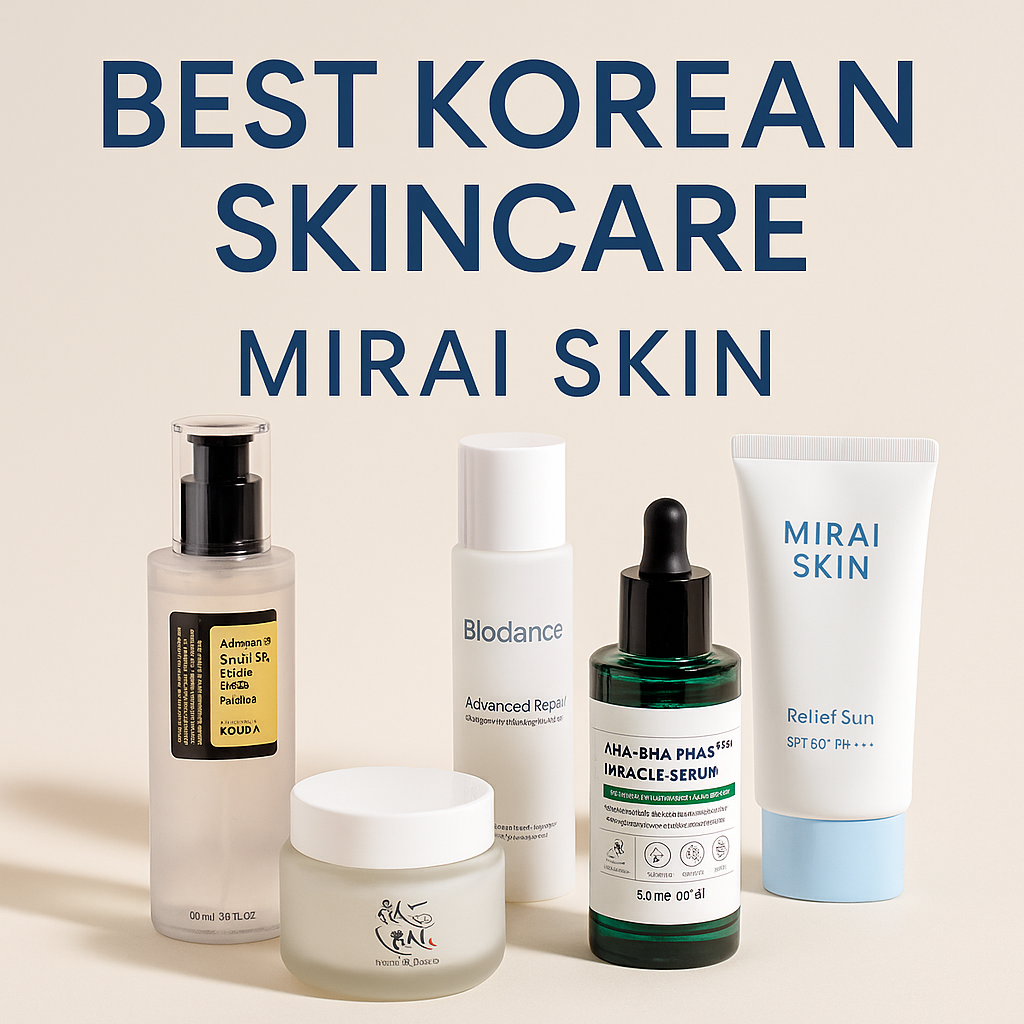
If you have sensitive skin, you know the struggle: every new product feels like a gamble, redness appears out of nowhere, and your skin seems to react to ingredients that everyone else swears by. The good news is that Korean skincare is uniquely positioned to help. With its emphasis on gentle formulations, barrier repair, and calming botanical ingredients, K-beauty offers a philosophy that aligns perfectly with what sensitive skin needs.
This comprehensive guide will walk you through everything you need to know about building a Korean skincare routine for sensitive skin. We will cover the science behind skin sensitivity, identify the gentlest and most effective K-beauty products, help you avoid common triggers, and give you the tools to build a custom routine that calms, protects, and strengthens your skin over time.
Whether you deal with occasional sensitivity, chronic redness, rosacea, eczema-prone skin, or a compromised moisture barrier, this guide has you covered. Korean beauty's "less is more" approach, combined with cutting-edge calming ingredients, makes it the ideal framework for managing sensitive skin without sacrificing results.
What You Will Learn in This Guide
- The different types of sensitive skin and their unique triggers
- How to build a minimal but effective K-beauty routine for reactive skin
- The best barrier-repair ingredients: ceramides, panthenol, and centella
- Product recommendations for every step -- cleansers, toners, moisturizers, and SPF
- How to manage rosacea and eczema with Korean skincare
- Ingredients to avoid and how to patch test safely
Table of Contents
- Why K-Beauty Is Perfect for Sensitive Skin
- Understanding Sensitive Skin: Types, Triggers, and Common Misconceptions
- The Sensitive Skin K-Beauty Routine (Minimal but Effective)
- Barrier Repair: Ceramides, Panthenol, and Centella for Skin Recovery
- Best Gentle Cleansers for Sensitive Skin
- Calming Toners and Essences: Heartleaf, Mugwort, and Centella Picks
- Moisturizers for Sensitive Skin: Fragrance-Free, Minimal-Ingredient Options
- Sunscreen for Sensitive Skin: Mineral and Low-Irritation Options
- Korean Skincare for Rosacea and Eczema-Prone Skin
- Ingredients to Avoid with Sensitive Skin
- How to Patch Test and Introduce New Products Safely
- Building Your Custom Sensitive Skin Routine
- Frequently Asked Questions
Why K-Beauty Is Perfect for Sensitive Skin
Korean beauty culture has always prioritized skin health over dramatic, fast-acting results. This philosophy translates into formulation practices that are inherently beneficial for sensitive skin. Here is why K-beauty and sensitive skin are a natural match.
The Gentle-First Philosophy
In Korean skincare, healthy skin is the foundation of beautiful skin. Rather than using aggressive ingredients to force quick changes, K-beauty emphasizes gradual improvement through gentle, consistent care. This approach minimizes the risk of irritation and allows sensitive skin to heal and strengthen over time.
Ingredient Innovation
Korean skincare laboratories have pioneered the use of calming botanical ingredients like centella asiatica (cica), heartleaf (houttuynia cordata), mugwort (artemisia), and green tea -- all of which have anti-inflammatory properties that soothe reactive skin. These ingredients have centuries of use in traditional Korean medicine, and modern research continues to validate their efficacy.
For an in-depth look at heartleaf -- one of the most popular calming ingredients in K-beauty -- see our heartleaf skincare guide.
Barrier-Centric Formulations
Many Korean skincare brands formulate their products specifically to repair and maintain the skin barrier, which is the root cause of most skin sensitivity. Ingredients like ceramides, cholesterol, fatty acids, panthenol, and beta-glucan are staples in K-beauty formulations, helping to rebuild the protective lipid layer that keeps irritants out and moisture in.
Customizable Layering
The Korean multi-step routine is not about using more products -- it is about using the right products in the right order. For sensitive skin, this means a streamlined, customizable routine where each product serves a specific calming or protective purpose. You have the flexibility to use as few as 3-4 products or expand as your skin tolerates more.
For our dedicated resources on sensitive skin care, explore our articles on Korean sensitive skin care and Korean skincare for sensitive skin.
Key Takeaway
Korean skincare's emphasis on gentle formulations, barrier repair, and calming botanicals makes it the ideal framework for managing sensitive skin. The customizable multi-step approach lets you build a routine tailored to your skin's unique needs.
Understanding Sensitive Skin: Types, Triggers, and Common Misconceptions
Not all sensitive skin is created equal. Understanding what type of sensitivity you have is the first step toward building an effective routine.
Types of Sensitive Skin
Naturally Sensitive / Genetic Sensitivity: Some people are born with thinner skin, fewer protective lipids, or a genetic predisposition to conditions like rosacea, eczema, or psoriasis. This type of sensitivity is lifelong and requires consistent, gentle management.
Environmentally Triggered Sensitivity: Climate changes, pollution, UV exposure, wind, and extreme temperatures can trigger sensitivity in otherwise resilient skin. This type of sensitivity is often seasonal and can be managed by adjusting your routine to environmental conditions.
Reactively Sensitive / Product-Induced: Over-exfoliation, too many active ingredients, stripping cleansers, or sensitizing ingredients (like high-concentration retinol or certain fragrances) can damage the skin barrier and create sensitivity. This type is often reversible with proper barrier repair.
Condition-Related Sensitivity: Skin conditions like rosacea, eczema (atopic dermatitis), contact dermatitis, and perioral dermatitis cause chronic sensitivity that requires specialized care and sometimes medical treatment alongside your skincare routine.
Common Triggers for Sensitive Skin
- Fragrance: Both synthetic and natural fragrances are among the most common irritants for sensitive skin
- Alcohol (denat. alcohol): High concentrations of drying alcohol can strip the skin barrier
- Essential oils: Despite being "natural," many essential oils are potent sensitizers (lavender, citrus oils, tea tree in high concentrations)
- Over-exfoliation: Using AHAs, BHAs, or physical scrubs too frequently or at too-high concentrations
- Harsh surfactants: SLS (sodium lauryl sulfate) and other strong cleansing agents
- pH imbalance: Products with extreme pH levels can disrupt the acid mantle
- Climate extremes: Cold, dry air; hot, humid conditions; strong winds; central heating
Common Misconceptions
"Sensitive skin cannot use active ingredients." False. Sensitive skin can benefit from active ingredients, but they need to be introduced slowly, at lower concentrations, with proper buffering. Many K-beauty products formulate actives specifically for sensitive skin tolerance.
"Natural products are always better for sensitive skin." False. Natural ingredients like essential oils, botanical extracts, and plant-based fragrances can be just as irritating as synthetic ones. Focus on the specific ingredient list rather than "natural" vs "synthetic" labels.
"Sensitive skin needs fewer products." Partially true. While simplifying your routine can help, the key is using the right products, not necessarily fewer. A well-curated 5-step routine of gentle products is better than a 2-step routine with harsh ones.
For more on reducing facial redness, see our guide on how to reduce redness on your face.
The Sensitive Skin K-Beauty Routine (Minimal but Effective)
For sensitive skin, less is often more -- but "less" does not mean "nothing." Here is the essential framework for a sensitive skin K-beauty routine that covers all the bases without overwhelming your skin.
Morning Routine (4 Steps)
- Gentle Cleanser: A low-pH, non-foaming or mildly foaming cleanser that removes overnight buildup without stripping. Some people with sensitive skin do well with water-only cleansing in the morning.
- Calming Toner or Essence: A hydrating, soothing toner to prep the skin and deliver calming ingredients like centella, heartleaf, or panthenol.
- Barrier-Supporting Moisturizer: A fragrance-free moisturizer with ceramides, panthenol, or centella to protect and strengthen the skin throughout the day.
- Gentle Sunscreen: A mineral or gentle hybrid sunscreen that protects without irritating. SPF is non-negotiable -- sun exposure worsens inflammation and sensitivity.
Evening Routine (4-5 Steps)
- Oil Cleanser / Micellar Water: A gentle first cleanser to remove sunscreen and makeup. Oil cleansers are generally well-tolerated by sensitive skin because they dissolve products without friction.
- Gentle Water-Based Cleanser: A second cleanse with a low-pH gel or cream cleanser to remove any remaining residue.
- Calming Toner or Essence: Same as morning -- hydrate and soothe.
- Treatment (Optional): On alternate nights or a few times per week, you can introduce a gentle treatment like a low-concentration serum targeting specific concerns. Start slowly.
- Barrier-Repair Moisturizer or Sleeping Pack: A rich, nourishing moisturizer or sleeping mask to support overnight repair.
Key Takeaway
A sensitive skin K-beauty routine can be as simple as 4 steps: cleanse, tone/soothe, moisturize, and protect with SPF. Expand gradually as your skin stabilizes, always patch testing new additions.
Barrier Repair: Ceramides, Panthenol, and Centella for Skin Recovery
If your skin is sensitive, there is a high chance your moisture barrier is compromised. The skin barrier (also called the stratum corneum or acid mantle) is a thin protective layer made of ceramides, cholesterol, and fatty acids that keeps moisture in and irritants out. When this barrier is damaged, everything stings, moisture escapes, and inflammation runs rampant.
Korean skincare excels at barrier repair, offering some of the most effective and affordable barrier-recovery products on the market. Here are the three powerhouse ingredients to look for.
Ceramides
Ceramides are lipid molecules that make up approximately 50% of the skin barrier. When your barrier is damaged, ceramide levels drop, leading to dryness, sensitivity, and increased vulnerability to environmental irritants.
Korean ceramide products replenish these essential lipids, helping to rebuild and strengthen the barrier from the outside in. The most effective ceramide products use a balanced ratio of ceramides, cholesterol, and fatty acids -- mimicking the skin's natural composition.

ILLIYOON Ceramide Ato Concentrate Cream -- A beloved ceramide-rich cream that repairs and strengthens the skin barrier.
Top Korean ceramide products: The ILLIYOON Ceramide Ato Concentrate Cream is widely considered the gold standard for affordable barrier repair. For detailed comparisons, see our article on ILLIYOON vs COSRX vs Torriden ceramide cream. For a deep dive into ceramides as an ingredient, read our ceramides in Korean skincare guide. You can also read our full ILLIYOON Ceramide Ato Cream review.
Panthenol (Vitamin B5)
Panthenol, also known as provitamin B5 or D-panthenol, is a multitasking ingredient that hydrates, soothes inflammation, and accelerates skin healing. It is a humectant that draws moisture into the skin while also supporting the production of barrier lipids. Think of it as an ingredient that both soothes current irritation and prevents future sensitivity.

Jumiso D-Panthenol Barrier Soothing Serum -- A concentrated panthenol serum that calms irritation and supports barrier recovery.
Learn more about this essential ingredient in our panthenol skincare guide. For information on repairing a damaged barrier, see how to repair a damaged skin barrier.
Centella Asiatica (Cica)
Centella asiatica -- commonly called "cica" in K-beauty -- is arguably the most important calming ingredient in Korean skincare. It contains four key active compounds: madecassoside, asiaticoside, madecassic acid, and asiatic acid. Together, these compounds reduce inflammation, promote collagen synthesis, accelerate wound healing, and protect against oxidative stress.

Torriden Balanceful Cica Calming Serum -- A gentle cica serum that soothes redness and inflammation for sensitive skin.
Key Takeaway
The three pillars of K-beauty barrier repair are ceramides (rebuild the barrier), panthenol (hydrate and heal), and centella (calm inflammation). Look for products that combine two or more of these ingredients for maximum barrier-repair benefits.
Best Gentle Cleansers for Sensitive Skin
Cleansing is where many sensitive skin routines go wrong. A harsh cleanser can strip away the skin's natural oils and protective lipids, leaving the barrier vulnerable and triggering a cascade of irritation. Choosing the right cleanser is foundational to everything else in your routine.
What Makes a Cleanser "Sensitive Skin Friendly"
- Low pH (5.0-6.0): The skin's natural pH is slightly acidic (around 5.5). Cleansers with a matching pH preserve the acid mantle and prevent disruption.
- Gentle surfactants: Look for amino acid-based or glucoside-based surfactants rather than SLS/SLES.
- Fragrance-free: No added perfumes or essential oils.
- Non-stripping: Your skin should not feel tight or "squeaky clean" after cleansing -- that tightness means the barrier has been disrupted.
- Minimal ingredient list: Fewer ingredients means fewer potential irritants.
First Cleansers (Oil-Based)
For your evening double cleanse, a gentle oil cleanser or micellar water is the safest first-step option for sensitive skin. Oil cleansers dissolve sunscreen and makeup through the "like dissolves like" principle, eliminating the need for harsh rubbing or stripping surfactants.
Look for: Fragrance-free formulas, calming botanicals, clean rinse-off without residue.
Second Cleansers (Water-Based)

COSRX Low pH Good Morning Gel Cleanser -- A cult-favorite low-pH cleanser with gentle BHA and tea tree for clean, non-stripped skin.
The COSRX Low pH Good Morning Gel Cleanser is a K-beauty classic for sensitive and acne-prone skin. Its pH of 5.0-6.0 matches the skin's natural acidity, and the mild BHA (betaine salicylate) provides gentle exfoliation without irritation. For more options, check out our guide on the best cleansers for redness-prone skin.
Morning Cleansing Tips for Sensitive Skin
- Consider water-only cleansing in the morning if your skin is particularly reactive
- If you do cleanse, use the gentlest option available -- a cream or gel cleanser with minimal surfactants
- Avoid hot water -- lukewarm water is best for sensitive skin
- Pat dry gently rather than rubbing with a towel
Calming Toners and Essences: Heartleaf, Mugwort, and Centella Picks
Toners and essences are where Korean skincare really shines for sensitive skin. These lightweight, watery products deliver concentrated doses of calming ingredients directly to freshly cleansed skin, prepping it for the moisture and protection that follows.
Heartleaf Toners
Heartleaf (Houttuynia Cordata) has become one of K-beauty's most beloved calming ingredients. Rich in quercitrin and other flavonoids, heartleaf provides powerful anti-inflammatory and antibacterial benefits, making it excellent for skin that is both sensitive and acne-prone.

Anua Heartleaf 77% Soothing Toner -- 77% heartleaf extract delivers intense calming and soothing for reactive skin.
The Anua Heartleaf 77% Soothing Toner contains a remarkable 77% heartleaf extract, making it one of the most potent calming toners available. Its lightweight, watery texture absorbs instantly and can be layered for additional soothing benefits.

Abib Heartleaf Calming Toner Skin Booster -- A calming toner with heartleaf extract that soothes and hydrates sensitive skin.
For a detailed comparison between these two popular heartleaf toners, see our Abib vs Anua heartleaf toner comparison. Learn more about heartleaf's benefits in our heartleaf ingredient guide.
Centella / Cica Essences
Centella-based essences are another cornerstone of sensitive skin care in K-beauty. The Mixsoon Soondy Centella Asiatica Essence is a standout option, offering a pure, minimal-ingredient formula that lets centella's calming properties take center stage. Its gentle, watery texture makes it suitable even for the most reactive skin types.
Mugwort Toners
Mugwort (Artemisia) is a traditional Korean medicinal herb with powerful calming properties. It is rich in vitamins, minerals, and antioxidants that help soothe irritated skin and reduce redness. Mugwort-based products are especially beneficial for skin that is sensitive due to environmental stress or seasonal changes.
How to Use Calming Toners
- Apply immediately after cleansing to damp skin for better absorption
- Pour into your palms and press gently into the skin -- avoid cotton pads on sensitive skin to minimize friction
- Layer 2-3 applications for extra soothing during flare-ups (the "7 skin method" adapted for sensitive skin)
- Store in the refrigerator for an extra cooling, anti-inflammatory effect during redness episodes
Browse our complete selection of calming Korean toners for sensitive skin.
Moisturizers for Sensitive Skin: Fragrance-Free, Minimal-Ingredient Options
A good moisturizer is the cornerstone of any sensitive skin routine. It seals in hydration, strengthens the barrier, and creates a protective layer against environmental irritants. For sensitive skin, the ideal moisturizer is fragrance-free, non-comedogenic, and rich in barrier-supporting ingredients.
What to Look For
- Ceramides: The most important barrier-repair ingredient
- Panthenol: Soothes and accelerates healing
- Squalane: A lightweight, non-irritating oil that mimics the skin's natural sebum
- Centella asiatica: Anti-inflammatory and healing
- Fragrance-free: No perfumes, essential oils, or masking fragrances
- Minimal ingredient list: Shorter lists mean fewer potential triggers
Our Top Picks

COSRX The Ceramide Skin Barrier Moisturizer -- A ceramide-rich moisturizer designed to rebuild and protect the skin barrier.
COSRX The Ceramide Skin Barrier Moisturizer: This moisturizer features a balanced blend of ceramides, panthenol, and hyaluronic acid that work together to repair and maintain the moisture barrier. The gel-cream texture is lightweight enough for warm weather yet nourishing enough for dry, compromised skin.
ILLIYOON Ceramide Ato Concentrate Cream: A K-beauty classic for sensitive and eczema-prone skin. The generous 200ml size makes it excellent for both face and body use. Its thick, rich texture provides intense protection and is especially beneficial during colder months. Read our detailed ILLIYOON Ceramide Ato Cream review.
Torriden SOLID IN Ceramide Cream: A lighter ceramide option that combines five types of ceramides with panthenol and beta-glucan. The medium-weight texture works well for combination-sensitive skin types who need barrier support without heaviness.
Round Lab Soybean Panthenol Cream: Combines panthenol with soybean-derived ingredients for gentle, soothing moisture. The formula is fragrance-free and specifically designed for sensitive skin. Explore our ceramide cream comparison for help choosing.
Browse our full Korean moisturizer collection for more fragrance-free options.
Key Takeaway
For sensitive skin, prioritize fragrance-free moisturizers with ceramides, panthenol, and centella. These ingredients repair the barrier while soothing current inflammation. A well-chosen moisturizer can dramatically reduce sensitivity over time.
Sunscreen for Sensitive Skin: Mineral and Low-Irritation Options
Sun protection is essential for sensitive skin -- UV exposure triggers inflammation, worsens redness, and degrades the already-compromised skin barrier. However, finding a sunscreen that does not sting, cause breakouts, or trigger redness can be challenging.
Mineral vs Chemical Sunscreen for Sensitive Skin
Mineral sunscreens (zinc oxide, titanium dioxide) are generally the safer choice for sensitive skin because they sit on the skin's surface rather than being absorbed. They are less likely to cause stinging or irritation, and they start protecting immediately upon application.
Chemical sunscreens can work for some sensitive skin types, especially newer-generation formulas with gentler filters. However, if you experience stinging or redness with chemical filters, switching to mineral is the safest bet.

Anua Heartleaf Silky Moisture Sunscreen SPF50+ PA++++ -- Heartleaf-infused sun protection for calmed, comfortable sensitive skin.
Our Top Sunscreen Picks for Sensitive Skin
Anua Heartleaf Silky Moisture Sunscreen SPF50+ PA++++: With 50% heartleaf extract, this sunscreen actively soothes while protecting. The silky, lightweight texture is well-tolerated by reactive skin types.
For a comprehensive overview of gentle sun protection options, see our full guide to the best Korean sunscreens for sensitive skin.
Application Tips for Sensitive Skin
- Apply sunscreen as the very last step in your skincare routine, after your moisturizer has fully absorbed
- Use the two-finger rule for adequate coverage
- If mineral sunscreens feel too thick, try warming the product between your palms before pressing it onto the skin
- On flare-up days, a physical sunscreen is less likely to aggravate irritation than a chemical one
- Consider wearing a hat and seeking shade as supplementary protection to reduce reliance on heavy sunscreen application during sensitive periods
Browse our full Korean sunscreen collection for sensitive-skin-friendly options.
Korean Skincare for Rosacea and Eczema-Prone Skin
Rosacea and eczema present unique challenges that go beyond general sensitivity. These chronic conditions require specialized approaches, and Korean skincare offers some of the most effective gentle products for managing them.
K-Beauty for Rosacea
Rosacea is characterized by persistent facial redness, visible blood vessels, and sometimes acne-like bumps. The key principles for managing rosacea with K-beauty are:
- Avoid known triggers: Alcohol, hot water, spicy food, extreme temperatures, and sun exposure can all trigger rosacea flares
- Focus on anti-inflammatory ingredients: Centella asiatica, heartleaf, and niacinamide can help reduce the chronic inflammation associated with rosacea
- Use gentle, fragrance-free products only: Rosacea-prone skin is hypersensitive to fragrances and essential oils
- Apply mineral sunscreen daily: UV exposure is one of the most common rosacea triggers
- Avoid physical exfoliation: No scrubs, no cleansing brushes, no rough washcloths
- Keep your routine minimal: Fewer products means fewer potential triggers
For a comprehensive treatment protocol, see our guide to Korean skincare for rosacea. Also check our Dr. Jart+ Cicapair Cream review -- a product specifically designed for redness-prone skin.
K-Beauty for Eczema (Atopic Dermatitis)
Eczema involves chronic dryness, itching, and inflammation, often with a significantly compromised skin barrier. Korean skincare approaches eczema care with:
- Ultra-gentle, minimal-ingredient products: Look for the "Ato" designation in Korean products (short for "atopy"), which indicates formulation for eczema-prone skin
- Heavy ceramide-based moisturizers: ILLIYOON's Ceramide Ato line was developed specifically for atopic skin and is widely recommended by Korean dermatologists
- No fragrances, essential oils, or active ingredients: During eczema flares, the absolute minimal routine is best
- Thick occlusive layers: Seal in moisture with rich creams or healing balms, especially at night
- Lukewarm water only: Hot water strips oils and triggers itching
Read our Dr. Jart+ Ceramidin Cream review for another excellent eczema-friendly option.
Key Takeaway
Rosacea and eczema require an ultra-gentle approach with focus on anti-inflammatory ingredients (centella, heartleaf, niacinamide) and intensive barrier repair (ceramides, panthenol). Always consult a dermatologist for persistent conditions alongside your skincare routine.
Ingredients to Avoid with Sensitive Skin
Knowing what to avoid is just as important as knowing what to use. While everyone's triggers are different, the following ingredients are most commonly problematic for sensitive skin types.
High-Risk Ingredients
Fragrance (Parfum/Perfume): The number one cause of cosmetic contact dermatitis. This includes both synthetic fragrances and natural essential oils. Even products labeled "naturally scented" can be irritating.
Denatured Alcohol (Alcohol Denat., SD Alcohol): High concentrations of drying alcohol can strip the skin barrier, increase transepidermal water loss, and trigger inflammation. Note: fatty alcohols like cetyl alcohol and cetearyl alcohol are different and are generally safe and beneficial for sensitive skin.
Essential Oils: Lavender oil, tea tree oil (in high concentrations), citrus oils (lemon, bergamot, grapefruit), peppermint oil, and eucalyptus oil are common sensitizers. While some people tolerate them, they are best avoided if your skin is reactive.
Harsh Surfactants: Sodium Lauryl Sulfate (SLS) and Sodium Laureth Sulfate (SLES) are strong cleansing agents that can strip the skin barrier. Look for gentler alternatives like Cocamidopropyl Betaine, Sodium Cocoyl Isethionate, or amino acid-based surfactants.
Moderate-Risk Ingredients (Use with Caution)
High-Concentration Actives: Retinol (start at 0.025-0.05%), vitamin C (start with derivatives like ascorbyl glucoside rather than L-ascorbic acid), and AHA/BHA (start with low concentrations and infrequent use).
Witch Hazel: Often touted as a natural toner, witch hazel contains tannins that can be drying and irritating for sensitive skin, especially if the product also contains alcohol.
Physical Exfoliants: Scrubs, brushes, and rough washcloths create micro-tears in the skin that can worsen sensitivity and damage the barrier.
Reading Korean Product Labels
Korean products list ingredients in both Korean and English (INCI names). Here is what to scan for when checking a product for sensitive skin compatibility:
- Check the first 5-6 ingredients -- these are present in the highest concentrations
- Look for "fragrance" or "perfume" anywhere on the list and avoid if present
- Check for alcohol denat. in the first half of the ingredient list (small amounts near the end are usually fine)
- Look for familiar calming ingredients: centella, heartleaf, panthenol, allantoin, ceramides, madecassoside
How to Patch Test and Introduce New Products Safely
Patch testing is not optional for sensitive skin -- it is the single most effective way to prevent full-face reactions to new products. Here is the correct method.
The Proper Patch Test Method
- Choose your test area: Apply a small amount of the product behind your ear, on your inner wrist, or on a small patch of skin along your jawline.
- Apply once daily for 3 days: Use the product on the test area once per day for at least 3 consecutive days.
- Monitor for reactions: Watch for redness, itching, burning, stinging, bumps, or flaking. If any reaction occurs, discontinue immediately.
- If no reaction after 3 days: Move to a half-face test for an additional 3 days before applying to your full face.
- Introduce one product at a time: Wait at least 2 weeks before introducing another new product so you can identify the cause of any delayed reactions.
Signs of a Reaction vs Normal Adjustment
Reaction (stop immediately):
- Burning or stinging that does not subside within 30 seconds
- Redness or flushing in the application area
- Itching that persists
- Bumps, hives, or rash
- Swelling or tightness
- Flaking or peeling (unless using a known exfoliant)
Normal adjustment (usually fine to continue):
- Brief tingling (less than 30 seconds) that resolves on its own
- Very mild warmth immediately after application
- Slight increase in oiliness or dewiness as skin adjusts
The Slow Introduction Method
When introducing a new product to your sensitive skin routine:
- Week 1: Use every other day
- Week 2: Use every day
- Week 3: Use twice daily (if appropriate for the product type)
- Week 4+: Evaluate results and decide if it earns a permanent place in your routine
Building Your Custom Sensitive Skin Routine
Now that you understand the principles, ingredients, and products, here is how to build a complete, customized K-beauty routine for your specific type of sensitivity.
Starter Routine (Ultra-Sensitive / Rebuilding Phase)
If your skin is currently irritated, inflamed, or in a flare-up, strip your routine down to absolute essentials:
- Morning: Water-only cleanse > Centella or heartleaf toner > Ceramide moisturizer > Mineral sunscreen
- Evening: Gentle oil cleanser (if wearing sunscreen/makeup) > Low-pH water cleanser > Ceramide moisturizer (apply generously)
Stay with this minimal routine for 4-6 weeks until your skin calms down and the barrier begins to repair.
Maintenance Routine (Stable Sensitive Skin)
Once your skin has stabilized, you can gradually add products:
- Morning: Gentle cleanser > Calming toner (heartleaf or centella) > Lightweight serum (niacinamide or panthenol) > Moisturizer > Sunscreen
- Evening: Oil cleanser > Water-based cleanser > Calming toner > Treatment serum (2-3 nights per week) > Rich moisturizer or sleeping pack
Sample Product Routine
Our Recommended Sensitive Skin Routine
| Step | AM Product | PM Product |
|---|---|---|
| Cleanse | COSRX Low pH Good Morning Cleanser | Oil cleanser + COSRX Low pH Cleanser |
| Tone | Anua Heartleaf 77% Toner | Anua Heartleaf 77% Toner |
| Treat | Jumiso D-Panthenol Serum | Torriden Cica Calming Serum |
| Moisturize | COSRX Ceramide Moisturizer | ILLIYOON Ceramide Ato Cream |
| Protect | Anua Heartleaf Sunscreen SPF50+ | -- |
Seasonal Adjustments
Winter / Cold Weather: Switch to richer moisturizers, add a sleeping pack, use a humidifier indoors, and consider adding a facial oil (squalane is safest for sensitive skin) before your moisturizer.
Summer / Hot Weather: Lighten your moisturizer to a gel-cream formula, prioritize oil-control in your sunscreen, and increase toner layering for hydration without heaviness.
Transition Seasons (Spring/Fall): Watch for increased sensitivity due to environmental changes. Keep your barrier-repair products on hand and reduce actives if sensitivity increases.
Frequently Asked Questions About Korean Skincare for Sensitive Skin
Is the 10-step Korean skincare routine too much for sensitive skin?
The 10-step routine is a guideline, not a rule. For sensitive skin, a streamlined 4-5 step routine is often more appropriate. Focus on quality over quantity: a gentle cleanser, calming toner, barrier-repair moisturizer, and sunscreen cover the essentials. You can gradually add products as your skin stabilizes, but there is no requirement to use 10 products. Listen to your skin and add only what it needs and tolerates.
Can sensitive skin use Korean exfoliating products?
Yes, but with caution. Chemical exfoliants (AHAs, BHAs, PHAs) are generally better tolerated than physical scrubs because they do not require rubbing. Start with the gentlest option -- PHAs (polyhydroxy acids) like gluconolactone are the most gentle exfoliant class. Use exfoliants once a week at most, and always buffer with moisturizer. Skip exfoliation entirely during flare-ups.
How do I know if my skin barrier is damaged?
Common signs of a damaged skin barrier include: persistent tightness or dryness; stinging when applying products that previously did not sting; increased redness and reactivity; visible flaking or rough texture; increased breakouts (a damaged barrier allows bacteria in); and skin that looks dull or feels dehydrated even after moisturizing. If you are experiencing multiple symptoms, focus on barrier repair before introducing any new active ingredients.
Are Korean products fragrance-free?
Not all Korean products are fragrance-free, but many Korean brands offer fragrance-free lines specifically designed for sensitive skin. Brands like ILLIYOON, Torriden (SOLID IN line), COSRX, and Jumiso are known for their fragrance-free options. Always check the ingredient list for "fragrance," "parfum," or "perfume" rather than relying on front-of-package claims. Some products labeled "unscented" may still contain masking fragrances.
What is the difference between sensitive skin and sensitized skin?
Sensitive skin is a skin type you are born with -- it is genetically predisposed to react more easily to stimuli. Sensitized skin is a skin condition caused by external factors like over-exfoliation, harsh products, environmental damage, or stress. The key difference is that sensitized skin can be healed and returned to a resilient state through proper barrier repair, while sensitive skin requires ongoing gentle management. Many people who think they have sensitive skin actually have sensitized skin that can be resolved.
Can I use retinol if I have sensitive skin?
Yes, but you need to approach it carefully. Start with the lowest concentration available (0.025-0.05%), use it only once a week, and always apply over a layer of moisturizer (the "sandwich method") to buffer the active ingredient. Korean retinol products tend to be formulated with soothing ingredients like cica or panthenol that help reduce irritation. Bakuchiol is a gentler plant-based alternative if your skin cannot tolerate even low-concentration retinol. Gradually increase frequency over months, not weeks.