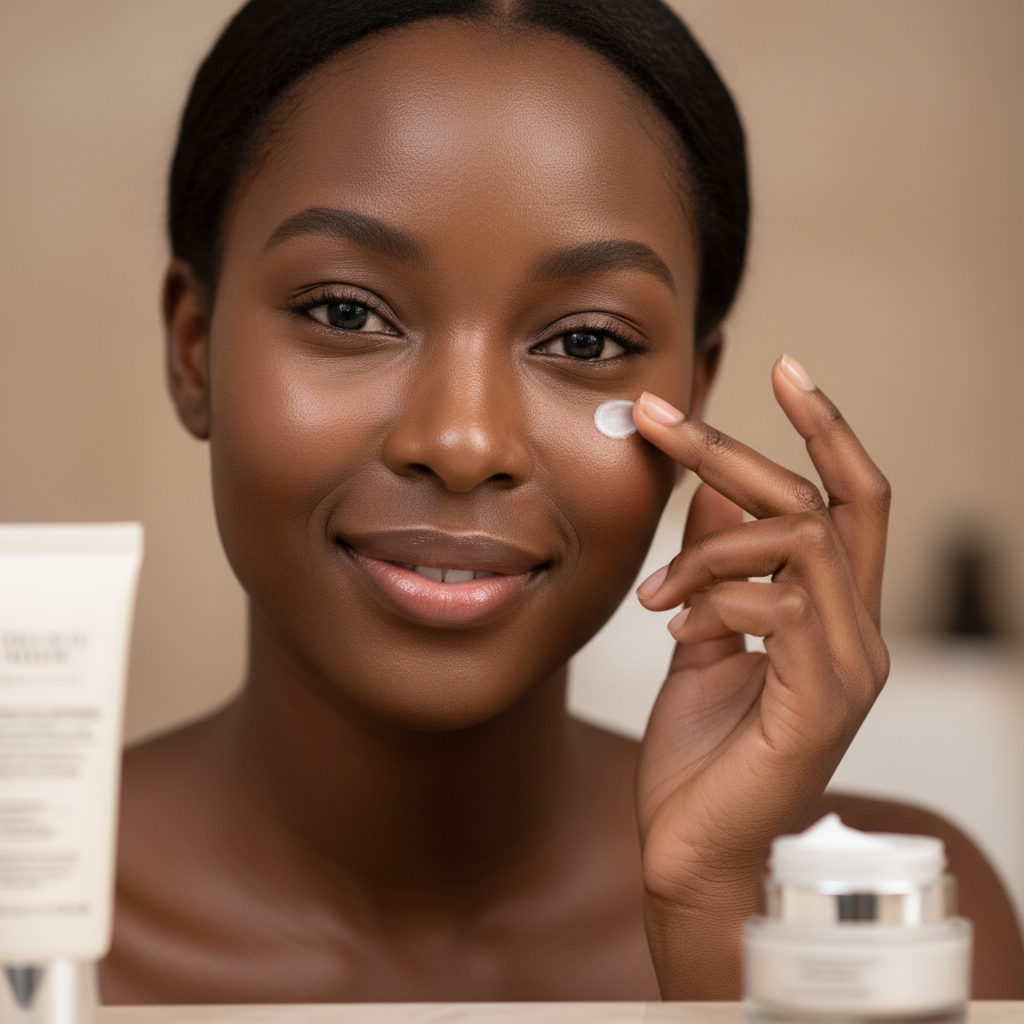
You cleanse, pat your face dry, and your skin feels squeaky clean for about thirty seconds. Then the tightness starts. Your serum pills, your exfoliant stings more than usual, and by afternoon your skin is somehow both shiny and dehydrated.
That’s the moment a ph balancing toner starts to make sense.
In K-Beauty, toner isn’t just a leftover step from old routines. It’s the reset button after cleansing. Used well, it helps your skin feel calm again, supports the barrier, and creates a better surface for the rest of your routine. If you love ingredients like snail mucin, niacinamide, retinol, or acids, this holds more importance than often recognized.
Your Skin's Invisible Shield The Acid Mantle Explained
Right after cleansing, your skin can look perfectly fine and still be unsettled. A face that feels tight, turns red quickly, or suddenly stings from products it tolerated yesterday is often dealing with a barrier problem before it becomes an obvious dryness problem.
That surface-level shield is called the acid mantle. It is a thin, slightly acidic film made up of water, sweat, sebum, and skin-supporting compounds on the outermost layer of skin. It works like a light raincoat. You do not see it, but it helps hold moisture in while making life harder for irritants and unwanted microbes on the surface.
Dermatologists generally describe healthy skin as slightly acidic, often in the pH 4.5 to 5.5 range, according to the American Academy of Dermatology’s overview of skin pH.

What pH means in real life
pH sounds like lab language, but the routine-level meaning is simple. It describes how acidic or alkaline something is. Skin tends to perform best in a mildly acidic zone because many of the enzymes, lipids, and microbes that support barrier health function better there.
Once that balance shifts, the symptoms can feel oddly disconnected from the actual cause. Your moisturizer may seem weaker. Your active serum may sting more. Your skin may look oilier while also feeling dehydrated, which confuses plenty of skincare users because it does not resemble textbook "dry skin."
Common clues include:
- Tightness after washing: Water is escaping faster than your skin can comfortably hold it.
- Fast redness: A disrupted surface reacts more easily.
- Sudden stinging: Products meet less cushioning on the skin.
- Stress breakouts: An irritated barrier can make the whole face behave unpredictably.
What throws the acid mantle off
Cleansing is one of the biggest triggers. According to a review in StatPearls on skin pH and the acid mantle, alkaline soaps can disrupt the skin barrier, increase irritation, and interfere with the skin's normal protective functions. That helps explain why skin can feel "squeaky clean" at first and uncomfortable ten minutes later.
Water exposure, over-exfoliation, harsh surfactants, dry indoor air, and pollution can all add to that stress. None of these factors ruins skin in one dramatic moment. The problem is cumulative. If the barrier keeps getting pushed out of its preferred range, the products you apply afterward have to work on skin that is already on edge.
This is one place where K-Beauty philosophy adds something useful. Western skincare often treats toner as an optional extra after cleansing. Authentic Korean routines tend to view the post-cleanse moment as the beginning of barrier repair. The goal is not just to "balance pH" as a marketing phrase. The goal is to restore the conditions that help the rest of the routine perform better.
Practical rule: If your face feels polished but uncomfortable after cleansing, your skin may need support for its barrier first, not a stronger treatment step.
Skincare confusion often starts at that point. People switch serums, blame retinol, or buy a heavier cream. Sometimes the first fix is simpler. The acid mantle needs to be brought back to a calmer, more stable state so every step that follows lands on skin that can effectively use it.
How Korean pH Balancing Toners Bring Back Balance
Old-school toners often focused on stripping oil. That’s why many people still hear the word “toner” and think of alcohol-heavy astringents that leave the skin feeling raw. A Korean ph balancing toner does something very different. It aims to restore, cushion, and prepare.
That shift in purpose is one of the biggest differences between classic Western toner narratives and modern K-Beauty philosophy. In K-Beauty, toner usually isn’t the final swipe that proves your cleanser worked. It’s the first recovery step after cleansing.
The buffering idea that makes toner work
A well-formulated pH toner doesn’t force the skin into an extreme. It gently nudges it back toward a more comfortable range. In formulas like Toun28’s, citric acid is used as a buffering agent to precisely adjust pH, and that restoration can reduce transepidermal water loss by up to 20 to 30% after cleansing, according to INCIDecoder’s ingredient review of Toun28 pH Balancing Toner.
If “buffering agent” sounds abstract, it functions like a thermostat rather than a blast of cold air. The goal isn’t to shock the skin. The goal is to help it settle.
Why this matters for the rest of your routine
A balanced face is a better canvas.
When your skin is freshly cleansed and unsettled, your serum may absorb unevenly, your moisturizer may need to work harder, and your treatment step may feel harsher than it should. A pH-balancing toner helps create a smoother handoff between cleansing and treatment.
That’s why so many Korean routines place toner early and treat it as part of skin prep, not as an optional extra. The toner step can make the routine feel more coherent. Your essence layers better. Your gel cream feels less like it’s sitting on top. Your active step feels more controlled.
A good toner doesn’t need to feel dramatic. If it’s doing its job, your skin often just feels normal again.
What a modern K-Beauty toner should feel like
The best ones usually don’t sting, smell sharp, or leave a squeak. Instead, they tend to feel:
- Light but not empty: watery, milky, or essence-like
- Comforting on contact: less “astringent,” more “reset”
- Supportive of layering: they play well with serums and moisturizers
- Purposeful after cleansing: they bridge cleansing and treatment
That’s the quiet strength of a ph balancing toner. It’s not there to impress you in ten seconds. It’s there to help every step after it work on skin that feels steadier.
The Ultimate Ingredient Checklist for pH Toners
A label that says “pH balancing” doesn’t tell you enough. The formula around that claim matters just as much. If the toner helps restore balance but leaves your skin dehydrated, scented into irritation, or overly stripped, it’s missing the point.
The most useful way to shop is to read the ingredient list like a checklist.

Ingredients worth seeking out
Some ingredients do more than make toner feel nice. They help turn pH correction into barrier support.
- Ceramides: These are the “mortar” between your skin cells. They help patch the small gaps that appear when the barrier is stressed. In pH-focused formulas, ceramides are especially useful because they support recovery, not just hydration.
- Hyaluronic acid in multiple forms: This ingredient helps bind water to the skin. According to Pure’AM’s pH Balance Calming Toner details, each hyaluronic acid molecule can retain up to 1000x its weight in water, and formulas with vegan ceramides and triple hyaluronic acid can reduce redness by 30% in sensitive skin through barrier repair.
- Centella asiatica or cica: When skin feels hot, flushed, or “angry,” cica is often the ingredient people notice first. It fits beautifully in a pH toner because calming the barrier and restoring comfort usually go together.
- Panthenol and beta-glucan: These don’t need flashy marketing to earn a place. They help soften the feel of a formula and support a replenished, less reactive finish.
Ingredients to be careful with
Not every toner marketed as balancing is built for barrier health. Some include ingredients that can work against the calming purpose of the category.
A useful caution list:
- High amounts of drying alcohols: If a toner evaporates instantly and leaves a crisp, tight after-feel, that’s not a win for a compromised barrier.
- Strong fragrance: Fragrance isn’t automatically bad for every person, but if your skin is already touchy after cleansing, scented formulas can complicate the picture.
- Harsh astringent-heavy formulas: If the whole identity of the toner is “shrink, strip, mattify,” it may not be the prep step your skin needs daily.
- Very aggressive acid positioning for everyday use: A toner can be exfoliating, but a daily pH toner should still feel like support, not punishment.
What K-Beauty often gets right
Korean toners tend to treat hydration and barrier support as part of the same conversation. That’s why you’ll often see textures that feel more like a watery essence or a light emulsion than a classic sharp toner. The formula isn’t only trying to lower pH. It’s trying to make the skin more comfortable immediately afterward.
Ingredient shortcut: If the formula pairs pH-supportive design with humectants and barrier lipids, it’s usually thinking beyond “balance” and toward recovery.
When you read the label, ask a simple question: Does this toner only correct, or does it also care for the skin after correction? The best ph balancing toner should do both.
Your Personalized Toner Guide for Every Skin Type
The right toner depends less on trends and more on what your skin is trying to recover from. Some people need a watery reset after foaming cleansers. Others need a cushiony, milky layer that feels almost like a light treatment.

Oily and acne-prone skin
If your skin gets congested easily, the toner step should feel fresh and lightweight, not waxy or overly rich. Look for a formula that restores comfort after cleansing without making the face feel coated.
This is also the skin type where pH prep can be especially practical before acids. A 2014 study found that using a pH 4.0 toner before 2% salicylic acid reduced acne lesions by 42% over 8 weeks, compared with 28% without the toner prep, according to The Acid Queen’s review of pH and acid-use timing.
That matters because many acne routines fail in one of two ways. Either the active doesn’t seem to do enough, or it works but irritates too fast. Prepping skin with the right toner can help make the treatment step feel more efficient and more manageable.
Dry and dehydrated skin
Dry skin often loves the K-Beauty approach to toner because this is where layering really shines. A ph balancing toner for this skin type should feel replenishing from the first pass. Think milky textures, ceramides, humectants, and a finish that leaves the skin softer rather than just damp.
Use your hands instead of a cotton pad if you want to keep every drop on the skin. Press, don’t rub. If your face still feels thirsty, add another light layer before serum.
Here’s a quick visual guide before you layer the rest of your routine:
Sensitive and reactive skin
Sensitive skin usually benefits from simplicity. A good toner here should feel almost boring in the best way. Minimal scent, no aggressive after-feel, and ingredients that support calm rather than force visible results overnight.
Use a small amount first. If your skin tends to flush, pat the toner in gently and wait a moment before the next step. Texture matters. Many reactive skin types do better with soft, hydrating toners than with formulas that feel very acidic or heavily astringent.
If your skin stings from everything, don’t stack more actives first. Rebuild the comfort level of the routine.
Combination skin
Combination skin often needs two things at once. Less heaviness through the T-zone, more support around the cheeks or jaw. A balanced toner can unify the face before you customize later steps.
Try this approach:
- Apply one even layer all over: Let the toner bring the whole face back to baseline.
- Target with serum afterward: Use lighter products in oily zones and richer ones where you’re dry.
- Adjust by season: In humid weather, one layer may be enough. In dry weather, add another pass with your palms.
Using toner with actives
Here, ph balancing becomes practical instead of theoretical.
- Before BHA or AHA: The toner can help create a better starting condition for pH-dependent exfoliants.
- Before vitamin C: A calm, evenly prepped surface often makes application feel more consistent.
- Before retinol: The toner doesn’t replace moisturizer, but it can make the skin feel less stripped before your retinoid sandwich or evening routine.
The key is not to treat toner as filler. If you choose the right texture and ingredient profile for your skin type, it becomes the step that helps the rest of the routine behave better.
Common Mistakes and Pro-Tips for Maximum Results
The most common toner mistake is using it like it’s still 2008. If you swipe aggressively with a cotton pad until the skin feels squeaky, you’re turning a supportive step into unnecessary friction.
Another mistake is using far too much product. Toner should leave the skin refreshed and lightly hydrated, not dripping and sticky. More isn’t always better, especially if you’re layering several other products afterward.
Mistakes that quietly sabotage the step
A few habits make a ph balancing toner less useful than it could be:
- Applying with too much rubbing: Friction can irritate skin that’s already unsettled after cleansing.
- Choosing “harsh” over “effective”: A sharp sting doesn’t mean the toner is doing a better job.
- Treating every toner the same: An exfoliating acid toner and a daily pH-supportive toner are not interchangeable.
- Skipping toner on the days you use actives: For many routines, that’s exactly when the prep step is most valuable.
K-Beauty tricks that are actually useful
The well-known 7 Skin Method can work beautifully with a gentle hydrating toner. The idea is simple: apply several very thin layers instead of one heavy coat. You don’t need to force seven layers if your skin feels satisfied sooner. The point is gradual hydration, not strict rule-following.
You can also soak a few cotton pads with toner and leave them briefly on dry areas like a quick mini mask. That’s a favorite move when cheeks feel hot or flaky.
Try your toner with your hands first. Cotton pads are useful, but your palms often give a softer, less wasteful application.
A spray bottle can also be handy if your toner is simple and hydrating. It won’t replace your full routine, but it can refresh the skin midday without the heaviness of another cream layer.
The best pro-tip is still the least glamorous one. Watch how your skin feels after cleansing and after toner, not just how it looks under bright bathroom lighting. Comfort is data.
Your pH Balancing Toner Questions Answered
You wash your face with a cleanser you like, your skin does not feel stripped, and you still wonder whether a pH balancing toner is doing anything meaningful. That question makes sense, especially in a routine that already has essences, serums, and moisturizers competing for space.
The short answer is that a good pH-supportive toner is not there to check a box. In a K-Beauty routine, it often works as the reset step that helps the barrier recover after cleansing and helps later layers spread, absorb, and feel better on the skin. That is the part many Western toner conversations miss. The value is not only "balancing pH." It is creating better conditions for the rest of your routine to work.
If your cleanser is already gentle, you may not always need a toner. Skin that feels calm, comfortable, and stable right after washing may do fine without one. But if your face often feels tight, warm, oddly shiny yet thirsty, or harder to layer products onto, a well-formulated toner can make a real difference.
A pH balancing toner is also not the same thing as an exfoliating toner. The names can confuse people because both sit in the "toner" category. A daily barrier-supportive toner is meant to replenish water, soothe the skin surface, and support the acid mantle. An exfoliating toner is a treatment step first. It uses acids to loosen dead skin buildup. Some routines use both, but they are not interchangeable.
Application matters too. For most hydrating Korean toners, your hands are the gentler choice because they press the formula in without extra friction and waste less product. Cotton pads still have a place if you want a quick toner mask on flaky areas or a controlled application around the T-zone. The method should match the formula and your skin's mood that day.
Many people can use this kind of toner morning and night. The better guide is feel, not rigid rules. If your skin seems comfortable and drinks it in, twice daily is often fine. If your face starts feeling filmy or overloaded, use less or apply it once a day.
You also do not need a long wait time before serum. Slightly damp skin is often ideal for the next hydrating layer, much like applying body lotion before water fully evaporates from the skin. The goal is not to let toner sit for several minutes. The goal is to keep that light hydration in motion through the routine.
Oily skin can benefit too. Oil and hydration are not the same thing. Skin can produce excess sebum and still have a weakened barrier or water loss after cleansing. A light, low-irritation toner can help oily skin feel balanced without the heavy finish of a richer cream.
One answer deserves special attention. If your toner stings every time you use it, stop using it. A supportive toner should usually calm things down. Persistent stinging often points to a damaged barrier, a formula that is too aggressive, or a routine with too many exfoliating and active steps layered together.
In the K-Beauty order of application, toner goes right after cleansing and before essence, serum, ampoule, and moisturizer. It works like priming a slightly dry sponge before adding more water. Once the surface is receptive again, the layers that follow tend to spread more evenly and feel less irritating.
A good ph balancing toner earns its place through subtle results. If your skin feels steadier, less reactive, and easier to care for after you add it, that step is doing more than adjusting pH. It is helping rebuild the environment your barrier needs so the rest of your routine can perform better.
If you’re ready to build a smarter K-Beauty routine with authentic products, explore Mirai skin. It’s a trusted destination for Korean skincare from verified Korean distributors, which makes it easier to find toners, essences, serums, and barrier-supportive formulas that work together, not against each other.