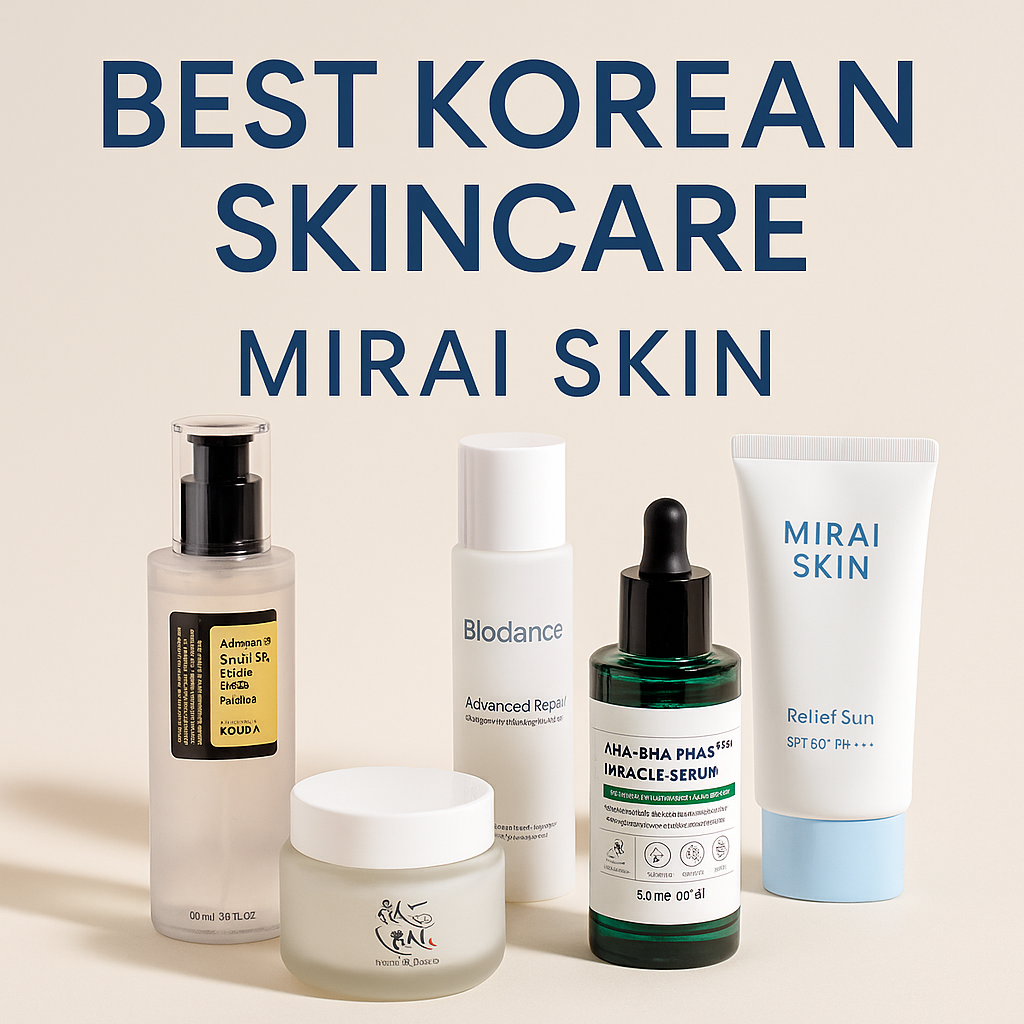
By noon, your sunscreen may feel less like skincare and more like a film sitting on top of your face. Your T-zone looks shiny, makeup starts sliding, and you wonder whether SPF is causing the congestion around your nose and chin.
That frustration is real. A lot of people with oily skin do not dislike sun protection itself. They dislike the texture, the heaviness, and the way some formulas seem to turn extra sebum into an all-day slick.
K-Beauty offers a more useful way to think about sunscreen oily skin concerns. The goal is not just “oil-free.” It is daily protection that feels wearable, supports the skin barrier, and fits into a routine you can repeat without dreading it. That is why Korean sunscreens became so influential. They focus on elegant textures, comfortable layering, and finishes that work in humid weather instead of fighting it.
If you understand why certain sunscreens feel wrong, the label gets easier to read. If you understand texture and filter type, buying gets easier too. That is how you stop guessing and start choosing with confidence.
The Search for the Perfect Sunscreen for Oily Skin
You buy a sunscreen that promises a matte finish. It feels fine for ten minutes. Then your forehead starts reflecting light, your bangs stick to your skin, and the area around your nose feels congested by lunch.
A week later, you try another one. This time it pills over serum, sits badly under foundation, and leaves you wondering whether skipping SPF would make your skin happier.
That cycle is common with oily and acne-prone skin. The problem is not that your skin “cannot handle sunscreen.” The problem is that many formulas were not built with oily skin behavior in mind. They protect well on paper, but they do not always cooperate with excess sebum, heat, sweat, or layered skincare.
Why this feels so personal
Oily skin changes throughout the day. A sunscreen that looks smooth at 8 a.m. can feel very different at 1 p.m. once sebum, humidity, and movement start breaking up the finish.
That is also why generic advice often falls flat. “Use SPF every day” is correct, but it does not answer the practical questions oily skin users ask:
- Will this clog my pores
- Will this make my makeup separate
- Will it stay comfortable in humidity
- Can I reapply without looking greasy
Korean skincare philosophy tends to start with those lived questions. It treats sunscreen as part of the whole routine, not as an isolated final step that you tolerate.
The K-Beauty mindset
In K-Beauty, sunscreen is often designed to behave like skincare first and UV protection second. That does not mean weaker protection. It means more attention to feel, finish, spreadability, and how a product layers with toner, serum, moisturizer, and makeup.
A sunscreen you enjoy wearing is usually more valuable than a “perfect” formula you avoid.
That is especially important for oily skin. If a formula feels suffocating, you will use less of it, skip reapplication, or stop wearing it altogether. Cosmetic elegance is not a luxury for this skin type. It is part of compliance.
Why Most Sunscreens Feel Wrong on Oily Skin
You apply sunscreen in the morning, your skin looks balanced for an hour, and by lunch the T-zone is shiny, makeup has started to separate, and the area around the nose feels coated. That experience usually points to a formula mismatch, not a personal failure to “control oil.”
Oily skin changes the way sunscreen wears. Sebum is part of the reason, but the full picture is more mechanical than that. Sunscreen has to form an even film to protect well. On oilier skin, that film is asked to sit on a surface that keeps producing sebum, often in heat and humidity, and often over several skincare layers. If the base is too rich or too slow to set, the finish can slide from fresh to greasy very quickly.
A pore works a bit like a narrow drain. Oil, dead skin, sunscreen residue, and makeup can collect near the opening over the course of the day. When the mixture gets thick, skin may not break out dramatically, but it often feels rough, congested, or oddly coated by evening.
That is why “oil-free” is not enough as advice.
Many sunscreens feel wrong on oily skin because of the vehicle, which is the full base that carries the UV filters. Two products can offer similar SPF and still behave completely differently. One may dry down into a thin, flexible layer. Another may stay creamy, keep mixing with sebum, and settle into pores.
Why heaviness shows up so fast
Traditional sunscreen formulas often use emollients, silicones, waxes, and film-formers to help the UV filters spread evenly and stay in place. Those ingredients are not bad. They are part of what makes protection reliable. The problem is balance.
On oily skin, too much cushion can feel like too much drag. Too much occlusion can trap heat and sweat. A formula that stays tacky can grab onto every layer underneath it and every bit of oil that appears later. In a humid climate, that effect becomes even more obvious.
This helps explain why a sunscreen that feels elegant on dry skin can feel suffocating on an oily face.
K-Beauty formulas often approach this differently. Instead of relying on richness to make sunscreen feel protective, many Korean sunscreens aim for lighter textures such as essence, gel, fluid, or watery lotion. The goal is not less protection. The goal is a more even, comfortable film that can sit over skincare without turning the whole routine into a slippery stack.
The friction points oily skin notices first
Several problems tend to show up again and again:
- Midday shine The sunscreen did not set, or the finish was too emollient for your sebum level.
- Pilling One layer formed a film before the layer underneath settled, so the products start rolling against each other.
- Pore emphasis Richer formulas can collect around the nose, inner cheeks, and chin, where oil output is usually highest.
- Breakout confusion The trigger may be one ingredient, but it is often the combination of a heavy base, repeated touching, sweat, and incomplete cleansing at night.
One detail many people miss is that oily skin does not always need the strongest matte finish possible. Overly drying sunscreens can push skin into an awkward cycle where the surface feels tight at first, then looks even shinier a few hours later. The better target is a breathable, stable finish that stays neat without feeling stripped.
If sunscreen feels unpleasant every day, the usual problem is fit. Your skin needs a different texture, finish, or layering approach.
Why precision matters more for oily skin
Dry skin can often tolerate a richer sunscreen because that extra cushion feels supportive. Oily skin usually does better with a formula that spreads thinly, sets cleanly, and keeps its shape as sebum rises during the day.
That is also where Korean sunscreen philosophy becomes especially helpful. It treats sunscreen as part of a system. The cleanser, toner, serum, moisturizer, sunscreen, and even base makeup have to cooperate. For oily skin, comfort is strongly tied to how each layer behaves in humid air and how much residue it leaves behind.
Protection matters, of course. For oily skin, texture is what makes consistent use realistic.
Mineral vs Chemical Sunscreens The Oily Skin Verdict
By this point, many oily-skin users have had the same experience. A sunscreen looks promising on the first application, then by lunch it feels heavy, shiny, or strangely tight. The filter type plays a role, but the ultimate decision usually comes down to how the full formula behaves once oil, sweat, and humidity enter the picture.
For oily skin, mineral and chemical sunscreens are not rivals in a simple good-versus-bad way. They are different tools. Korean sunscreen design makes that distinction easier to understand because it focuses on wearability, finish, and how sunscreen fits into the rest of the routine.

How they protect the skin
Mineral sunscreens use filters such as zinc oxide and titanium dioxide. These sit on the skin and are often chosen by people who want a simpler-feeling formula, a softer matte finish, or a sunscreen that feels calmer on reactive skin.
Chemical sunscreens use organic UV filters that are built into the formula more fluidly. That often allows thinner textures, faster spreading, and a clear finish that is easier to wear on deeper skin tones.
A useful way to compare them is powder versus ink. Mineral filters can behave more like fine powder suspended in a base, which can help with shine but can also feel more noticeable. Chemical filters usually blend into the base more like ink into water, which is why many feel lighter and look more invisible.
The trade-offs for oily skin
The finish matters as much as the filter.
| Type | What oily skin may like | What oily skin may dislike |
|---|---|---|
| Mineral | Softer matte look, often comfortable for sensitive or acne-prone skin | Can feel thicker, drier, or leave a visible cast |
| Chemical | Lightweight feel, transparent finish, easy under makeup | Some formulas can feel slick later in the day or sting reactive skin |
| Hybrid | Often balances comfort, protection, and finish | Performance still depends heavily on the base formula |
When mineral makes more sense
Mineral sunscreen often suits oily skin that is also reactive, acne-prone, or easily irritated by active ingredients. Zinc oxide is the filter oily-skin users usually notice most because it can help the surface look less shiny while still giving broad-spectrum protection.
One cited reason is that non-nano zinc oxide can have a mattifying effect. A guide discussing oily-skin sunscreen ingredients notes reduced shine in user benchmarks and a very low irritation rate in patch testing (non-nano zinc oxide for mattifying oily skin).
That does not mean every mineral sunscreen will feel dry or every zinc formula will control oil well. The base still decides a lot. A zinc sunscreen in a heavy cream can overwhelm oily skin, while a lightweight mineral fluid can feel surprisingly neat and breathable.
When chemical or hybrid can be the better fit
Many oily-skin users stop wearing sunscreen consistently because older formulas feel like a film sitting on top of the face. Chemical and hybrid Korean sunscreens often solve that problem through texture engineering rather than just promising to be oil-free.
Watery essences, milk fluids, gel-creams, and serum-like sunscreens are a big part of that shift. They spread in a thinner layer, set faster, and cooperate better with the light layering style common in K-Beauty routines, especially in humid weather.
Mirai Skin carries Korean skincare from multiple brands, including sunscreen formats oily skin users often look for, such as lightweight fluids and gel-cream textures.
The verdict
Choose based on your friction point.
If your biggest problem is irritation, visible redness, or a sunscreen that seems to make breakouts harder to manage, start with a lightweight mineral formula or a hybrid that includes zinc oxide. If your biggest problem is that sunscreen feels obvious, pills under makeup, or looks too white, a chemical or hybrid Korean formula will often be easier to wear every day.
Use this quick guide:
- Choose mineral first if your main goals are calmer wear, less shine, and better tolerance.
- Choose chemical first if your main goals are invisibility, thin texture, and easy layering.
- Choose hybrid if you want a middle path with a more balanced finish.
The best sunscreen for oily skin is the one that still feels acceptable at 3 p.m., not just the one that feels nice for the first five minutes.
Decoding Sunscreen Ingredients Your Oily Skin Checklist
A sunscreen label tells you far more than the SPF number. For oily skin, the ingredient list often predicts whether a formula will feel breathable, calming, and stable, or whether it will turn greasy by midday.
You do not need to memorize every ingredient. You only need to know what signals a good fit.
Green flags worth spotting
Some ingredients help sunscreen feel better on oily skin even if they are not the UV filters themselves.
- Niacinamide This is one of the easiest ingredients to like in sunscreen oily skin routines. It supports a more balanced look, pairs well with acne-prone skin, and often shows up in formulas designed for redness or visible pores.
- Zinc oxide If you want a mineral route, this is the filter to know. It is especially useful when you want sun protection and a less shiny finish from the same product.
- Water-gel or fluid bases Labels and marketing copy often reveal texture clues. Words like “watery,” “fluid,” “essence,” or “gel” usually suggest a lighter vehicle than “cream” or “rich lotion.”
- Soothing plant ingredients In K-Beauty, sunscreen often includes calming ingredients such as Centella Asiatica or Heartleaf. These do not replace the UV filters, but they can make the daily experience feel kinder to stressed skin.
This video gives a helpful visual sense of what to watch for in sunscreen formulas and application.
Ingredients that deserve caution
Not every ingredient on your “avoid” list will bother your skin. Still, oily and acne-prone users usually do better when they pay extra attention to heavy, waxy, or pore-clogging support ingredients.
Look more carefully when you see:
- Heavy oils Coconut oil is a common example people with breakout-prone skin often prefer to avoid in facial sunscreen.
- Very rich emollient bases If a sunscreen feels like a night cream, oily skin may struggle with it during the day.
- Drying alcohol-heavy formulas Some lightweight sunscreens use strong alcohols to create a quick-dry feel. That can work for some people, but others end up with irritation and rebound oiliness.
How to read the label without overthinking it
Read in this order:
- Filter system first Is it mineral, chemical, or hybrid?
- Texture clues second Does it sound like a gel, serum, fluid, or cream?
- Support ingredients third Are there balancing or soothing ingredients such as niacinamide and calming botanicals?
- Your personal trigger list last This matters more than internet rankings. If a certain sunscreen texture always breaks you out, trust your own pattern.
A simple checklist before buying
Ask these four questions:
- Does this sound light enough for daytime wear
- Does it include ingredients my skin usually tolerates well
- Will it layer with the rest of my routine
- Can I imagine reapplying this without dreading it
If the answer to the last question is no, keep looking.
Oily skin usually prefers sunscreen that behaves like a thin daytime layer, not like a protective mask.
Understanding SPF and PA Ratings for Oily Skin
You are standing in front of a sunscreen shelf, holding two formulas that both claim high protection. One sounds safer because the number is bigger. The other sounds easier to wear every day. For oily skin, that choice matters because protection only works when the formula survives real life on your face, in heat, humidity, and midday shine.
SPF and what it measures
SPF measures protection against UVB rays, the rays most closely linked with sunburn.
That number is often misunderstood. SPF 30 is not “half as strong” as SPF 60. The difference is much smaller than the labels make it seem. Earlier in this guide, the consumer data source noted that SPF 15 filters a significant portion of UVB rays, SPF 30 filters slightly more, and SPF 50 offers a marginally higher level of protection, and that shoppers often choose SPF 30 or SPF 50 rather than the highest numbers available.
For oily skin, that matters. A very high SPF can be useful in the right formula, but higher numbers sometimes come with a thicker film, more slip, or a finish that feels heavy by noon. Korean sunscreen design tends to focus on a better balance. Enough protection for daily life, plus a texture you will apply in the correct amount.
Broad-spectrum matters as much as the SPF number
SPF only tells one part of the story. You also need broad-spectrum protection, which means the sunscreen helps protect against UVA as well as UVB.
UVA is the quieter problem. It does not usually announce itself with an obvious burn, but it contributes to tanning, lingering marks after acne, and long-term photoaging. If UVB is the part that feels like a surface flare, UVA works more like slow background heat.
That is why oily skin should not choose sunscreen by SPF alone. A matte-feeling formula with weak UVA protection is still a compromise.
Where PA fits in
The PA system is commonly used in Korean and Japanese sunscreens to show UVA protection. The more plus signs, the higher the UVA protection level.
A simple way to read it:
- PA+ means lower UVA protection
- PA++ means moderate UVA protection
- PA+++ means high UVA protection
- PA++++ means very high UVA protection
If you deal with post-acne marks, uneven tone, or sun-triggered pigmentation, PA matters a lot. This is one reason K-Beauty sunscreens often feel more thoughtful for oily skin users. The goal is not only to prevent burning. It is also to guard against the kind of daily UV exposure that slowly deepens discoloration while keeping the formula elegant enough to reapply.
How to choose the right range for oily skin
For everyday use, many oily skin types do well with SPF 30 to SPF 50 and PA+++ or PA++++.
That range usually gives a practical middle ground:
- enough protection for daily exposure
- more options in lightweight Korean fluids, essences, and gels
- a better chance that you will apply the full amount and reapply when needed
If you live in a humid climate, texture becomes part of the protection strategy. A sunscreen that sets cleanly, layers well over light skincare, and does not turn greasy after two hours is often the smarter choice than chasing the highest number on the shelf.
The primary goal is consistent wear. A balanced sunscreen applied generously will usually protect oily skin better than a very high-SPF formula you apply too sparingly because it feels thick or suffocating.
The K-Beauty Secret Textures and Finishes
A key strength of K-Beauty sunscreen is not just ingredient innovation. It is texture engineering. Korean formulas often feel designed for people who hate the feel of sunscreen but still want protection every day.
That matters for oily skin because finish changes behavior. A product that spreads like water, sets like a light lotion, and leaves a satin surface is easier to wear than a formula that stays creamy and mobile on the skin.
Water-gel, essence, serum, lotion
These texture words are not just marketing. They tell you how the sunscreen will probably behave.
Water-gel formulas often suit dehydrated-oily skin. They feel fresh, spread quickly, and give light hydration without the weight of a classic cream.
Essence sunscreens usually feel thin and flexible. If your skin gets oily but still dislikes tightness after cleansing, this texture can feel balanced.
Serum sunscreens often appeal to people who want the least noticeable finish. They tend to sit lightly under makeup and work well in routines with fewer morning layers.
Airy lotions are useful when you want a little more cushion without crossing into greasy territory. In humid climates, this can be a sweet spot.
Finishes and what they do on the face
Oily skin users often focus on ingredient lists and forget to judge finish. Finish is what you see in the mirror at noon.
- Natural finish Skin looks like skin. Good if you dislike a flat matte look.
- Satin finish Slightly refined, softly blurred, often the easiest finish under makeup.
- Matte finish Best for very oily skin or for people who want sunscreen to act almost like a primer.
Why humid climates change the choice
Humidity exposes weaknesses in sunscreen faster. Rich creams can feel slippery. Very dry formulas can grab unevenly. The best K-Beauty sunscreens for oily skin usually sit somewhere in the middle. Light, flexible, and able to set without feeling powdery.
This is one reason Korean sunscreen texture matters so much. A formula can be protective and still feel elegant enough for daily commuting, office wear, or layered makeup in sticky weather.
If your skin is oily but dehydrated, do not assume you need the driest sunscreen available. You may need a lighter, more hydrated texture that still sets cleanly.
Mastering Sunscreen Application The Korean Way
A good sunscreen can still perform badly if you apply it over a routine that is too heavy, too wet, or poorly layered. Many oily skin users get frustrated here. They blame the sunscreen, but the issue is often application.
K-Beauty routines help because they treat layering as part of the formula’s success.
The morning order that usually works
For sunscreen oily skin routines, keep the morning routine lean. You do not need every step you use at night.
A reliable order looks like this:
- Gentle cleanse or rinse If your skin gets oily overnight, start with a cleanser that leaves no residue.
- Light hydrating layer if needed A watery toner or simple serum is often enough.
- Moisturizer only if your skin needs it Many oily skin types do better with a very light gel moisturizer or none at all if the sunscreen is already comfortably hydrating.
- Sunscreen as the final skincare step Apply before makeup.
The biggest mistake is applying sunscreen over too many tacky layers. If everything underneath is still wet or sticky, pilling becomes much more likely.
How much to use
Many people underapply because oily skin makes them fear heaviness. That leaves them with less protection than the label suggests.
Use enough sunscreen to cover the face evenly and bring it down to the neck if exposed. Spread in thin passes instead of dropping a large blob in one spot. That usually feels better and helps avoid streaking.
Reapplication in humidity
K-Beauty shines here. Oily skin rarely wants to reapply a thick cream over an already shiny face, especially when makeup is involved.
A cited discussion of K-Beauty sunscreen in humid conditions reports that a 2025 study in the Journal of Cosmetic Dermatology found K-Beauty hybrid sunscreens reduced sebum by 28% more than mineral-only US brands in humid conditions, and it also notes that oiliness can spike by 40% in high humidity (K-Beauty hybrid sunscreens and sebum control in humidity).
That lines up with what users experience in real life. In sticky weather, your reapplication method matters as much as the sunscreen itself.
Practical reapplication options
If you wear makeup, choose the least disruptive format for your day.
- Sun sticks Convenient and portable. Best when used with careful, even passes rather than a rushed swipe.
- Cushion-style SPF touch-ups Useful if you want to refresh coverage and protection together.
- Powder SPF products Helpful for reducing visible shine, though many people still prefer them as a touch-up aid rather than their only sunscreen layer.
Before reapplying, blot excess oil first. That step changes everything. It prevents you from sealing fresh sunscreen over a layer of sebum.
In humid weather, blot first, then reapply. If you skip the blotting step, even a good sunscreen can feel greasy.
Troubleshooting common problems
Pilling
Pilling usually means your layers are fighting each other.
Try this:
- use fewer morning steps
- let each layer settle before the next
- avoid rubbing aggressively when applying sunscreen
- match textures more thoughtfully, such as gel under fluid, not heavy cream under silicone-rich SPF
Breakthrough shine
Do not over-correct by stripping the skin.
A better sequence is:
- blot
- reapply a lightweight sunscreen or touch-up format
- use powder only if you want extra oil control
New breakouts
Pause and assess the full routine. Ask whether the formula is too rich, whether you changed multiple products at once, and whether you are removing sunscreen thoroughly at night.
For mineral or more tenacious sunscreens, many oily skin users do best with a gentle first cleanse followed by their regular face wash.
Essential Sunscreen FAQs for Oily Skin
Can I skip moisturizer if my sunscreen feels hydrating
Sometimes, yes. Oily skin does not always need a separate morning moisturizer if the sunscreen already feels comfortable and your skin stays balanced underneath it.
The caution is simple. Do not skip moisturizer just because your skin is oily. Skip it only if your sunscreen already gives enough support.
Is SPF in foundation enough
Usually not. Makeup with SPF is a bonus, not a full sunscreen step.
Many people do not apply foundation in the amount needed to rely on it as their main protection. Use dedicated sunscreen first, then treat SPF makeup as extra help.
How long should I wait between moisturizer and sunscreen
Wait until the moisturizer no longer feels wet or slippery. The exact time varies by formula.
For oily skin, the goal is not “wait forever.” The goal is “do not trap a wet layer underneath sunscreen.”
How do I remove sunscreen without clogging pores
If the sunscreen feels tenacious, water-resistant, mineral-heavy, or layered with makeup, use a thorough but gentle cleanse at night. Many oily skin types prefer a first cleanse to loosen sunscreen, followed by a regular face wash.
If your skin feels filmy after washing, your cleanser may not be removing everything.
Will sunscreen make my face darker or oilier
Sunscreen is not supposed to darken your skin. The more common issue is that a poor texture match makes your face look shinier than you want.
That is a formula problem, not proof that oily skin should skip SPF.
If you want to explore authentic Korean sunscreen options for oily and acne-prone skin, browse Mirai skin for curated K-Beauty products from verified Korean distributors. It is a practical way to compare textures, finishes, and formula styles before choosing the sunscreen that fits your routine.