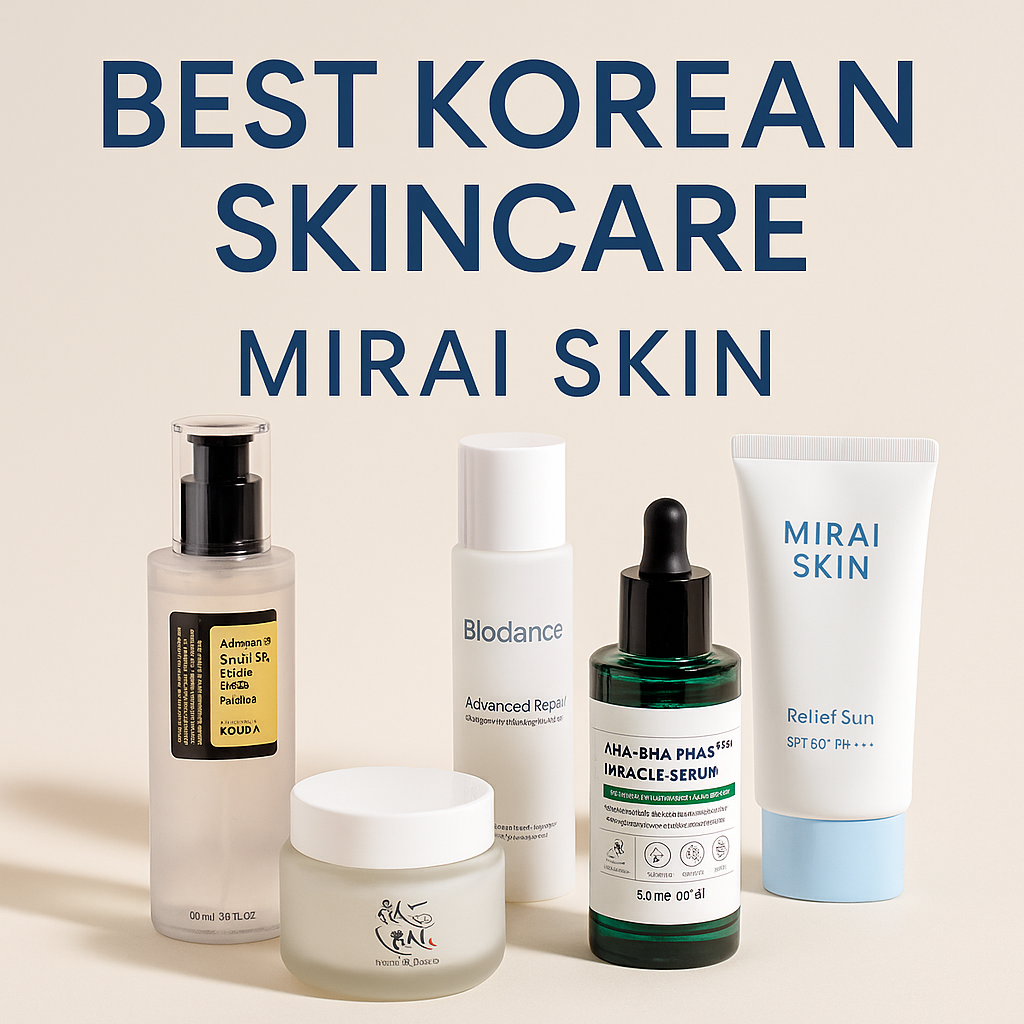
You're probably here because you've reached that familiar skincare crossroads. Your toner says AHA. Your serum says BHA. Another product promises a peel. Someone on social media says chemical exfoliation is the secret to smooth, clear, “glass skin” texture, while someone else warns that acids will destroy your barrier. If you already use ingredients like retinol, niacinamide, or snail mucin, the confusion gets worse fast.
That's why it helps to strip the topic back to basics. What is chemical exfoliation? It's a way to remove built-up dead skin cells without scrubbing your face with grit, brushes, or rough particles. Done well, it can support a brighter look, smoother texture, and clearer pores. Done carelessly, it can leave skin irritated and overworked.
For ingredient-savvy K-Beauty shoppers, this isn't just an academic question. It affects how you build a routine that works. Korean skincare often layers hydration, barrier support, and treatment steps together, so understanding where exfoliating acids fit matters more than memorizing a simple AHA versus BHA chart.
Your Guide to a Glowing Complexion
Chemical exfoliation sounds harsher than it usually is. The word chemical makes many people picture a strong in-office peel, visible flaking, or a week spent hiding indoors. In reality, the term covers a wide range of products, from gentle everyday formulas to professional-strength peels.
That range helps explain why the category has become so common. The global exfoliators market was valued at USD 6,854.6 million in 2023, and chemical exfoliators held about 70% of the market share, according to Grand View Research's exfoliators market analysis. That tells you something useful. People haven't moved toward chemical exfoliants because they sound more advanced. They've moved toward them because they fit modern skincare better than rough scrubs do.
Why so many routines now favor acids
Physical exfoliation relies on friction. You rub, the particles scrape, and some dead skin comes off. Sometimes that feels satisfying. It can also be uneven, especially if you press harder around the nose, chin, or any rough patch that already feels tempting to attack.
Chemical exfoliation works differently. It aims to loosen the dead cells that are ready to leave instead of manually forcing them off. That's why people often find it easier to use consistently within a multi-step routine.
Three acid families show up most often:
- AHAs for surface dullness, uneven tone, and rough texture
- BHAs for clogged pores and oilier skin
- PHAs for a gentler approach when your skin gets reactive easily
Chemical exfoliation isn't one product type. It's a category that includes toners, pads, serums, masks, and peels with very different strengths.
Why this matters in K-Beauty routines
K-Beauty doesn't usually chase the harshest treatment possible. It tends to favor steady results, comfort, and barrier-aware formulation. That makes chemical exfoliation especially relevant. A well-chosen acid can sit inside a routine built around hydration and repair, rather than replacing the rest of your skincare.
If you've ever wondered why one exfoliating toner makes skin look fresh and refined while another leaves it tight and angry, the answer usually isn't just the acid name. It's the formula, strength, timing, and what else you're layering with it.
Unlocking Smooth Skin The Science of Exfoliation
Your skin is always renewing itself. Fresh cells form lower down, move upward, then eventually become the dull, dry cells sitting on the surface. When that shedding process moves along smoothly, skin tends to look clearer and feel softer. When it doesn't, skin can start to look rough, tired, congested, or uneven.
That's where exfoliation comes in. It helps remove surface buildup so newer skin can show through more evenly. Chemical exfoliation does this in a controlled way, which is why it has a very different feel from using a scrub.

A simple way to think about it
Think of dead skin cells like tiny roof tiles. They're meant to come off gradually. Sometimes they cling longer than you want, especially if your skin is dry, congested, sun-stressed, or irritated from too many active ingredients. Chemical exfoliants help loosen the connections so those excess cells can shed more evenly.
In clinical dermatology, chemical exfoliation is defined as the application of a chemical substance to the skin to cause controlled epidermal injury and resurfacing, as described in the NCBI overview of chemical peels. The same review notes that glycolic acid is often used at 30% to 50% as a first-line peeling agent for superficial hyperpigmentation and mild photoaging.
That clinical language sounds intense, but the key word is controlled. A properly formulated exfoliant is not random damage. It's a deliberate, measured process designed to improve surface texture and appearance.
Why this often feels gentler than scrubbing
A scrub can only remove what friction reaches. It doesn't know the difference between flaky skin that's ready to come off and skin you're rubbing too aggressively. That's why people often end up overdoing the nose folds, corners of the mouth, or active breakouts.
Chemical exfoliants are more selective in how they work. They don't depend on your hand pressure or a rough grain size. That makes them easier to use evenly across the face.
If your skin looks smoother after exfoliation but feels raw, your routine is too aggressive. Good exfoliation should improve texture without leaving your barrier feeling stripped.
What readers often confuse
A lot of people hear “peel” and assume every chemical exfoliant will cause visible peeling. That's not true. Some do, especially stronger treatments. Many don't. A mild acid toner or serum may make skin feel a little smoother over time, with no dramatic shedding at all.
That's why asking “Will it peel?” is often less useful than asking two better questions:
- How strong is the formula?
- Is it designed for frequent home use or professional treatment?
How Chemical Exfoliants Work on a Deeper Level
Once you understand that acids loosen dead skin buildup, the next question is why one formula feels mild and another feels sharp. The answer isn't just the percentage on the label. pH, buffering capacity, and free acid value all shape how strong an exfoliant behaves on skin.
According to Dermascope's explanation of hydroxy acids, pH, and formulation strength, lower pH solutions are generally more effective but also more irritating. That's because the acid is better able to do its job of breaking apart the bonds that hold surface cells together.
The glue analogy is actually useful
Skin cells on the surface aren't just piled loosely on top of one another. They're held together by structures often described as the skin's “glue.” Chemical exfoliants help dissolve or weaken those connections, including desmosomes, so cells that are ready to shed can come away more easily.
That's why skin can feel smoother without being physically scrubbed. The exfoliant is doing chemistry, not abrasion.
Here's the practical version:
| Factor | What it affects | Why you care |
|---|---|---|
| pH | How active the acid is | Lower pH usually means stronger action and higher irritation risk |
| Buffering | How quickly and intensely the formula acts | More buffering can make a product feel gentler |
| Free acid value | How much acid is actually available to work | Two products with similar percentages can perform very differently |
Why percentage alone can mislead you
Many shoppers compare exfoliants by percentage and stop there. That's understandable, but it misses a big part of the story. A higher number doesn't automatically mean a better result for your skin. If the formula is harsh, badly timed in your routine, or paired with too many other actives, your skin may respond with redness, stinging, and more irritation than payoff.
Professional peels can go deeper because they use stronger conditions and more controlled application methods. Over-the-counter exfoliants are usually designed to be gentler and more sustainable for home use. This gentler design is generally beneficial.
Where long-term results come from
Superficial exfoliation improves how skin looks and feels at the top layer. Deeper peeling approaches can also trigger broader renewal responses. The same educational review notes that medium-depth chemical peels, when layered, can stimulate collagen renewal through cytokine activity.
That doesn't mean your at-home acid toner is doing the same job as a clinical peel. It means exfoliation exists on a spectrum. Home products are usually about gradual refinement. Professional treatments are a different category and need different expectations.
Your skin doesn't read ingredient marketing. It responds to the formula, the dose, the frequency, and everything else you put on top of it.
Meet the Acid Families AHAs BHAs and PHAs
If you want a quick mental model, think of exfoliating acids as different tools for different jobs. They all help remove excess dead skin, but they don't move through skin in the same way.

AHAs for surface dullness and uneven texture
Alpha hydroxy acids, or AHAs, are water-soluble acids that work mainly on the skin's surface. As explained in Minimalist's guide to AHA, BHA, and PHA exfoliation, AHAs like glycolic acid help normalize cell turnover.
Common examples include:
- Glycolic acid, often chosen for visible glow and smoother texture
- Lactic acid, a gentler AHA that also helps maintain hydration
AHAs are often a smart match for skin that looks dull, rough, or uneven rather than congested.
BHAs for pores and congestion
Beta hydroxy acids, or BHAs, are oil-soluble. That changes everything. Because they're lipophilic, BHAs can move into oilier areas and penetrate further into sebaceous structures.
The most familiar BHA is salicylic acid. It's often the go-to choice when blackheads, clogged pores, and excess oil are part of the picture.
A simple way to separate AHA and BHA is this:
- AHAs mostly target the surface
- BHAs are better when the problem sits inside the pore
PHAs for a gentler route
PHAs don't get as much attention, but they matter for people who want exfoliation without the sharper feel some acids bring. They're often described as gentler because their larger molecular structure tends to make them less aggressive on skin.
If your skin is reactive, easily flushed, or you've already overdone actives in the past, PHA-based products can be a useful middle ground. They won't feel identical to stronger acids, and that's the point.
A quick comparison
| Acid family | Solubility | Often chosen for | Common fit |
|---|---|---|---|
| AHA | Water-soluble | Dullness, roughness, uneven tone | Dry, normal, sun-stressed looking skin |
| BHA | Oil-soluble | Clogged pores, blackheads, visible congestion | Oily or acne-prone skin |
| PHA | Gentle surface exfoliation | Mild refinement with less intensity | Sensitive or easily irritated skin |
One more point matters in real routines. People often assume stronger sensation means better exfoliation. It doesn't. The right acid is the one that matches your skin concern and your tolerance, not the one that tingles the most.
Choosing the Right Exfoliant for Your Skin Type
The smartest exfoliant isn't the trendiest one. It's the one your skin can use consistently without turning every routine into damage control.

If your skin is dry or dehydration-prone
Dry skin often needs exfoliation, but in a way that doesn't worsen tightness. In that case, gentler AHAs are often easier to live with than stronger, sharper formulas. Lactic acid is a common starting point because it's associated with a softer approach and can fit well inside a hydrating routine.
Look for textures like essence-toners, light serums, or pads that don't leave your face squeaky or stripped. If your skin feels more comfortable after moisturizer than before it, you're heading in the right direction.
If your skin is oily or breakout-prone
When the main problem is clogged pores, recurring congestion, or that bumpy feeling around the T-zone, BHA usually makes more sense than AHA. Salicylic acid is often the first ingredient to consider because it can move into oily areas more effectively than water-soluble acids.
Product format matters in this context. A leave-on toner, serum, or spot-focused liquid can be more practical than a wash-off product if clogged pores are your priority.
If your skin is sensitive or reactive
Sensitive skin doesn't automatically mean “no acids ever.” It means your margin for error is smaller. If your skin stings easily, flushes fast, or is already irritated from retinoids, vitamin C, or over-cleansing, start with the gentlest option you can tolerate.
A few signs you should slow down before adding an exfoliant:
- Persistent stinging: even bland moisturizers burn
- Shiny but tight skin: the surface may look glossy yet feel uncomfortable
- Patchy redness: especially around the nose, mouth, or cheeks
- Routine overload: you're already using several active products at once
Barrier health comes first. Exfoliation works better on skin that can recover well than on skin that's already inflamed.
If your skin is combination
Combination skin often benefits from a flexible approach rather than one “perfect” acid. You may prefer BHA around the nose and chin, while a mild AHA works better on the outer cheeks where dullness or dryness shows up.
That's one reason K-Beauty routines can be useful here. You can tailor product placement instead of applying the same intensity everywhere.
If your skin is focused on glow and early aging signs
If your goal is smoother texture, fresher-looking tone, and a more polished surface, AHAs are often the first family to explore. Glycolic acid is the classic example, though some people prefer gentler formats over stronger acid percentages.
If you want to browse formulas by acid category, the Mirai Skin exfoliator collection organizes products around AHA, BHA, and PHA options, which can make comparison easier when you already know your skin concern.
Your Safe Exfoliation Routine A Step-by-Step Guide
A good exfoliation routine should feel boringly sustainable. If it feels dramatic, your skin may be paying for it later.

Start with less than you think you need
For over-the-counter exfoliants, the concentration, the degree of acid neutralization, and the rest of the formula all influence both outcome and irritation potential, as noted earlier in the Dermascope discussion of formulation factors. That's why copying someone else's frequency rarely works.
A simple starter framework works well:
- Patch test first. Try the product on a small area before using it across your face.
- Use it on clean skin. Exfoliants usually go after cleansing.
- Keep the rest of the routine calm. Follow with hydrating, non-irritating layers.
- Watch your skin for several days. Irritation can be delayed.
Know where it fits in a K-Beauty routine
Most leave-on chemical exfoliants go on after cleansing and before heavier hydrating products. If you use an exfoliating toner, that usually comes before essence, serum, ampoule, and moisturizer.
A simple example routine might look like this:
| Step | Example role |
|---|---|
| Cleanser | Remove sunscreen, oil, and daily buildup |
| Chemical exfoliant | AHA, BHA, or PHA toner, pad, or serum |
| Hydrating layer | Essence, hydrating toner, or soothing serum |
| Moisturizer | Support comfort and barrier function |
| Morning sunscreen | Protect freshly exfoliated skin |
Be careful with layering
Many ingredient lovers get into trouble here. The problem usually isn't one acid product by itself. It's the acid plus retinoid plus another exfoliating toner plus a strong vitamin C serum all in the same window.
A few practical pairing rules help:
- Snail mucin and acids usually work well together. The acid does the exfoliating, and snail mucin can sit later in the routine as a cushioning, soothing step.
- Retinoids and acids can be too much in the same routine for many people, especially beginners or anyone with a reactive barrier.
- Multiple exfoliants don't automatically give better results. They often just stack irritation.
- Hydrating toners can help balance the feel of an exfoliation night, especially if your routine tends to run active-heavy.
Here's a helpful visual if you want a routine example in motion.
Don't ignore the warning signs
If your skin starts burning when you apply bland moisturizer, gets unusually shiny and tight, or develops scattered red patches, stop chasing “purging” as an explanation for everything. You may be over-exfoliating.
Pull back to the basics:
- Pause the acid
- Drop other strong actives for a bit
- Focus on cleanser, moisturizer, and sunscreen
- Restart only when skin feels calm again
Sunscreen is not optional
Exfoliation removes part of the surface buildup that had been sitting on skin. That can leave skin more vulnerable to sun exposure. If you use chemical exfoliants and skip sunscreen, you undercut your own results and increase the chance of irritation or visible discoloration.
Use your exfoliant at night if that feels easier, but protect your skin every morning.
Common Myths and K-Beauty FAQs
A lot of bad exfoliation advice survives because it sounds tough and efficient. Skin usually responds better to patience.
Myth it has to sting to work
No. A strong burning sensation is not proof of effectiveness. Some formulas tingle a little, some don't, and some irritate your skin. Judge an exfoliant by the results and your skin's recovery, not by how dramatic it feels.
Myth physical scrubs are stronger
They can feel stronger because you can feel the friction right away. That doesn't mean they're more precise. Chemical exfoliants often give a more even result because they don't depend on how hard you scrub.
Are K-Beauty exfoliants less effective
Not necessarily. Many Korean formulations lean toward gentler, repeatable use rather than aggressive one-night transformation. For many people, that approach is easier to maintain and easier on the barrier.
Can I use an AHA toner with snail mucin
Yes, in many routines that pairing makes sense. Apply the exfoliant first, then use snail mucin afterward if your skin likes it. The key is to watch total routine intensity, not just whether two products can technically coexist.
Can I exfoliate if my skin barrier is compromised
It's usually smarter to repair first, exfoliate later. If your skin is already irritated, adding acid often creates more noise and makes it harder to tell what's helping.
The goal isn't to exfoliate as much as possible. The goal is to exfoliate as much as your skin can handle well.
How do I know I chose the right acid
The right choice usually looks boring in the best way. Your skin feels smoother, looks clearer or brighter over time, and doesn't become persistently red, tight, or stingy. That's what you want from chemical exfoliation. Not punishment. Progress.
If you're building a routine around authentic Korean skincare, Mirai skin offers a wide range of K-Beauty products from verified Korean distributors, including exfoliating options that fit AHA, BHA, and PHA routines. If you already know your skin type and goals, browsing by ingredient category can make it easier to choose a formula that fits the rest of your routine without overcomplicating it.
To choose between the acid families, this AHA vs BHA vs PHA breakdown maps each one to a skin type.