Navigating facial redness can feel like a constant battle, but the secret to calmer skin isn't about fighting it-it's about understanding and nurturing it. The K-Beauty philosophy teaches that achieving a calm, even-toned complexion starts with a routine that focuses on soothing inflammation, rebuilding the skin's protective barrier, and avoiding common irritants. This is where gentle, targeted Korean skincare ingredients and consistent, mindful care truly excel.
This guide will equip you with the knowledge to build a routine that not only reduces redness but fosters a healthier, more resilient complexion.
Your Blueprint for Calm, Balanced Skin
Facial redness is more than a cosmetic concern; it's a clear signal from your skin that its equilibrium is disrupted. This inflammation can arise from a multitude of factors, each requiring a thoughtful, gentle approach.
Instead of resorting to quick-fix solutions that often exacerbate the issue, the Korean skincare philosophy champions a different strategy: nurture the skin barrier first. This is about building resilience from the inside out-not attacking the redness, but coaxing your skin back to a peaceful, balanced state.
Common Culprits Behind Facial Redness
Understanding the 'why' behind your redness is the foundational step toward finding lasting relief. While every individual's skin is unique, most flare-ups can be traced back to one of these common triggers:
- A Compromised Skin Barrier: This is the primary cause. When the skin's outermost defensive layer is damaged, it can no longer retain moisture effectively or shield against external irritants. The result? Chronic sensitivity and persistent redness.
- Environmental Stressors: Factors like UV radiation, pollution, and even harsh wind can provoke an inflammatory response, leaving your skin looking flushed and feeling raw.
- Underlying Skin Conditions: For many, persistent redness is a symptom of a condition like rosacea. It's estimated that rosacea affects approximately 5.46% of the global adult population, making it a daily reality for millions. You can learn more about the global impact of rosacea on skincare needs and the critical need for gentle solutions.
- Over-Exfoliation or Harsh Products: It's easy to overdo it with skincare. Using aggressive physical scrubs or potent active ingredients too frequently can strip the skin, causing immediate irritation and predisposing it to long-term sensitivity.
By focusing on gentle care and barrier repair, you create a foundation for a calm, balanced complexion. This guide will walk you through the essential steps to build a sustainable routine that soothes irritation and restores your skin's health.
Navigating the world of calming skincare can be complex, especially with so much conflicting advice available. To simplify, here’s a quick comparison of common mistakes versus the strategic K-Beauty approach.
Quick Guide to Calming Redness: K-Beauty Style
| Common Mistake | K-Beauty Solution | Key Principle |
|---|---|---|
| Using harsh scrubs & cleansers. | Opting for a gentle, low-pH cleanser and non-abrasive exfoliants. | Preserve the Barrier. Harsh products strip natural oils and weaken defenses. |
| Layering too many strong actives. | Focusing on hydrating and soothing layers first (toners, essences). | Soothe, Then Treat. Calm inflammation before introducing potent ingredients. |
| Skipping moisturizer to "let skin breathe." | Applying a barrier-repairing cream with ceramides or panthenol. | Hydrate & Protect. A healthy barrier needs both water and lipids to function. |
| Relying on a single "miracle" ingredient. | Using a combination of calming botanicals like Centella Asiatica & Mugwort. | Holistic Healing. Different ingredients address various aspects of inflammation. |
This table highlights the core philosophy: work with your skin, not against it. By prioritizing hydration and gentle support, you provide your skin with the tools it needs to heal itself and maintain a calm state long-term.
The Art of the Gentle Cleanse
Your cleansing ritual can either set the stage for a calm, balanced day or trigger an immediate flare-up. For those managing redness, cleansing is not merely about purification-it's a strategic measure to protect the skin's delicate barrier.
This is a cornerstone of any K-Beauty routine designed to reduce sensitivity. Many popular cleansers, particularly high-foaming variants, possess a high pH that strips your skin of its natural, protective oils. This disrupts the acid mantle, your skin's primary line of defense, leaving it vulnerable to irritation and, consequently, increased redness.
The objective is to remove impurities without inflicting collateral damage.
Rethinking Your Cleansing Method
The secret lies in the formula and technique. Ditch harsh, stripping cleansers in favor of gentle, low-pH options that respect your skin's natural state.
- Hydrating Cleansing Balms or Oils: These are the gold standard for the first step in a K-Beauty double cleanse. They effectively dissolve makeup, SPF, and excess sebum without requiring harsh rubbing.
- Milky or Gel Cleansers: For your second cleanse (or your sole morning cleanse), a creamy, non-foaming formula is ideal. These cleansers purify the skin while often incorporating soothing ingredients to leave it feeling soft, not taut.
This two-step method, known as double cleansing, is highly effective for sensitive skin. It ensures a thorough cleanse with minimal friction, preventing the physical irritation that can lead to flushing. You’re not just washing your face; you're performing a calming ritual.
Your cleanser's function is to clean your skin, not strip it. If your face feels tight, squeaky, or uncomfortable post-cleansing, your product is too harsh. It's likely compromising your skin barrier, a major contributor to facial redness.
Small Details That Make a Big Difference
Beyond product selection, minor adjustments to your technique can transform this daily task into a soothing practice. For managing redness, these details are non-negotiable.
First, always use lukewarm water. Hot water is a significant trigger, as it can dilate blood vessels and strip essential lipids from your skin, exacerbating redness. Conversely, ice-cold water can be a shock to an already sensitive complexion.
Finally, avoid rubbing your face with a towel. After rinsing, gently pat your skin dry with a soft, clean towel. This simple change minimizes physical aggravation and ensures your skin remains calm, perfectly prepped for the soothing serums and moisturizers to follow. Mastering the gentle cleanse is the most critical first step toward a less reactive, visibly calmer complexion.
Key Ingredients for Soothing Redness
If you've ever felt overwhelmed by skincare ingredients, you're not alone. When it comes to calming facial redness, however, understanding a few key actives can be transformative. This is where Korean skincare excels-it leverages potent botanicals that don't just mask the problem but actively soothe inflammation and promote skin healing.
Topical treatments are where the real innovation is happening. The global market for redness-relief skincare is projected to grow by USD 2.65 billion between 2030 and 2035. What’s driving this growth? Powerful, effective actives like Centella asiatica, azelaic acid, and niacinamide-all staples in K-Beauty. You can delve deeper into the growth of the facial erythema treatment market to see how these ingredients are leading the industry.
But before you can apply these incredible ingredients, you must properly prep your skin. A gentle cleanse is non-negotiable.
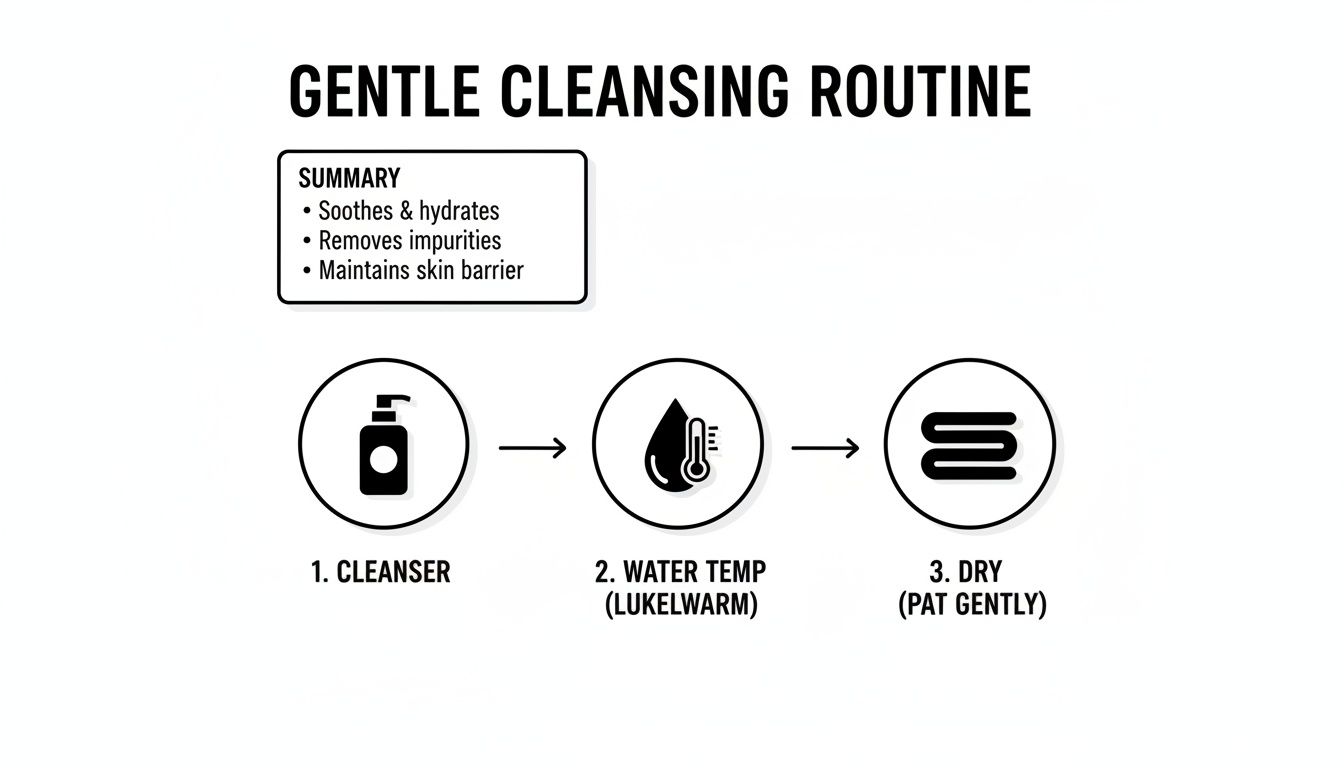
Starting with a gentle cleanse ensures your skin barrier is calm and receptive to the beneficial ingredients that follow, rather than being stripped and irritated from the outset.
The Power Trio for Calm Skin
When scanning an ingredient list for redness-reducing solutions, these are the names you want to see. They are legendary in K-Beauty for one simple reason: they deliver results.
- Centella Asiatica (Cica): Also known as "Tiger Grass," Cica is the ultimate hero for inflamed skin. It’s rich in madecassoside, a compound renowned for its ability to soothe irritation and support the skin's natural healing process. It's a lifesaver for skin that’s sensitive, reactive, or prone to breakouts.
- Artemisia (Mugwort): A treasured ingredient in traditional Korean remedies, Artemisia is an antioxidant powerhouse with exceptional anti-inflammatory properties. It’s particularly effective at reducing the sensation of heat in the skin, making it perfect for calming angry, flushed moments.
- Niacinamide (Vitamin B3): This versatile ingredient is essential for strengthening the skin barrier. It stimulates the production of ceramides-the building blocks of a healthy barrier-making your skin less susceptible to redness triggers. It is also excellent for fading the post-inflammatory erythema (red marks) left behind by acne.
To make product selection easier, here's a quick reference guide to help you identify the best ingredients for your redness concerns and the product types where they are most effective.
Your K-Beauty Ingredient Cheatsheet for Redness
| Ingredient | Primary Benefit for Redness | Best Found In (Product Type) |
|---|---|---|
| Centella Asiatica (Cica) | Soothes immediate irritation and supports skin repair. | Serums, spot treatments, balms, and barrier creams. |
| Artemisia (Mugwort) | Reduces heat and calms flushed, angry skin with antioxidants. | Essences, masks (especially clay or sheet masks), and toners. |
| Niacinamide | Strengthens the skin barrier and fades post-acne redness. | Serums, moisturizers, and toners. |
| Azelaic Acid | Gently exfoliates and reduces rosacea-related bumps and redness. | Targeted serums and specialized treatment creams. |
| Snail Mucin | Hydrates, repairs, and soothes with a unique blend of nutrients. | Essences, serums, and all-in-one creams. |
Consider this table your strategic shopping list. When you see these ingredients in the right product formats, you know you're on the correct path to building a routine that actively calms and fortifies your skin.
Advanced Actives for Targeted Relief
Once your foundational routine is established, a few other ingredients can provide next-level results. These are excellent for addressing specific types of redness, such as that from rosacea or stubborn post-breakout marks.
First is Azelaic Acid. It's a gentle exfoliant celebrated for its potent anti-inflammatory and anti-bacterial properties. This makes it a go-to for individuals with rosacea-prone skin, as it helps to calm bumps and persistent redness without the irritation often associated with other acids.
Then there's the iconic Snail Mucin. While it may sound unconventional, this K-Beauty superstar is packed with beneficial components like glycoproteins and hyaluronic acid. It’s a fantastic all-in-one ingredient that hydrates, repairs the barrier, and soothes skin simultaneously.
By learning to identify these key ingredients, you are no longer guessing. You are making informed choices, selecting products specifically formulated to soothe, repair, and build your skin’s resilience. It's the difference between hoping for results and actively taking control of your skin's health.
Fortify Your Skin with Smart Hydration
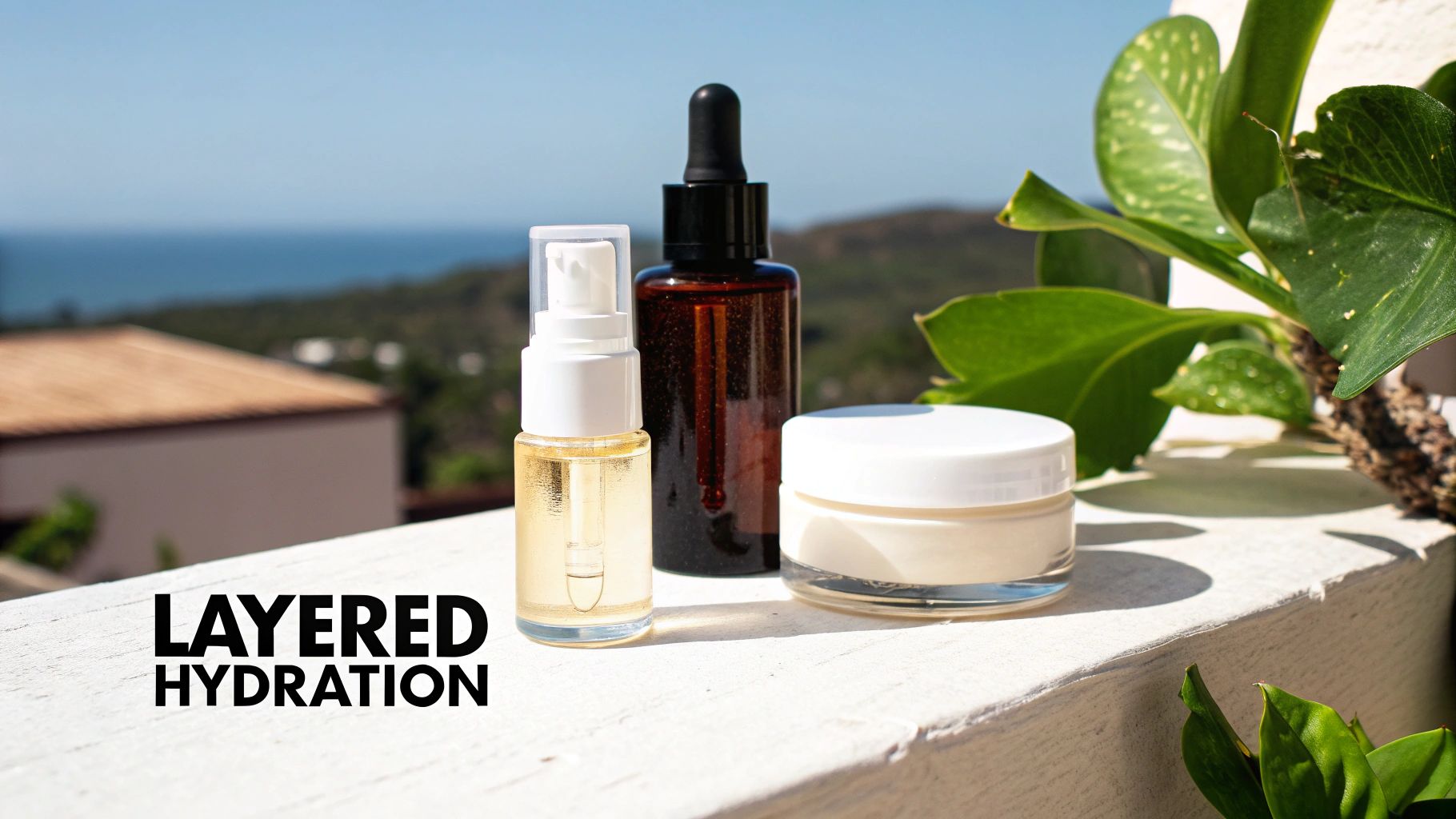
A robust, healthy skin barrier is your ultimate defense against facial redness. Think of it as a brick-and-mortar wall: your skin cells are the bricks, and lipids (healthy fats) are the mortar holding them together.
When this mortar weakens, irritants can penetrate, moisture escapes, and your skin signals its distress with inflammation and redness. It's a direct cause-and-effect relationship.
To rebuild this wall, your skin requires two distinct components: hydration (water) and moisturization (lipids/oils). Many use these terms interchangeably, but understanding their difference is a game-changer for calming reactive skin. Hydration plumps your skin cells from within, while moisturization seals in that water and reinforces the barrier.
This is precisely why the Korean skincare layering method is so effective for red, sensitive skin. It’s a strategic approach: deliver water-based hydration first, then lock it in with an intelligent moisturizer.
The K-Beauty Layering Technique for Redness
The purpose of layering is to drench your skin in lightweight, watery layers of hydration before applying a sealant. This method prevents the heavy, occlusive feeling a single thick cream can sometimes impart, while still providing everything your skin needs to remain calm.
- Start with a watery essence or toner. Immediately after cleansing, while your skin is still damp, pat on a hydrating toner or essence. This delivers an initial surge of hydration deep into the skin, enhancing its receptiveness to subsequent products.
- Apply a targeted hydrating serum. This is where you introduce potent humectants. Look for ingredients like Hyaluronic Acid or Beta-Glucan to draw more moisture into the skin.
- Lock it in with a barrier-supporting moisturizer. This is the final, non-negotiable step. It prevents transepidermal water loss (TEWL) and provides the lipids your barrier craves.
This method ensures your skin is deeply hydrated from within and protected from external aggressors-a powerful combination for reducing chronic redness.
Choosing Your Barrier-Building Champions
When seeking to reduce redness, learning to scan ingredient lists for barrier-repairing heroes is crucial. These are the ingredients that provide the "mortar" for your skin's defensive wall.
- Ceramides: These lipids are a natural component of your skin barrier. Applying them topically is like patching holes in the wall, directly fortifying your skin’s structure and making it less sensitive over time.
- Panthenol (Pro-Vitamin B5): This is both a humectant and an emollient. It attracts water and helps to heal the skin barrier. It’s incredibly soothing and excellent at calming visible irritation.
- Beta-Glucan: Often derived from oats or mushrooms, this ingredient is a hydration powerhouse-even more potent than hyaluronic acid. It also possesses incredible antioxidant properties that help soothe and calm stressed skin.
Think of your routine this way: Hydrating essences and serums are like giving your skin a large drink of water. Your ceramide-rich moisturizer is the lid that prevents that water from evaporating. You absolutely need both to build a resilient, less reactive complexion.
Finally, always listen to your skin when choosing a moisturizer's texture. If you have oily or combination skin, or live in a humid climate, a lightweight gel-cream may be ideal. For drier or more compromised skin, a richer, nourishing cream will provide the necessary comfort and protection. Matching the texture to your skin's needs is the final piece of the puzzle.
Lifestyle Habits That Influence Skin Redness
While a diligent skincare routine is your first line of defense, internal factors often manifest on the skin's surface. Certain lifestyle habits can trigger inflammation and dilate blood vessels, increasing their visibility and contributing to a persistently flushed appearance.
Identifying these triggers is key to managing redness holistically. This isn't about imposing strict restrictions, but about cultivating greater awareness. When you know your personal triggers, you can make small, impactful adjustments that significantly support your topical skincare efforts.
Common Culprits and Calmer Alternatives
Many everyday habits can amplify unwanted redness. A great starting point is to simply observe how your skin reacts after certain meals, drinks, or activities. This self-awareness can provide powerful clues on how to reduce redness on your face.
Some of the most common offenders include:
- Spicy Foods: The heat from capsaicin, the compound in chili peppers, can cause blood vessels to expand, leading to a temporary but noticeable flush.
- Alcohol: This is a major trigger. Red wine, in particular, is a well-known vasodilator that can cause redness and exacerbate conditions like rosacea.
- Extreme Temperatures: Stepping out of a hot shower or into cold wind can cause a rapid rush of blood to the skin's surface, resulting in redness.
You don't have to eliminate your favorites entirely. Instead of a fiery curry, consider a flavorful dish seasoned with anti-inflammatory heroes like turmeric and ginger. Swapping a scalding shower for a lukewarm one is another simple change that helps protect your skin’s delicate balance.
The link between lifestyle and skin health is undeniable. By managing internal inflammation through mindful choices, you reinforce the efficacy of your skincare products. It's about creating a comprehensive strategy for calm, resilient skin.
Stress, Sleep, and Your Skin
Never underestimate the impact of stress and poor sleep. When you're stressed, your body produces cortisol, a hormone that can disrupt your skin barrier and trigger an inflammatory response.
Furthermore, insufficient quality sleep deprives your skin of its crucial overnight repair and regeneration time, leaving it weaker and more vulnerable to irritation.
This internal stress is a massive driver behind the growing demand for effective treatments. The global market for treating facial redness was valued at approximately USD 214.95 million in 2024 and is projected to reach USD 369.36 million by 2030. With an estimated 16 million Americans living with rosacea alone, the need for both cosmetic and lifestyle solutions is massive. You can explore more data on the global demand for redness treatments to see just how common this concern is.
Incorporating stress-management techniques-such as meditation, quiet walks, or gentle exercise-can work wonders. Aiming for 7-9 hours of quality sleep per night is not just beneficial for your energy levels; it can make a visible difference in reducing chronic redness.
Your Top Questions About Facial Redness, Answered
When you're trying to calm sensitive, red skin, a lot of questions pop up. It’s normal to wonder about timelines, which ingredients are safe, and what really makes the biggest difference. Let's clarify some of the most common concerns.
How Long Until I See Less Redness?
Patience is perhaps the most challenging, yet essential, part of the process. While some soothing ingredients like Centella Asiatica can offer immediate relief, achieving a true, lasting reduction in chronic redness takes time.
If you consistently follow a K-Beauty routine focused on repairing your skin barrier, you should begin to see noticeable, sustained improvement within 4 to 8 weeks. The goal is not a quick, harsh fix, but a gentle, progressive restoration of your skin's health. Taking weekly photos in consistent lighting can help you track your progress and stay motivated.
Can I Use Actives Like Retinol with Red Skin?
Yes, but it requires a strategic and patient approach. The cardinal rule is to strengthen your skin barrier first. Before incorporating any potent active, dedicate several weeks to a routine of calming, hydrating, and repairing ingredients until your skin feels comfortable and resilient.
Once your barrier is fortified, you can slowly introduce a gentle active. Here’s how to do it correctly:
- Choose a gentle formulation. Look for options like an encapsulated Retinol or a non-acidic Vitamin C derivative (e.g., Sodium Ascorbyl Phosphate) that are known to be less irritating.
- Start slow. Introduce the active just once or twice a week, at night only.
- Use the "sandwich" method. Apply a layer of moisturizer, then the active, then another layer of moisturizer. This creates a buffer that reduces potential irritation while still allowing the ingredient to be effective.
- Introduce one new active at a time. Never add more than one new active to your routine simultaneously. Allow your skin to fully acclimate before considering another.
This careful methodology allows you to reap the benefits of powerful ingredients without compromising the progress you've made in calming your complexion.
Is All Facial Redness Rosacea?
No, definitely not. While rosacea is a common cause, redness can stem from various other factors. It could be simple skin sensitivity, a damaged barrier from over-exfoliation, or contact dermatitis from an allergic reaction to a product.
It could also be post-inflammatory erythema (PIE)-the persistent red or pink marks that remain after an acne lesion has healed.
Rosacea is a specific medical condition characterized by other symptoms, such as persistent flushing, visible blood vessels (telangiectasias), and sometimes papules or pustules. If your redness is severe, persistent, or accompanied by burning and stinging, it is crucial to consult a dermatologist for an accurate diagnosis.
What's the Single Most Important Product for Preventing Redness?
If you incorporate only one product into your daily routine, make it sunscreen. A broad-spectrum sunscreen with SPF 30 or higher, applied generously every morning, is your most critical defense against redness. This is non-negotiable.
UV exposure is a primary trigger for inflammation. It damages the skin barrier and can cause significant flare-ups in conditions like rosacea. Korean sunscreens are often a game-changer for sensitive skin, utilizing gentle mineral filters like Zinc Oxide or advanced chemical filters that feel weightless and non-irritating. Think of it as a daily shield that protects your skin and all the progress you’ve achieved.
At Mirai Skin, we believe that understanding your skin is the first step toward lasting calm. Our curated collection of authentic Korean skincare is handpicked to soothe, repair, and strengthen even the most sensitive complexions. Discover gentle yet powerful solutions to begin your journey to balanced, healthy skin today.
Explore our collection of calming K-Beauty essentials at mirai-skin.com