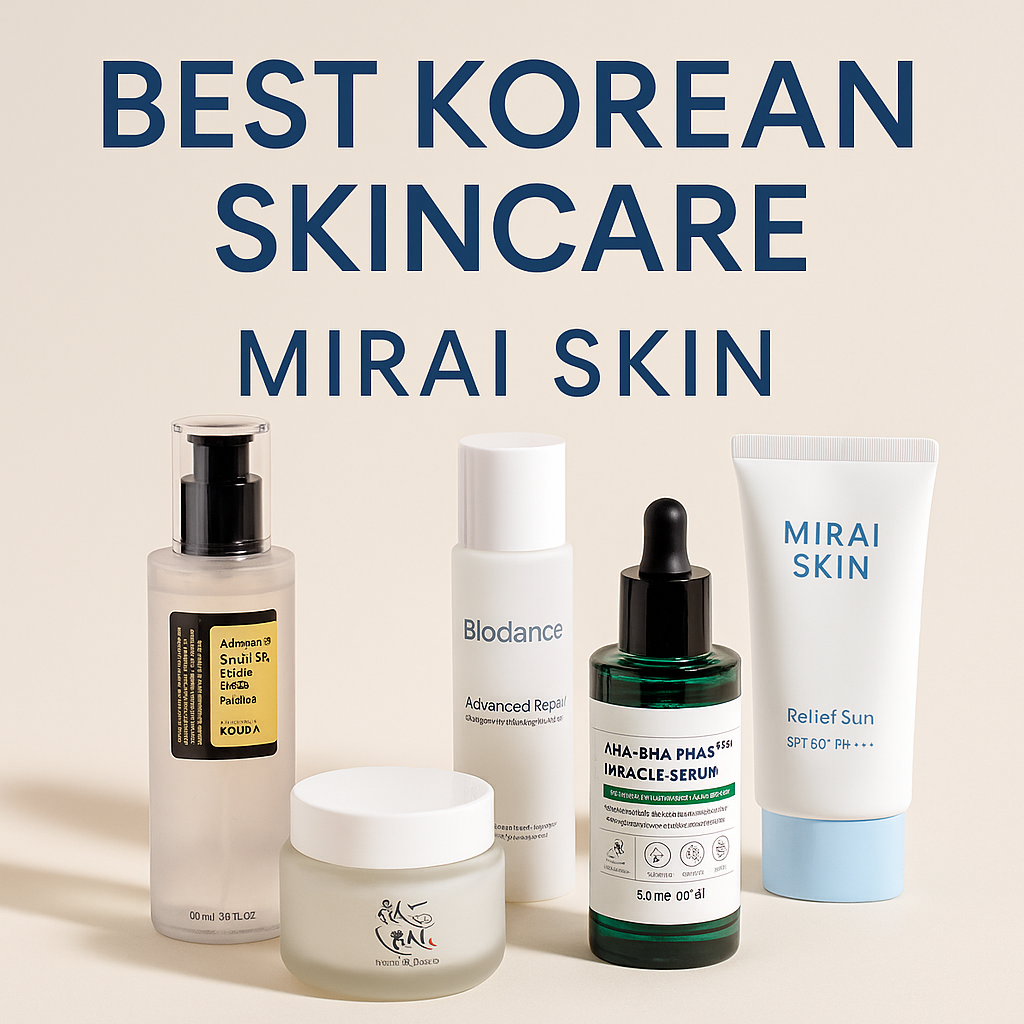
To restore dehydrated skin, the K-Beauty philosophy is clear: replenish water content and lock it in. This involves a strategic shift from harsh, stripping products to a multi-layered routine. By using gentle cleansers, layering hydrating formulas rich in humectants like hyaluronic acid and snail mucin, and sealing it all with a barrier-supporting moisturizer, you can effectively quench your skin’s thirst and rebuild its resilience.
Is Your Skin Dehydrated or Just Dry?
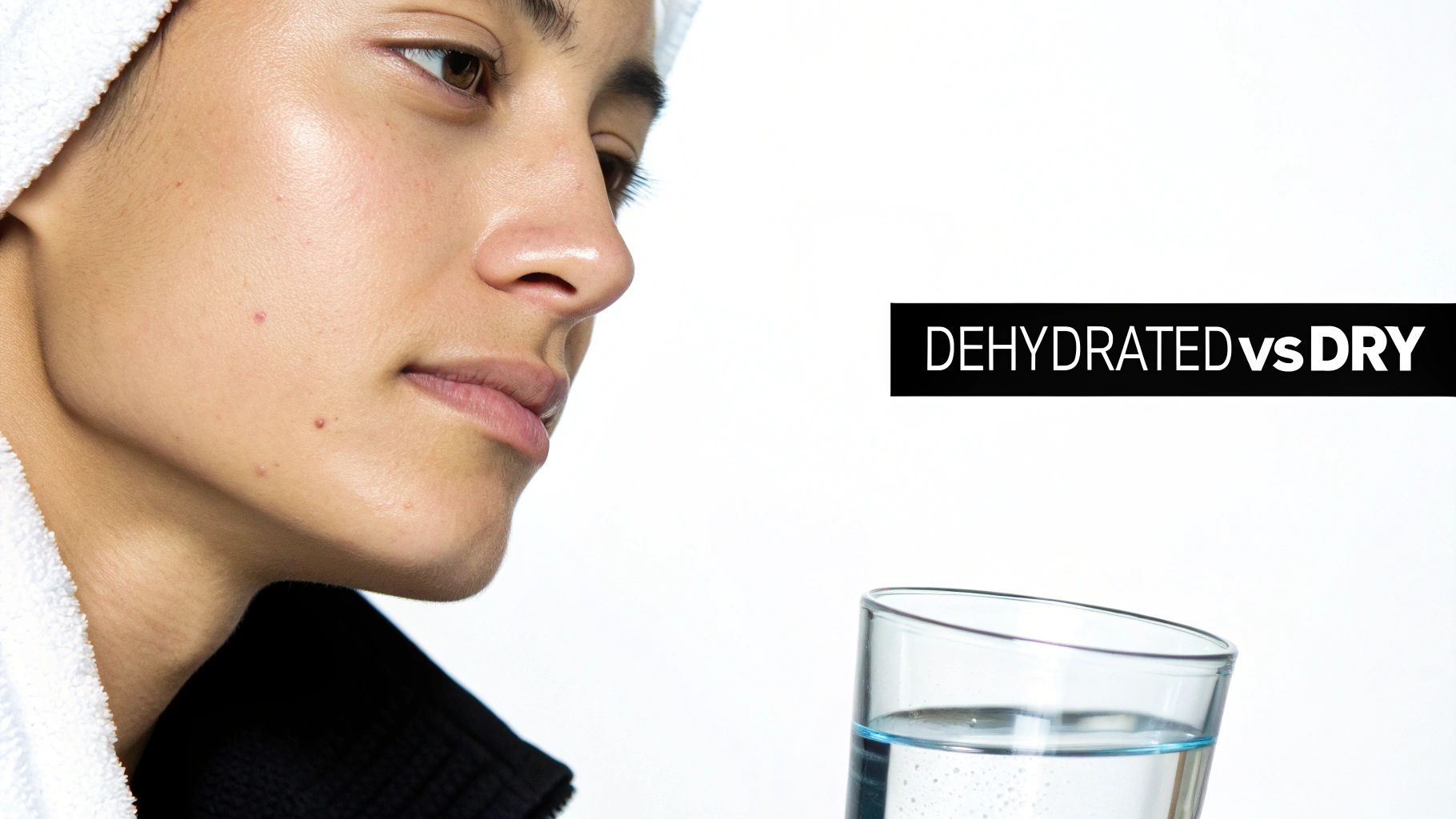
Let's clear up one of the biggest misconceptions in skincare. Many use "dry" and "dehydrated" interchangeably, but they are fundamentally different concerns. Understanding this distinction is the critical first step toward giving your skin what it truly needs to thrive.
Dry skin is a skin type you are born with. It is characterized by an insufficient production of natural oils (sebum), which can leave your skin feeling consistently rough, flaky, or tight year-round. It requires consistent management with oil-rich products.
Dehydrated skin, on the other hand, is a temporary skin condition. It’s caused by a lack of water, not oil. This is a crucial difference because it means any skin type-even oily and combination skin-can become dehydrated.
Dehydrated Skin vs Dry Skin at a Glance
Sometimes, a side-by-side comparison makes the differences clear. Here’s a quick guide to help you decode your skin's signals and identify the true cause of your concerns.
| Characteristic | Dehydrated Skin (A Condition) | Dry Skin (A Type) |
|---|---|---|
| Root Cause | Lack of water | Lack of natural oils (sebum) |
| How It Feels | Tight, sometimes oily and flaky simultaneously | Consistently rough, scaly, or itchy |
| How It Looks | Dull, fatigued, shows fine lines when pinched | May look flaky, red, or have a rough texture |
| Can It Change? | Yes, it's temporary and treatable with targeted hydration | No, it's your natural skin type and requires lifelong management |
| Who Gets It? | Any skin type, including oily and acne-prone | Genetically determined; a consistent state |
Understanding this table can be a lightbulb moment for K-Beauty enthusiasts. If your skin feels tight yet produces oil or breaks out, you are almost certainly dealing with dehydration, not true dryness.
How to Spot the Signs of Dehydration
You might be dealing with dehydrated skin if you notice these tell-tale signs, which often appear suddenly due to changes in your environment, diet, or skincare routine.
- Uncomfortable Tightness: Your skin feels stretched and tight, especially after cleansing, even if it looks oily on the surface.
- Increased Sensitivity: Your skin becomes more reactive, showing redness or irritation to products that never used to cause issues. A weak moisture barrier cannot effectively defend against external irritants.
- A Dull, Fatigued Complexion: Without sufficient water, your skin's natural desquamation (cell turnover) process slows down, leading to a buildup of dead cells that obscure your natural radiance.
- Exaggerated Fine Lines: Gently pinch the skin on your cheek. A network of fine, triangular lines indicates dehydration lines, not permanent wrinkles.
The core issue with dehydrated skin is a compromised barrier leading to excessive transepidermal water loss (TEWL). In simple terms, the water in your skin is evaporating too quickly, leaving it parched from the inside out.
Savvy consumers are catching on. The global market for dehydrated skin products was valued at USD 6,748.7 million and is projected to reach USD 15,346.5 million by 2034. As reported in skincare industry trends on einpresswire.com, this growth signifies a major shift toward understanding and treating the root cause of skin thirst. Once you've identified that your skin is thirsty, you’re ready to build the effective K-Beauty routine we'll dive into next.
The Hydration Heroes Inside Your K-Beauty Products
To effectively treat dehydrated skin, you must understand the language of ingredient lists. Korean Skincare excels at this, masterfully formulating products with a trifecta of ingredient categories that work in synergy to restore your skin's moisture barrier.
Think of it as a three-stage rescue mission: first, ingredients to draw water into the skin (humectants); second, ingredients to smooth the surface (emollients); and finally, ingredients to seal it all in (occlusives). Let's meet these key players.
Stage One: Humectants (The Water Magnets)
Humectants are your first line of defense. These ingredients are hygroscopic, meaning they attract and bind water molecules like tiny magnets. They pull moisture from the deeper layers of your skin and the atmosphere, drawing it into the stratum corneum-your skin’s outermost layer. This foundational step directly tackles the core issue of dehydrated skin: a lack of water.
Think of a dry sponge: it's brittle and stiff. But when you add water, it becomes plump and flexible. Humectants do the same for your skin cells.
You’ll find these hydration champions in K-Beauty essences, toners, and serums:
- Hyaluronic Acid: A celebrated humectant that can hold up to 1,000 times its weight in water. It delivers an immediate plumping effect, visibly smoothing fine dehydration lines.
- Snail Mucin: A K-Beauty icon for a reason. Beyond its powerful hydrating properties, snail mucin is rich in glycoproteins and glycolic acid that aid in repairing the skin barrier and promoting cell regeneration.
- Glycerin: A classic, highly effective humectant. It’s a true workhorse that helps the skin retain moisture and protects it from irritation.
- Beta-Glucan: Derived from oats or mushrooms, this ingredient is a potent hydrator-some studies suggest it’s even more effective than hyaluronic acid-and offers remarkable skin-soothing benefits.
Using a product rich in humectants is like giving your skin a large glass of water. It's the foundational step that directly tackles the core issue of dehydrated skin: a lack of water.
Stage Two: Emollients (The Barrier Repair Crew)
Once you’ve drawn water into the skin, it's time to repair the surface. Dehydrated skin often presents with a compromised, rough, or flaky barrier. Emollients are lipids and oils that fill the gaps between skin cells, restoring a smooth and supple texture.
Imagine your skin's surface is a brick wall: the cells are the bricks, and lipids are the mortar. When skin is dehydrated, this mortar crumbles. Emollients act like fresh mortar, smoothing over cracks and reinforcing the structure.
These key emollients help restore a healthy, smooth texture:
- Ceramides: These lipids are naturally present in your skin, making up over 50% of its composition. Topically applying ceramides directly reinforces your skin's natural barrier, enhancing its ability to lock in moisture and defend against irritants.
- Squalane: A lightweight, non-comedogenic oil that mimics your skin's natural sebum. It absorbs beautifully to soften and moisturize without feeling greasy, making it an excellent choice even for oily, dehydrated skin types.
Stage Three: Occlusives (The Protective Seal)
This final step is non-negotiable for treating dehydration. Without a protective top layer, the hydration you've added will evaporate into the air via Transepidermal Water Loss (TEWL). Occlusives form a physical barrier on the skin's surface to dramatically slow this process. This is why your final moisturizing step is so critical for conquering dehydration.
Look for these powerful sealants in your moisturizers and sleeping masks:
- Shea Butter: A rich butter loaded with fatty acids and vitamins. It creates a soft, breathable film that seals in moisture while deeply conditioning the skin.
- Petrolatum: The gold standard of occlusives, proven to prevent up to 99% of TEWL. Its ability to repair a severely compromised barrier is unparalleled.
- Dimethicone: A type of silicone that forms a silky, protective layer on the skin. It locks in hydration and gives products a smooth, elegant finish without feeling heavy or greasy.
By understanding these three ingredient groups, you can analyze any product label and know precisely how it will quench your skin's thirst. The best Korean skincare for dehydration doesn't just feature one of these-it artfully combines all three for a complete, barrier-repairing solution.
Building Your Morning K-Beauty Hydration Routine
Your morning routine establishes a protective, water-rich shield that defends against environmental stressors and prevents moisture loss throughout the day. The K-Beauty approach achieves this through strategic, lightweight layers that hydrate deeply without feeling heavy, ensuring your skin remains plump and comfortable from dawn till dusk.
Think of it as prepping your skin for a marathon. Each step builds a reservoir of hydration that keeps that dreaded afternoon tightness at bay.
Start with a Gentle Cleanse or Water Rinse
The first principle of managing dehydrated skin is to protect your existing moisture. A harsh, stripping cleanser in the morning can undo all the repair work your skin accomplished overnight. For many, a simple splash of lukewarm water is sufficient to refresh the skin without disturbing its delicate acid mantle.
If you have oily skin or prefer a more thorough cleanse, opt for a low-pH cleanser. These gentle formulas effectively remove excess sebum and residual product without causing that squeaky-clean, tight feeling that signals a compromised barrier.
Master the Art of Layering Toners and Essences
This is where the magic of K-Beauty truly shines. Instead of applying a single thick cream, the philosophy is to build up thin, watery layers of hydration. This allows your skin to absorb moisture more effectively, leading to a plumper, bouncier texture. A high-quality hydrating toner or essence-packed with humectants like hyaluronic acid, beta-glucan, or snail mucin-is your most valuable tool here.
A popular technique for this is the ‘7 Skin Method’. While applying seven layers might be excessive for a daily routine, the principle is key.
- After cleansing, pour a small amount of your hydrating toner into your palms.
- Gently pat it onto your damp skin until it’s mostly absorbed.
- Repeat this process two or three times. You will physically feel your skin becoming more saturated and plump with each layer.
This process of layering hydration is all about how different types of ingredients work together.
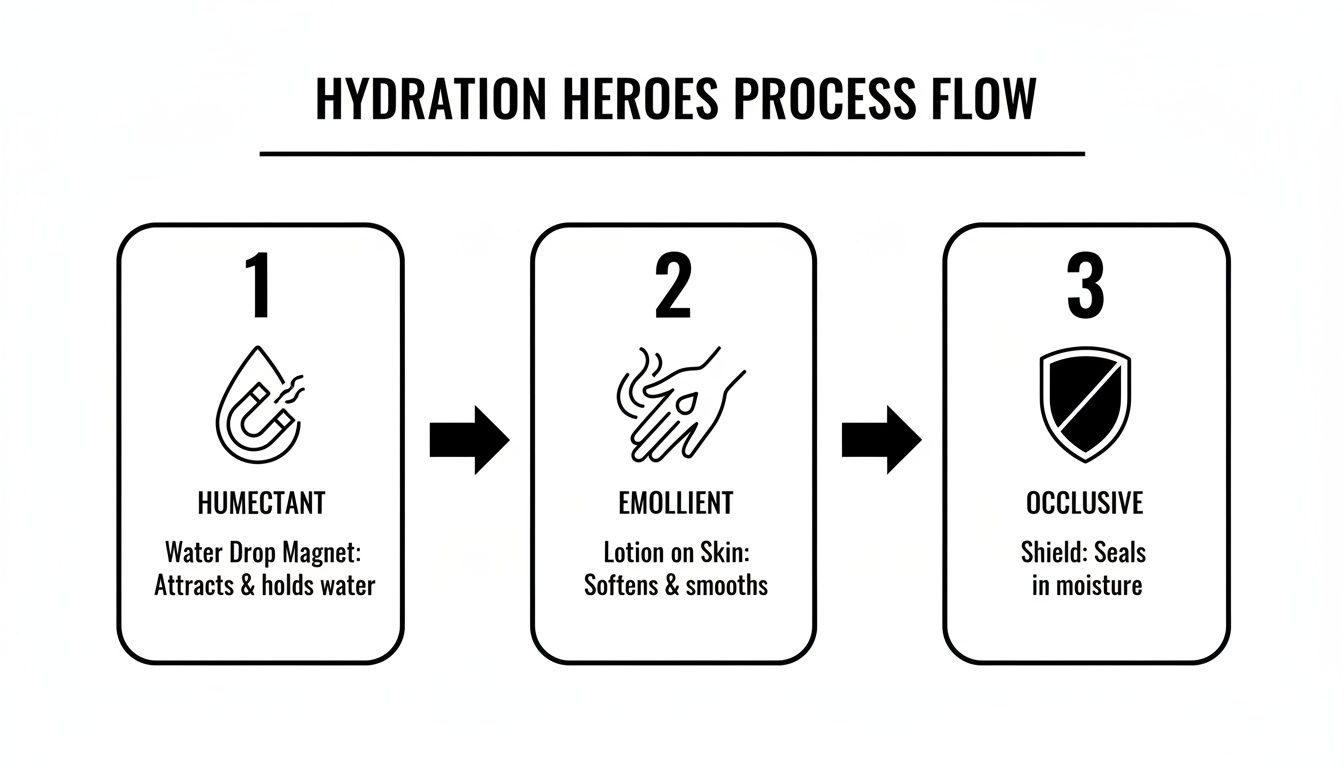
As the diagram illustrates, it’s a multi-step process. You first attract water with humectants, then smooth the surface with emollients, and finally, lock it all in with occlusives to prevent that hydration from escaping.
Choose a Lightweight Serum for Targeted Treatment
With your skin prepped and damp from your toner, it is perfectly primed to absorb the concentrated ingredients in a serum. For a morning routine, select a lightweight, fast-absorbing formula that won't feel sticky or pill under makeup.
Your serum should tackle dehydration with a potent dose of humectants while also addressing other concerns. For example, a serum with Niacinamide can hydrate, brighten, and help regulate sebum-making it an excellent choice for those with an oily-dehydrated skin type.
Pro Tip: Apply your serum while your skin is still slightly damp from your toner. This technique helps trap the watery hydration from the previous step and allows the serum to spread more easily and absorb more efficiently.
Finish with Moisturizer and a Hydrating Sunscreen
These final two steps are your daily armor. A great moisturizer for dehydrated skin will feature a balanced blend of humectants, emollients, and occlusives to seal in the watery layers you've applied. In the morning, a gel-cream or lightweight lotion texture works best to create a smooth canvas for makeup.
Finally, never skip sunscreen. Sun exposure is a primary culprit behind a damaged moisture barrier and dehydration. Look for a hydrating sunscreen with a moisturizing finish to add one last layer of protection and an extra boost of moisture. This ensures your skin stays protected and comfortable all day.
Finding authentic K-Beauty products is easier than ever. E-commerce platforms now account for 16.0% of all retail sales in the skincare sector, making it simple to find and compare products formulated specifically for dehydrated skin. You can discover more insights on the skincare e-commerce market on pristinemarketinsights.com.
Your Nighttime Routine for Repair and Recovery
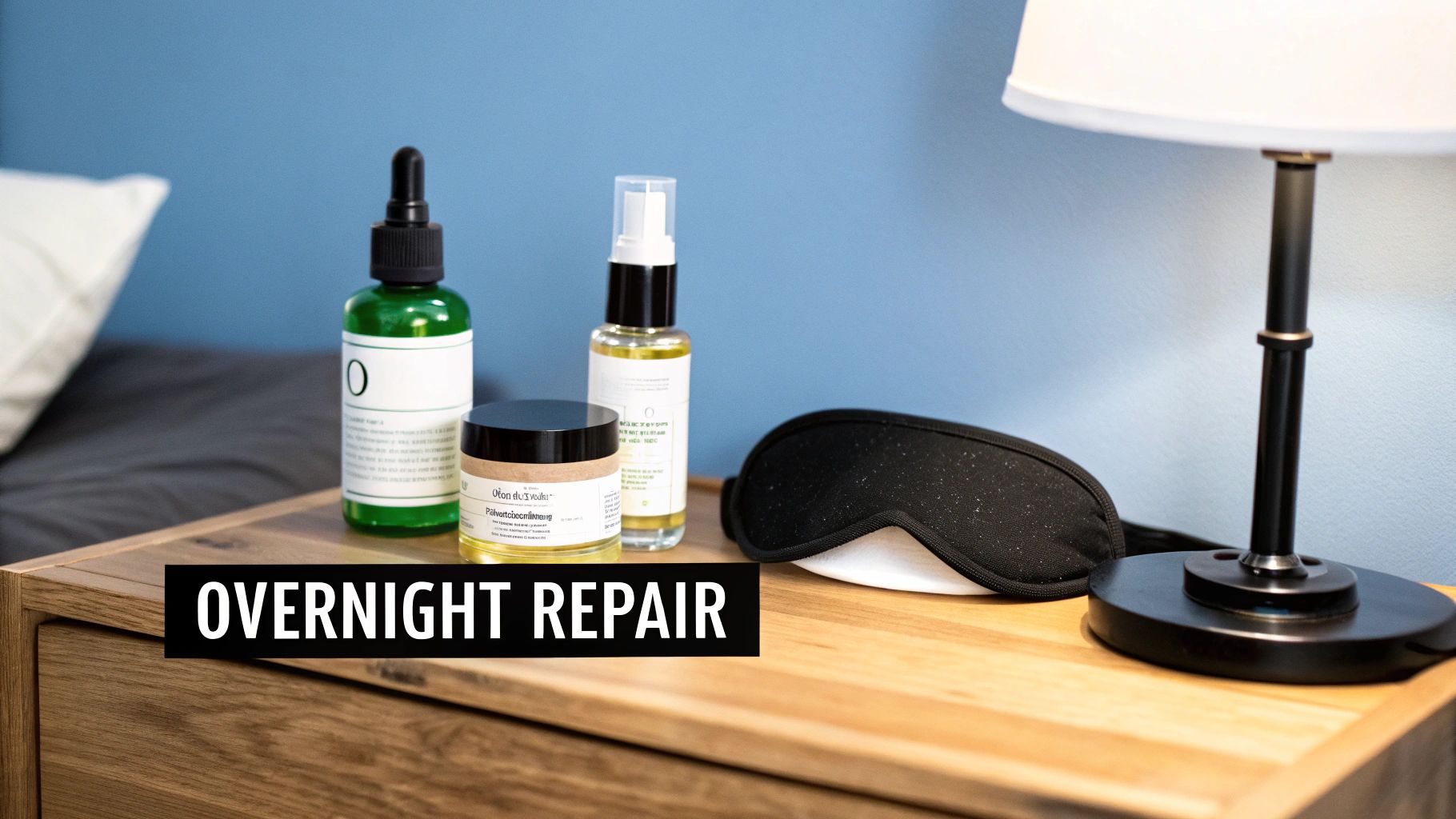
While your morning routine focuses on protection, your nighttime ritual is dedicated to repair. As you sleep, your skin’s natural regeneration processes accelerate. This is the golden opportunity to supply it with the nutrients and hydration it needs to heal, replenish, and fortify its moisture barrier.
An effective evening routine for dehydrated skin has two key missions: first, to gently but thoroughly remove the day's buildup of sunscreen, makeup, and pollutants; second, to layer restorative ingredients that work overnight to prevent water loss, ensuring you wake up to a visibly plumper, healthier complexion.
The K-Beauty Double Cleanse Done Right
For thirsty, dehydrated skin, the double cleanse is essential-but it must be performed gently. This two-step method ensures your skin is perfectly clean without stripping the vital lipids that maintain a strong moisture barrier.
-
Start with an Oil-Based Cleanser: On dry skin, massage in a cleansing balm or oil. These excel at melting away oil-based impurities like makeup, sunscreen, and excess sebum. Take a full minute to work it in, allowing it to dissolve everything before adding a splash of water to emulsify and rinse clean.
-
Follow with a Water-Based Cleanser: Next, use a gentle, low-pH foam or gel cleanser. This step removes any remaining water-based residue like sweat and dirt. The key is choosing a formula that leaves your skin feeling comfortable and hydrated, never tight or stripped.
This meticulous process creates the perfect clean slate, allowing subsequent hydrating products to penetrate more deeply and work more effectively.
Layering Restorative Essences and Serums
With your skin clean and still slightly damp, it's primed for a significant infusion of hydration. Nighttime is the ideal moment for richer textures and more potent ingredients, as your skin is most receptive during its recovery phase.
Begin by patting in a nourishing essence, which often has a slightly more viscous texture than a toner and is packed with soothing ingredients like fermented extracts or snail mucin.
Next, apply a targeted serum focused on barrier repair. This is where you bring in the heavy hitters. Look for a serum rich in ceramides-the lipids that act as the 'mortar' holding your skin cells together. A ceramide-powered serum actively works to rebuild a compromised barrier, which reduces sensitivity and helps your skin retain water.
By layering these treatments, you're not just adding moisture; you're providing the fundamental building blocks your skin needs to repair itself. This targeted approach is a cornerstone of Korean skincare, focusing on healing from within rather than just masking the symptoms.
Sealing Everything with a Rich Moisturizer
Your nighttime moisturizer should be richer and more emollient than your daytime one. Its primary function is to form a nourishing layer that provides sustained hydration and supports the repairing action of your serum.
Moisturizers are the star players in any dehydrated skin treatment plan. Their ability to deliver a balanced mix of humectants, emollients, and occlusives has made them a dominant force in the skincare market, reflecting a global consumer focus on powerful, hydration-centric formulas. You can learn more about the market growth of these essential products from Data Bridge Market Research.
The Final Step: An Occlusive Sleeping Mask
For a true game-changer, incorporate a sleeping mask into your routine two to three times a week. Think of it as a supercharged occlusive layer designed for overnight wear. It creates a protective seal over your entire routine, dramatically reducing transepidermal water loss (TEWL) while you sleep.
This protective film ensures that all the beneficial ingredients from your essence, serum, and moisturizer remain locked into your skin. You’ll wake up with skin that feels incredibly soft, bouncy, and deeply quenched-the ultimate reward for a well-executed nighttime routine.
Beyond the Bottle: Lifestyle Habits for Lasting Hydration
While an authentic K-Beauty routine is your greatest weapon against dehydration, your daily habits play a powerful supporting role. Think of your skincare as the targeted treatment and your lifestyle as the foundation upon which it is built.
Even the most sophisticated routine can struggle if it's constantly battling dehydrating habits. By making a few simple lifestyle adjustments, you can amplify your products' results and help your skin maintain its plump, dewy glow from the inside out.
Hydrate from Within Through Your Diet
You've heard it a million times, but it's a fundamental truth: internal hydration is non-negotiable. While drinking more water won't magically cure a compromised skin barrier, it provides the essential internal reservoir your topical products need to function optimally.
You can also "eat" your hydration. Incorporating water-rich foods is a delicious way to support your skin's moisture levels.
- Cucumber and Celery: Both are over 95% water and are perfect additions to salads or as a refreshing snack.
- Watermelon and Strawberries: These fruits are not only hydrating but also packed with antioxidants that help protect your skin from environmental stressors.
- Bone Broth: Rich in collagen and amino acids, it supports both hydration and overall skin health.
Also, be mindful of what works against you. Caffeine and alcohol are diuretics, meaning they can pull water from your system. Moderation is key when your skin is feeling particularly thirsty.
Control Your Environment to Protect Your Skin
Your immediate surroundings can significantly impact your skin's hydration. Air quality, humidity, and even the temperature of your shower water can affect your moisture barrier.
Your skin is in constant dialogue with its environment. If the air is dry, it will pull moisture from your skin. This is especially true during winter when indoor heating zaps humidity from the air, or in arid climates.
A simple, game-changing tool for treating dehydrated skin is a humidifier. Placing one in your bedroom or office adds moisture back into the air, creating a less demanding environment for your skin. This one change can dramatically reduce overnight water loss.
Small Habit Changes That Make a Big Difference
Sometimes the most impactful changes are the small ones. These habits might seem minor, but their cumulative effect on your skin's hydration is substantial.
- Turn Down the Heat in the Shower: Long, hot showers strip your skin of its natural oils, weakening your moisture barrier. Opt for lukewarm water and keep showers brief.
- Pat, Don't Rub: After cleansing, gently pat your skin dry with a soft towel. Aggressive rubbing can cause irritation and further compromise a fragile skin barrier.
- Manage Stress and Prioritize Sleep: High cortisol levels from stress can impair barrier function. During deep sleep, your body enters repair mode, which includes strengthening your skin. Consistently getting 7-9 hours of sleep is one of the best things you can do for your skin's long-term health.
By weaving these habits into your life, you create a holistic support system for your skin. This approach ensures your carefully selected K-Beauty products can perform at their best, helping you finally achieve that deeply hydrated, healthy glow.
Common Questions About Dehydrated Skin
Navigating the world of skincare can be complex, especially when addressing a specific issue like dehydration. To help clarify common points of confusion, we’ve answered some of the most frequently asked questions from our community.
This is your troubleshooting guide. The more you understand the "why" behind your skincare, the better you'll become at listening to your skin and giving it precisely what it needs.
How Long Does It Take to Fix Dehydrated Skin?
While you may feel immediate relief after just one or two days of a dedicated hydrating routine, fully repairing your skin's moisture barrier requires time and consistency.
Generally, expect to see significant, lasting improvements within two to six weeks. This timeline depends on the initial level of barrier compromise. Patience is crucial; you are rebuilding your skin's natural defenses, not just applying a temporary fix.
Consistency is the single most important factor. A simplified, gentle routine performed daily will deliver far better results than an elaborate, sporadic one. Your skin thrives on predictability, especially when it's fragile.
Can I Use Actives Like Retinol or AHAs on Dehydrated Skin?
Yes, but timing is everything. Applying potent actives like Retinol, Vitamin C, or exfoliating acids (AHAs/BHAs) to a compromised, dehydrated barrier is a recipe for irritation and further damage. Your primary focus must be on repairing your moisture barrier first.
We strongly recommend pausing all potent actives for at least 2-4 weeks. Concentrate solely on gentle cleansing, layering hydration, and sealing it in. Once your skin no longer feels tight, sensitive, or irritated, you can slowly reintroduce them.
Here’s how to do it safely:
- Start Low and Slow: Choose a lower concentration of your active and begin by using it only once or twice a week.
- Try the 'Sandwich Method': This technique is excellent for buffering potential irritation. Apply a thin layer of moisturizer, let it absorb, apply your active, and then follow with another layer of moisturizer.
Will Drinking More Water Alone Cure My Dehydrated Skin?
Drinking enough water is essential for your overall health and contributes to skin hydration from within, but it is rarely the sole solution for topical dehydration. You cannot drink your way out of a damaged skin barrier.
The core issue with dehydrated skin is often transepidermal water loss (TEWL), where water evaporates from the skin's surface too quickly. No matter how much water you drink, if your barrier is weak, that moisture will continue to escape. The solution is a dual approach: hydrate internally by drinking water, and hydrate externally with a smart topical routine that uses humectants to attract water and occlusives to lock it in.
My Skin Is Oily and Dehydrated. Won’t These Layers Cause Breakouts?
This is a valid and common concern for K-Beauty users. The thought of layering multiple products can seem counterintuitive for oily skin, but the secret lies in choosing the right textures. You are not looking for heavy, greasy products; your goal is to build thin, watery layers of hydration.
- Look for Lightweight Formulas: Opt for products that are non-comedogenic and have a water-based or gel-like consistency.
- Embrace Watery Textures: Prioritize watery essences, hydrating toners, and fast-absorbing serums featuring ingredients like snail mucin or beta-glucan.
- Choose the Right Moisturizer: A gel-cream moisturizer will be your best friend. It provides the necessary occlusive layer to lock in hydration without feeling heavy or suffocating your skin.
Properly hydrating your skin can actually help balance oil production. Dehydrated skin often overproduces sebum in an attempt to compensate for a lack of water. By providing the hydration it truly needs, you can help it find equilibrium, leading to less oiliness over time.
Armed with this knowledge, you are now ready to tackle dehydrated skin with confidence. At Mirai Skin, we are passionate about curating the very best in authentic Korean skincare to help you achieve your healthiest skin ever. Explore our collection of hydrating toners, essences, and moisturizers to build your perfect barrier-repair routine.
Discover your path to hydrated skin with our authentic K-Beauty selections at https://miari-skin.com.
![[SOME BY MI] Retinol Bakuchiol Dual Cream 50ml](http://ai.mirai-skin.com/cdn/shop/files/product_images_1786624489.product-image-1_0f94c941-f62b-4393-ac16-c2b0beb06f921789029928.jpg?v=1789283101&width=300)
![[Pyunkang Yul] Ultimate Calming Solution Cream 30ml](http://ai.mirai-skin.com/cdn/shop/files/product_images_1733971473.ultimatecream1741103643.jpg?v=1747730640&width=300)