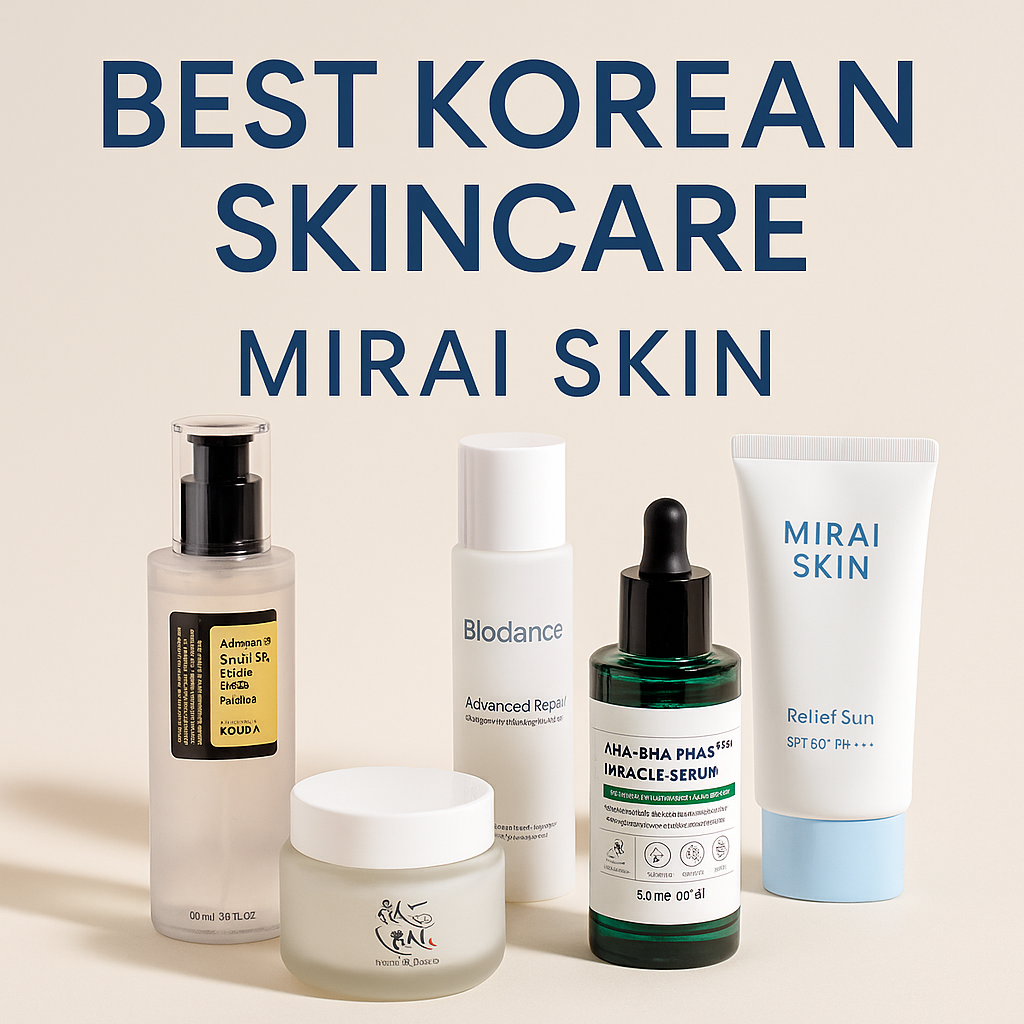
If your skin is sensitive, you know the frustration of a product that promises relief but delivers only irritation. It’s a common story, but it’s precisely where the Korean skincare philosophy offers a profoundly different-and much kinder-approach.
The K-Beauty ethos isn’t about quick fixes; it’s about nurturing your skin back to health. The goal is always to calm, protect, and hydrate. Forget harsh treatments; we’re focused on building resilience from the ground up, giving you a complexion that doesn’t just look healthy, but truly is.
Why K-Beauty Is a Game-Changer for Sensitive Skin
First, let's bust a myth: K-Beauty isn't about a rigid, 10-step routine that overwhelms your skin. Its real power lies in its principles, not the number of products on your shelf.
Unlike many Western approaches that often rely on high-strength actives to aggressively target a problem, the K-Beauty method is about creating a healthy, balanced canvas. This means prioritizing deep hydration, gentle product layering, and-most importantly-respecting your skin barrier.
The Gentle Philosophy Explained
Think of your skin barrier as the dedicated guardian for your face. When it’s strong, it expertly keeps moisture locked in and irritants locked out. But when it becomes damaged-often by harsh exfoliants or stripping alcohols-it can't do its job. That’s when redness, stinging, and unexpected breakouts appear.
Korean skincare is engineered to be that barrier’s biggest champion. Here’s how:
-
Deep, Lasting Hydration: K-Beauty is celebrated for its use of advanced humectants like hyaluronic acid, birch juice, and propolis. These ingredients act like magnets for moisture, drawing water into the skin to create a plump, hydrated foundation that is inherently less reactive.
-
Intelligent, Gentle Layering: Instead of applying one heavy, occlusive cream, the K-Beauty routine involves layering several lightweight, watery formulas like essences and serums. This allows your skin to absorb potent actives and hydration effectively without feeling suffocated.
-
Soothing, Science-Backed Botanicals: The ingredient lists are a sanctuary for sensitive skin. You’ll find calming powerhouses like Centella Asiatica (Cica), Mugwort, and Heartleaf featured prominently. These aren’t just trends; they are scientifically-backed staples chosen for their proven ability to reduce inflammation and soothe reactivity.
It’s a complete mindset shift. The objective isn't to force your skin into submission with aggressive chemicals. It's to nurture it back to optimal health by providing the consistent, gentle support it needs to thrive. This thoughtful methodology is what makes it the perfect match for even the most delicate complexions.
A Growing Movement Toward Gentle Care
This focus on gentle-but-effective skincare isn't just a niche trend; it's a global movement.
The market for sensitive skin products is exploding, projected to reach an incredible $68.12 billion by 2029. This surge is directly linked to the influence of K-Beauty, as consumers worldwide are finally seeking the gentle, barrier-friendly formulas that Korean brands have perfected for years. You can learn more about the market growth for sensitive skin care and see how K-Beauty is leading this revolution.
At Mirai Skin, our entire philosophy is built around this gentle journey. We are here to guide you with authentic products and expert advice, helping you achieve a calm, healthy complexion that feels as good as it looks.
Your Sensitive Skin Ingredient Cheat Sheet
Navigating the world of Korean skincare for sensitive skin means learning to speak its language-the language of ingredients. Understanding what you're putting on your face is the single most powerful tool for achieving a calm, happy complexion. Instead of getting overwhelmed by complex chemical names, let's break down what these powerhouse ingredients actually do for your skin.
This isn’t just about reading a label; it's about making informed choices. The K-Beauty boom is rooted in an intense focus on gentle, effective ingredients. In South Korea alone, the sensitive skincare market hit $527.78 million in 2024 and is projected to nearly double. That's a serious commitment to innovation that caters directly to the 44.6% of Americans and 38.4% of Europeans who identify as having sensitive skin. These K-Beauty market trends demonstrate how much the industry is listening to our reactive skin needs.
Before we dive into specifics, let’s revisit the core principles that make K-Beauty so effective for sensitive skin.
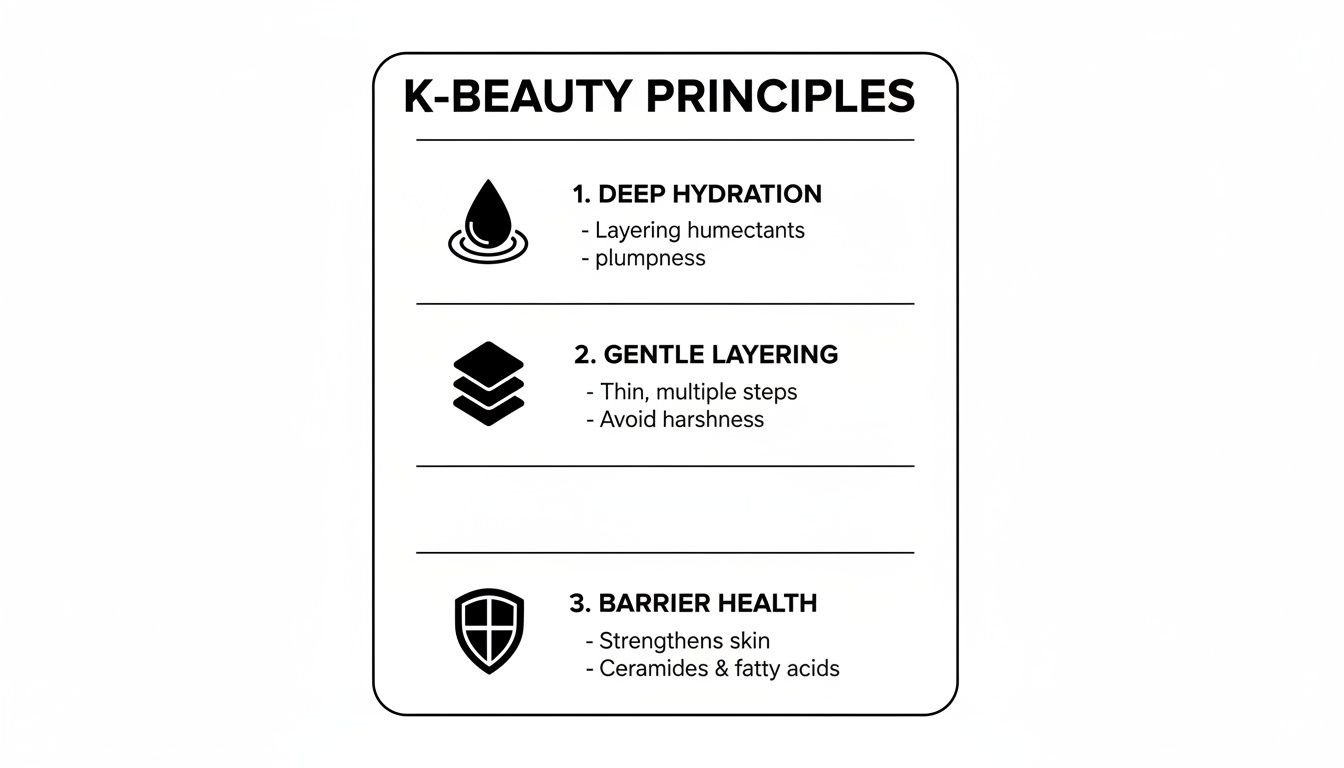
Think of it this way: deep hydration, gentle layering, and barrier health are the strategy. The ingredients we're about to cover are the elite players that execute that strategy.
Sensitive Skin Ingredient Cheat Sheet: Do's and Don'ts
To make things even easier, here's a quick-reference table. Consider it your trusted shopping companion when you're browsing for new products. It separates the heroes from the potential troublemakers.
| Ingredient Category | Embrace These (The Do's) | Approach with Caution (The Don'ts) |
|---|---|---|
| Calming Botanicals | Centella Asiatica (Cica), Mugwort, Heartleaf, Green Tea | Witch Hazel, Peppermint, Eucalyptus, Citrus Oils |
| Barrier Support | Ceramides, Snail Mucin, Peptides, Panthenol (B5) | Drying Alcohols (SD Alcohol, Denatured Alcohol) |
| Hydrators | Hyaluronic Acid, Birch Juice, Propolis, Glycerin | High concentrations of Urea, some Silicones (can be occlusive) |
| Exfoliants | PHAs (Gluconolactone), Lactic Acid (low %), Enzyme exfoliants | Glycolic Acid (high %), Physical Scrubs (walnut, apricot) |
| Antioxidants | Vitamin E, Ferments (Galactomyces), Niacinamide | High-potency L-Ascorbic Acid (Vitamin C), some synthetic fragrances |
This isn't an exhaustive list, of course, but it's a fantastic starting point for decoding labels and building a routine that works with your skin, not against it.
Calming Champions: Your First Responders for Irritation
When your skin is sending out an SOS-redness, itching, or that dreaded stinging sensation-these are the ingredients you call in. They're legendary in K-Beauty for their ability to rapidly reduce inflammation and restore calm.
-
Centella Asiatica (Cica): You'll see this everywhere, and for good reason. Often called "tiger grass," it's rich in madecassoside, a powerful compound that repairs damage and soothes redness. It’s the ultimate go-to when your skin feels compromised.
-
Mugwort (Artemisia): This is an MVP for hormonal breakouts or generalized sensitivity. Its natural anti-inflammatory and antibacterial properties feel like a purifying, soothing hug for stressed-out skin.
-
Heartleaf (Houttuynia Cordata): A true workhorse. Heartleaf is fantastic for regulating sebum while simultaneously soothing irritation. It's a game-changer if your sensitive skin also leans oily or gets congested, as it helps clarify without that tight, stripped feeling.
Barrier Defenders: Rebuilding Your Skin's Foundation
A healthy skin barrier is non-negotiable for sensitive complexions. It’s your skin's security system, standing between you and environmental triggers. When it's weak, everything feels irritating. These ingredients are the specialized team that rebuilds and reinforces it.
Ceramides are essential. They are literally the mortar holding your skin cells (the bricks) together. Applying them topically is like patching up holes in that wall, locking precious moisture in and keeping pollutants out.
Snail Mucin is another K-Beauty icon you can't ignore. It's packed with a unique cocktail of hyaluronic acid, glycoproteins, and peptides. Not only does it hydrate, but it also accelerates skin regeneration, helping a damaged barrier repair itself faster.
Expert Tip: When adding a new barrier-focused cream, apply it as the very last step in your routine (before SPF in the morning, or as the final seal at night). This locks in all the watery layers underneath and gives those restorative ingredients the perfect environment to get to work.
Hydration Heroes: Quench Thirst Without Clogging Pores
For sensitive skin, hydration is about more than just fighting dryness-it's about balance. Dehydrated skin often becomes more sensitive and may even overproduce oil to compensate. These ingredients deliver deep, lightweight moisture without risking irritation.
-
Propolis: This resin-like substance made by bees is a true multitasker. It’s naturally antibacterial and anti-inflammatory, all while being deeply nourishing. It hydrates while helping keep potential irritants and acne-causing bacteria at bay, leaving you with that healthy, "honey skin" glow.
-
Birch Juice: Tapped directly from birch trees, this sap is loaded with amino acids, minerals, and vitamins. Its small molecular structure allows it to penetrate the skin deeply and quickly for intense, purified hydration that feels weightless.
Once you start recognizing these key players, browsing the virtual aisles at Mirai Skin becomes an empowering experience. You'll spot them in cleansers, toners, and serums, and you'll know exactly what they can do for you, helping you build a routine that truly listens to your skin.
Crafting Your Gentle AM and PM Routines
You’ve mastered the ingredient intelligence. Now it's time for the rewarding part: putting it all together. Building a Korean skincare routine for sensitive skin isn't about collecting a dozen steps. It’s about creating a personal ritual that calms, protects, and genuinely restores your skin barrier. Think of it as a flexible framework, not a rigid checklist.
This gentle-first philosophy is exactly why K-Beauty's skincare segment is a global powerhouse. Holding over 65.8% of the global K-Beauty market, it's set to grow at a 9.3% CAGR through 2030. That incredible growth is driven by formulas made for sensitive complexions-a focus that dominates over 70% of South Korea's massive $5.89 billion skincare market. You can discover more about these K-Beauty market insights to see just how this thoughtful approach is winning over skincare lovers worldwide.
The easiest way to approach your routine is to give your morning and evening rituals two distinct missions. Your AM routine is all about hydration and defense. Your PM routine is for deep cleansing and repair.
The Gentle Morning (AM) Routine: Hydrate and Protect
Your morning routine is about preparing your skin to face the day. We're focusing on two things: replenishing moisture lost overnight and creating a shield against environmental aggressors like pollution and UV rays. For sensitive skin, less is definitely more here.
Phase 1: A Calming Water Rinse or Milky Cleanse Your skin likely doesn't need a deep, sudsy cleanse first thing in the morning. A simple splash of lukewarm water is usually enough to rinse away sweat and residual product, keeping your skin's natural oils intact.
If you wake up feeling oily or prefer a proper cleanse, reach for an ultra-gentle, low-pH milky or gel cleanser. Look for formulas with calming heroes like Centella Asiatica or Panthenol. Your skin should feel soft and comfortable afterward, never tight.
Phase 2: The Hydrating Toner Layer This is a non-negotiable step in any korean sensitive skin care routine. A good hydrating toner does so much more than "tone"-it's the first real layer of moisture that preps your skin to better absorb everything that follows.
Skip the cotton pads; just pat a few drops into your skin with your hands. Search for alcohol-free formulas with ingredients like Birch Juice or Propolis for an instant plumping and soothing effect. If your skin feels extra thirsty, you can even apply two or three light layers-a gentle take on the "7 Skin Method."
Phase 3: A Targeted Soothing Serum A morning serum should be lightweight and packed with antioxidants. This is your moment to address specific concerns like redness or stubborn dehydration.
A serum with Niacinamide is a fantastic all-rounder; it helps strengthen the skin barrier while offering antioxidant protection. Another great option is a serum with Green Tea extract to calm inflammation before your day even starts. A pea-sized amount, gently pressed into the skin, is all you need.
Phase 4: The Protective Moisturizer Seal and SPF These are your final, most crucial steps. First, lock in all that hydration with a lightweight moisturizer-think gel-creams or lotions that won't feel heavy or greasy. Its job is to seal in your toner and serum.
Next, and most importantly, apply a broad-spectrum sunscreen with at least SPF 30, but preferably SPF 50. K-Beauty sunscreens are renowned for their elegant, non-pasty formulas that feel more like a light moisturizer than traditional sunblock, making them perfect for sensitive skin and a dream to wear daily.
Key Takeaway: Your AM routine is your shield. It's a simple, four-phase process: a gentle rinse, a hydrating toner, a targeted serum, and a moisturizer followed by non-negotiable SPF.
The Restorative Evening (PM) Routine: Cleanse and Repair
Nighttime is when your skin shifts into repair mode. The goal here is to thoroughly remove the day-makeup, sunscreen, pollution-and then deliver nourishing ingredients to help your skin regenerate while you sleep.
Phase 1: The Gentle Double Cleanse When done correctly, the double cleanse is a game-changer for sensitive skin. It removes everything without stripping your delicate skin barrier.
- First Cleanse (Oil or Balm): Start with a fragrance-free cleansing balm or oil on dry skin. Massage it in to dissolve makeup, SPF, and sebum. These formulas are incredibly effective yet gentle, emulsifying with a splash of water to rinse clean without leaving a greasy film.
- Second Cleanse (Water-Based): Follow up with the same low-pH milky or gel cleanser you used in the morning. This quick second step whisks away any remaining water-based impurities. Your skin should feel perfectly clean, but still soft and hydrated.
Phase 2: The Hydrating Toner Layer Just like in the morning, your next step is a hydrating toner. This immediately replenishes any moisture lost during cleansing and creates that damp, receptive canvas for the rest of your products.
Phase 3: A Calming and Repairing Serum or Ampoule Your evening routine is the perfect time to bring in a more concentrated treatment, like a serum or an ampoule. This is where ingredients that support skin repair can really get to work without interruption.
Look for a serum rich in Snail Mucin to help with cellular repair and deliver deep hydration. Another excellent choice is an ampoule featuring Mugwort or Heartleaf, two ingredients that are superstars at calming inflammation and reducing any redness from the day.
Phase 4: The Protective Moisturizer Seal To finish, lock it all in with a nourishing moisturizer. Your nighttime moisturizer can be a bit richer than your daytime one, especially if your skin is on the drier side.
Hunt for formulas packed with Barrier Defenders like Ceramides and Peptides. These ingredients work overnight to rebuild and fortify your skin’s protective barrier, helping you wake up to a calmer, more resilient complexion. This final layer also prevents transepidermal water loss (TEWL), so all those amazing ingredients stay put and do their job.
How to Safely Introduce New Products
Adding a new product to your routine should be exciting, not intimidating. But for those of us with sensitive skin, the fear of a reaction is real. One wrong move can erase weeks of calm, happy skin, leaving you with redness and irritation.
That’s why learning how to introduce new skincare is just as crucial as choosing the right ingredients for your korean sensitive skin care routine.
The good news? There’s a simple, stress-free method. It all comes down to two key practices: smart patch testing and introducing new products one at a time. Mastering this approach will save you from flare-ups and help you become an expert on what your own skin truly loves.
The Art of the Patch Test
Think of a patch test as your first line of defense. It's a small trial run to see how your skin responds to a new formula before you commit to applying it all over your face. Skipping this step is a gamble you don't want to take.
Here’s how to do it right:
- Pick a Discreet Spot: Don't test on your arm or hand; the skin there is much tougher than your face. Instead, choose a small, out-of-the-way area like behind your ear, along your jawline, or on the side of your neck. These spots are more representative of your facial skin.
- Apply and Wait: Dab a small amount onto your chosen spot. Follow the product’s directions-if it’s a cleanser, let it sit for a minute before rinsing. If it's a serum or cream, let it absorb.
- Monitor for 24-48 Hours: This is the most important part. Patience is key, as some reactions don't show up immediately. Keep an eye on the area for any signs of trouble-redness, itchiness, swelling, or tiny bumps. If you see any signs of irritation, that product isn't for you.
If the coast is clear after 48 hours, you're ready for the next step.
Mastering the Slow Introduction
So, your patch test was a success. It's tempting to slather that new product on right away, but for sensitive skin, slow and steady wins the race. Your goal should be to introduce one new product at a time, giving your skin a few weeks to acclimate.
Why? If you add three new products at once and your skin reacts, you'll have no idea which one was the culprit. It's a skincare mystery you don't want to solve.
By introducing a new serum or moisturizer slowly-perhaps just two or three times in the first week-you give your skin a chance to adjust. This gradual exposure minimizes the risk of overwhelming your skin barrier and helps it build tolerance.
If your skin remains happy after a couple of weeks, you can start using it more frequently. This patient approach is the secret to building a routine that truly works, without the drama of irritation. It guarantees every product in your lineup is a true winner for your skin.
The Non-Negotiable: Always Buy Authentic
Finally, none of these safety steps will protect you if you’re using a counterfeit product. The beauty market is flooded with fakes that look shockingly real but are filled with cheap, unregulated, and sometimes dangerous ingredients like lead or harsh industrial chemicals. For sensitive skin, a fake product is a disaster waiting to happen.
This is why you must buy your skincare from a trusted, authorized source.
At Mirai Skin, we guarantee that every single product is 100% authentic. We source everything directly from verified distributors in Korea because we know your skin's health is on the line. Our commitment means you can explore the world of K-Beauty without worry, knowing what's inside the bottle is exactly what the brand intended.
Ready to build your routine with confidence? Find your next holy grail in our curated collection of gentle skincare at Mirai Skin.
A Practical Guide to Calming Skin Reactions
Even when you do everything right-patch testing, introducing products one by one-flare-ups can still happen. That’s the reality of sensitive skin. It’s not a failure; it’s your skin communicating with you. Learning to interpret its signals is the secret to long-term skin health.
Think of this as your emergency response plan. The absolute worst thing you can do is panic and layer on more products. Instead, take a deep breath. We're going to diagnose the issue and get your skin back on track.
The demand for gentle, calming skincare is exploding. In fact, South Korea's sensitive skin care market was valued at $527.78 million in 2024 and is expected to hit an incredible $1,007.2 million by 2033. This isn't just a trend; it's a massive shift toward the barrier-first, soothing formulas that K-Beauty is famous for. You can discover more insights about the Korean skincare market to see just how big this movement is.
What to Do About Sudden Redness and Flushing
You’ve just finished your routine, and now your cheeks are bright red and feel uncomfortably warm. We’ve all been there. It’s a classic sign of irritation.
What It Probably Means This is typically the first sign that an ingredient is too potent for your skin at that moment. It could be a fragrance, a high-strength active, or a formulation your skin barrier wasn't ready for.
Your Action Plan
- Stop and Rinse. Immediately splash your face with cool (not ice-cold) water and gently pat it dry with a soft towel.
- Grab a Calming Hero. Reach for a product you know your skin loves and trusts. A serum or cream packed with Centella Asiatica (Cica) or Mugwort is perfect for this-they are brilliant at telling inflammation to calm down.
- Go Minimalist. For the next few days, strip your routine back to the bare essentials: a gentle cleanser, your calming serum, and a no-frills barrier cream. That’s it.
How to Handle Stinging or Burning
You apply a product-maybe even one you use all the time-and it starts to sting. This is a clear distress signal from your skin.
What It Probably Means A stinging or burning sensation is almost always a sign of a compromised skin barrier. Your skin's protective outer layer has developed tiny, invisible cracks, allowing products to penetrate too deeply and irritate your nerve endings.
Your Action Plan
- Rinse It Off. Now. Just like with redness, get that product off your face immediately with cool water.
- Focus on Barrier Repair. Your only job for the next week is to pamper your skin barrier. Load up on products with Ceramides, Panthenol, and Snail Mucin to help patch up those cracks.
- Pause All Actives. That means no exfoliants (AHAs, BHAs, PHAs), no Vitamin C, and no retinoids. Do not reintroduce them until your skin feels completely back to normal.
This is a non-negotiable for anyone following a korean sensitive skin care routine. A damaged barrier is the root of almost all sensitivity issues. Fixing it is always priority number one.
Managing Those Unexpected Breakouts
You started using a new cream a couple of days ago, and now you have tiny bumps or a few whiteheads popping up in places you don't normally break out.
What It Probably Means This could be a few different things. You might be dealing with a pore-clogging ingredient, a formula that's simply too rich for your skin, or even a breakout triggered by irritation.
Your Action Plan
- Find the Culprit. Stop using the new product right away. This is exactly why we only introduce one new thing at a time!
- Treat It Gently. Don't resort to harsh, drying spot treatments, which will only worsen the situation. Instead, dab on a calming serum with an ingredient like Heartleaf to reduce inflammation without causing more stress.
- Become an Ingredient Detective. Pull up the ingredient list of the product that caused the reaction. If you've had similar breakouts before, compare the lists. You might start noticing a pattern and identify a specific ingredient your skin dislikes.
When you approach reactions calmly and methodically, you learn to trust your skin-and it learns to trust you. You become the expert on your own skin, ready to soothe whatever comes your way.
Your K-Beauty Questions Answered
Diving into a new skincare world always brings up a few questions. When it comes to Korean skincare for sensitive skin, some topics emerge more than others. Let's tackle the most common ones we hear from our community, so you can build your routine with total confidence.
Think of this as your practical guide to the nuances of a gentle K-Beauty approach, busting a few myths along the way.
Can I Use Actives Like Vitamin C or Retinol with Sensitive Skin?
Absolutely, but your strategy is everything. The trick is to go "low and slow," and thankfully, K-Beauty brands excel at creating gentle active formulas that are perfect for this.
Instead of jumping to a high-potency L-Ascorbic Acid, look for beginner-friendly Vitamin C derivatives like Sodium Ascorbyl Phosphate. They're much more stable and far less likely to cause irritation. For a retinoid, consider Bakuchiol, a plant-based alternative that delivers similar benefits without the redness and peeling often associated with traditional retinoids.
Always start by introducing an active just one or two nights a week. You can even "buffer" it by applying it after your moisturizer to soften its intensity. Pay close attention to how your skin responds before even considering increasing the frequency.
How Do I Know If My Skin Is Sensitive or Sensitized?
This is a fantastic-and crucial-question. The main difference comes down to whether the condition is inherent or acquired.
-
Truly Sensitive Skin: This is often genetic. It's a constant state you manage, meaning you're just naturally more prone to redness, flushing, and reactions to certain ingredients or environmental shifts.
-
Sensitized Skin: This is a temporary condition caused by a damaged skin barrier. It can happen to anyone, regardless of skin type, and is usually triggered by harsh products, over-exfoliation, or even stress.
The great news is that the core philosophy of korean sensitive skin care-focusing on barrier repair, deep hydration, and soothing ingredients-is the perfect solution for both. It calms irritation whether it's a chronic concern or a temporary SOS signal from a stressed-out barrier.
Whether your skin is sensitive or sensitized, the healing path is the same: strip your routine back to the absolute basics. Focus entirely on calming your skin and rebuilding its natural defenses.
Is the 10-Step Korean Routine Necessary for Sensitive Skin?
Not at all. In fact, for sensitive skin, a simpler, more intuitive routine is almost always better. The real essence of K-Beauty isn't about the number of steps; it's about the philosophy of listening to your skin and giving it exactly what it needs on any given day.
A powerful and complete Korean skincare routine can easily consist of just four or five thoughtful steps. A gentle double cleanse, a hydrating toner, a targeted soothing serum, and a protective moisturizer is a perfect framework. The goal is consistency and customization, not a crowded bathroom shelf. Your skin will thank you for it.
At Mirai Skin, we make it easy to find authentic, gentle products for your customized routine. Explore our curated collection of Korean skincare essentials for sensitive skin and start your journey to a calm, resilient complexion today.