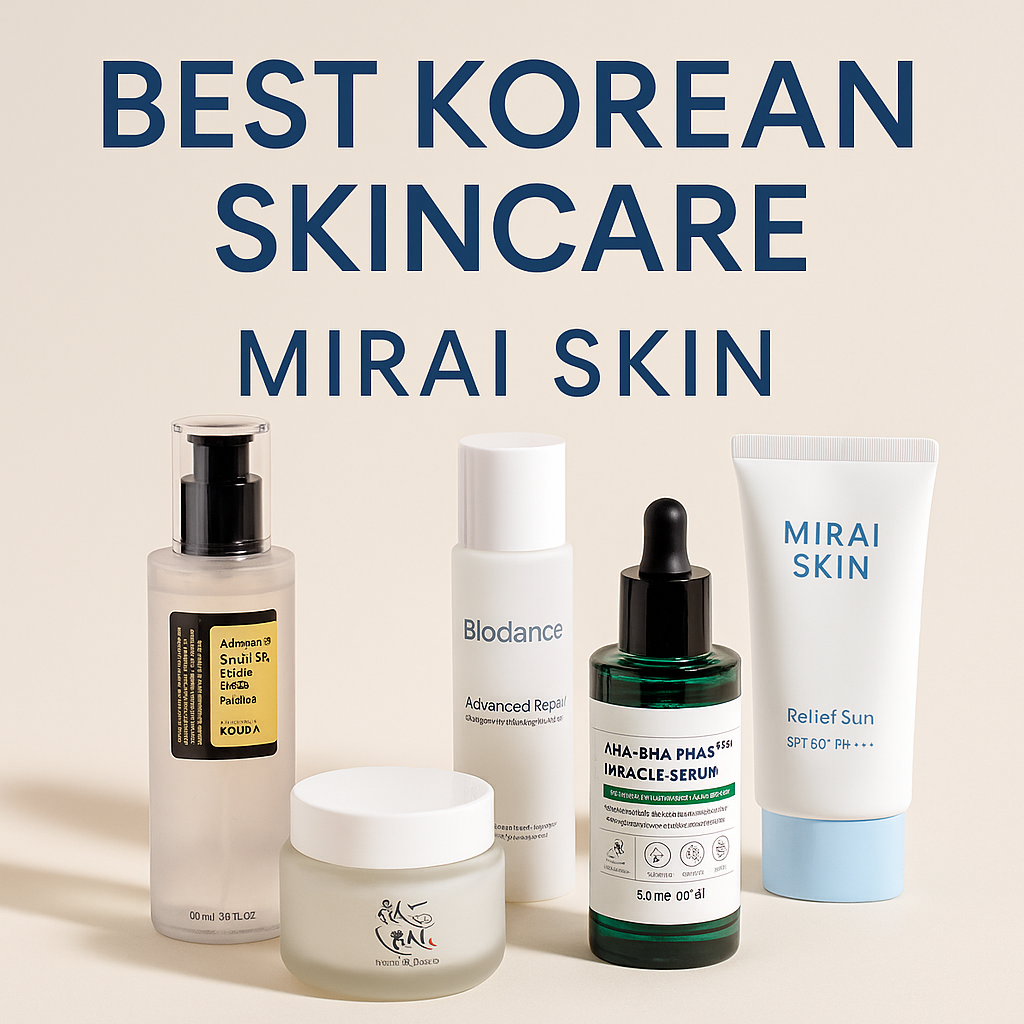
The secret to mastering a Korean skincare routine for combination skin lies in one core principle: balance. You’re not just treating a single skin type; you’re harmonizing two distinct zones-hydrating dry areas without overwhelming the oily ones.
It’s a delicate dance, but K-Beauty’s philosophy of using lightweight, layerable products is perfectly suited for this challenge. Think hydrating heroes like hyaluronic acid for thirsty cheeks and calming ingredients like green tea extract for that easily-agitated T-zone. It’s about building a routine that listens to your skin’s specific needs, not forcing a one-size-fits-all product on it.
Understanding Your Combination Skin
If you’re constantly battling a shiny forehead while simultaneously dealing with tight, flaky cheeks, welcome to the combination skin club. It’s one of the most common skin types, defined by that classic oily T-zone (forehead, nose, chin) and drier U-zone (cheeks).
This duality isn't just a random quirk. It’s usually genetic, but factors like climate and hormones can definitely influence its intensity. Your T-zone naturally has more active sebaceous glands, leading to that midday shine and a higher likelihood of breakouts. Meanwhile, your cheeks have fewer oil glands, leaving them vulnerable to dehydration and that uncomfortable, tight feeling. This is precisely where the gentle, targeted approach of K-Beauty excels.
The Korean Skincare Philosophy for Balance
Forget harsh, stripping products that promise to obliterate oil. We’ve all been there, and it usually backfires spectacularly. Those aggressive formulas often make dry patches even drier while sending your oily zones into overdrive to compensate.
Korean skincare takes a much smarter, more holistic approach. The goal is to create harmony by giving your entire face the hydration it needs with lightweight, water-based layers. This method is incredibly intuitive because it allows you to customize your routine on the fly. You can give each part of your face exactly what it's asking for without causing problems elsewhere.
This philosophy is taking the world by storm. The global K-Beauty market, filled with perfect solutions for combination skin, reached an incredible USD 11.1 billion in 2025. Skincare alone made up USD 8.54 billion of that. In major markets like North America, valued at USD 3.1 billion in 2025, it’s consumers aged 23-45 who are driving the trend. And with the female segment holding a 67.4% market share, there’s a clear demand for the exact products that combination skin loves-essences, hydrating toners, and gel moisturizers. Learn more about K-Beauty market trends.
Why Layering Works for Duality
Think of your face as a garden with different soil types. You wouldn't douse a cactus with the same amount of water as a fern, right? It’s the same with your skin. A multi-step routine lets you build hydration without piling on heavy, pore-clogging creams that your T-zone will hate.
Here’s why it’s so effective in practice:
- Targeted Treatment: You can apply a sebum-controlling serum (perhaps one with Niacinamide) just on your T-zone, and then pat a more nourishing, ceramide-rich essence onto your cheeks.
- Deep Hydration Without Greasiness: Watery products like toners and essences sink in fast. They deliver moisture deep down without leaving that heavy, greasy film that makes oily areas feel worse.
- Supports a Healthy Skin Barrier: By steering clear of harsh alcohols and over-exfoliation, a gentle K-Beauty routine helps keep your skin barrier strong. A resilient barrier is crucial for preventing both transepidermal water loss and excess sebum production.
Ultimately, managing combination skin with K-Beauty isn't about fighting your skin-it's about working with it. The goal is to find that sweet spot where both your oily and dry zones feel calm, hydrated, and happy.
Once you embrace this mindset, you can finally break free from the frustrating cycle of fixing one problem only to create another. Instead, you’ll be building a resilient, healthy complexion from the ground up. This is the first and most important step toward crafting a Korean skincare routine that finally feels like it was made just for you.
Key Korean Skincare Ingredients for Combination Skin
Navigating K-Beauty ingredients can feel overwhelming, but for combination skin, it’s all about finding multitaskers. You need ingredients that can hydrate dry patches without clogging pores or making oily areas greasier. This table breaks down some of the most effective powerhouse ingredients you’ll see in Korean skincare and explains how they work their magic on both zones of your face.
| Ingredient | Benefit for Oily Zones (T-Zone) | Benefit for Dry Zones (Cheeks) |
|---|---|---|
| Hyaluronic Acid | Provides lightweight, oil-free hydration that won't clog pores. | A potent humectant that draws moisture into the skin, plumping up fine lines caused by dehydration. |
| Niacinamide | Helps regulate sebum production, visibly minimizes the appearance of pores, and calms inflammation. | Strengthens the skin barrier, reduces redness, and helps prevent transepidermal water loss (TEWL). |
| Green Tea Extract | A powerful antioxidant that helps control oil and soothe redness or irritation from breakouts. | Calms and protects the skin from environmental stressors without feeling heavy. |
| Centella Asiatica (Cica) | Soothes inflammation and redness associated with acne and sensitivity. | Excellent for calming irritation and repairing a compromised skin barrier in dry areas. |
| Snail Mucin | Hydrates and helps repair the skin barrier without a greasy feel. Fades post-inflammatory hyperpigmentation (PIH). | Deeply hydrates, soothes, and helps improve skin texture and elasticity. |
| Propolis | Offers antibacterial properties to help keep pores clear and calm breakouts. | Provides nourishing, anti-inflammatory benefits that help soothe and hydrate dry, irritated skin. |
Choosing products with these ingredients is a strategic starting point for building a routine that brings true balance. They address the core needs of combination skin-hydration, barrier support, and gentle oil control-ensuring every part of your face gets the care it deserves.
Building Your Morning K-Beauty Routine
Your morning skincare routine is your first line of defense for the day. For combination skin, the goal isn’t to mattify everything into oblivion or slather on heavy creams. It’s about creating a lightweight, protective shield that keeps your dry zones happy and your oily T-zone in check.
Think of it as setting your skin up for success. A well-executed AM routine prevents that dreaded 3 PM shine attack while making sure your cheeks don't feel tight and parched by noon. Each step should build on the last, creating a balanced canvas that feels comfortable all day long.
Start with a Gentle Cleanse
How you wash your face in the morning can make or break your entire routine. A common mistake for those with combination skin is using a harsh, stripping cleanser. This sends your skin into a panic, causing your T-zone to pump out more oil to compensate while leaving your cheeks even drier.
Instead, reach for a gentle, low-pH cleanser. A light gel or soft foam is perfect for removing any sweat or impurities from overnight without disrupting your skin's delicate moisture barrier. This simple switch ensures your day starts with calm, balanced skin, not an irritated, reactive mess. Look for formulas with soothing ingredients like green tea extract or Centella Asiatica.
Tone and Hydrate Immediately
Right after cleansing, while your skin is still slightly damp, it’s prime time for hydration. This is where a Korean toner (often called a "skin") comes into play. Forget those old-school, alcohol-heavy astringents that sting and dry you out. K-Beauty toners are all about replenishing moisture.
For combination skin, a hydrating toner packed with humectants like hyaluronic acid or glycerin is ideal. Gently pat it into your skin to lock in that first wave of moisture. This single step can make a massive difference in keeping your cheeks plump and preventing dehydration as the day wears on.
The entire K-Beauty philosophy for combination skin is about finding harmony. You first manage the oilier areas, then bring the entire face into balance before sealing in hydration.
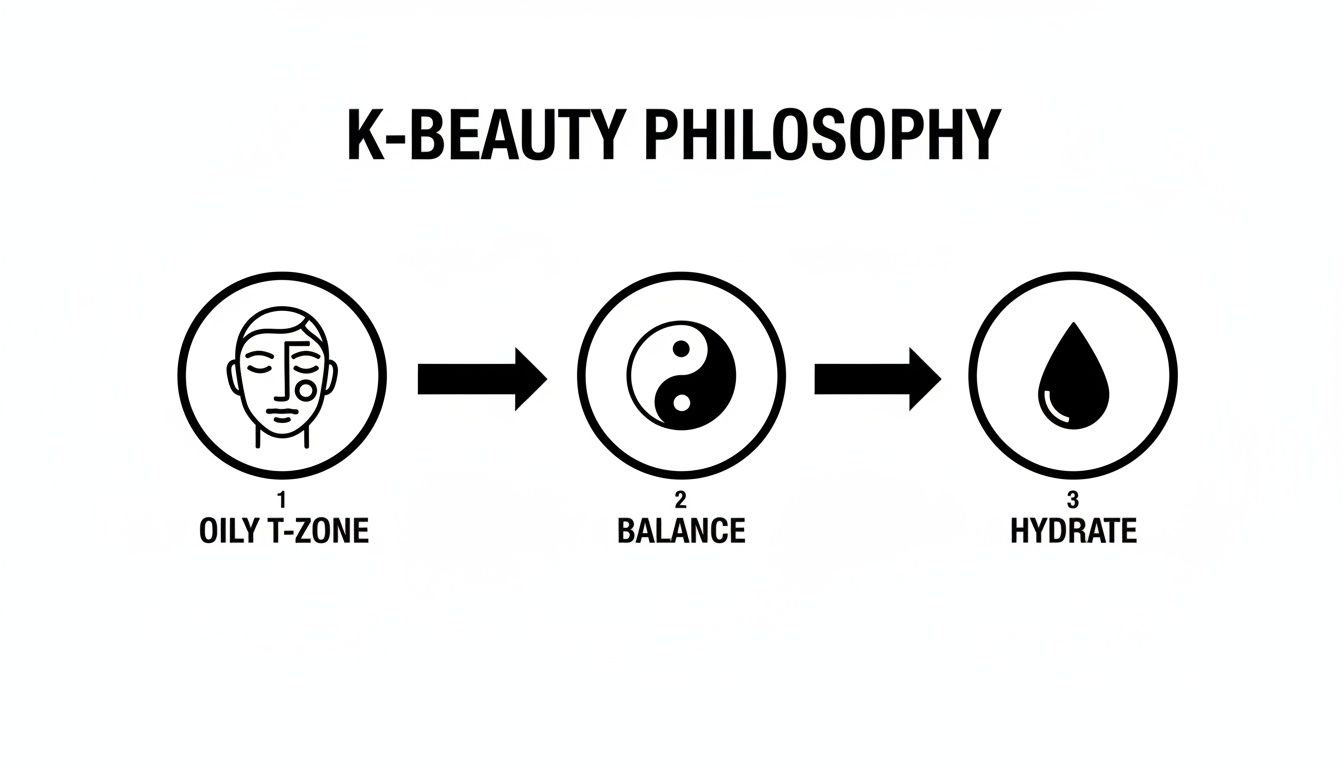
This visual shows that success isn't about fighting one problem area, but about creating a balanced system across your entire face.
Target Concerns with a Lightweight Serum
The serum step is where you get specific. In the morning, you need a targeted treatment that’s potent but feels like nothing on the skin. For combination skin, niacinamide is an absolute game-changer.
- For your T-Zone: It helps regulate oil production and makes pores look smaller.
- For your cheeks: It strengthens the skin barrier and calms down redness.
A water-based niacinamide serum sinks in quickly, delivering these benefits everywhere without adding a greasy film. You can also layer in other supportive serums here, like one with propolis for its incredible antibacterial and calming effects.
Lock It In with the Right Moisturizer
Finding the right moisturizer for combination skin used to be a nightmare, but Korean skincare has perfected the art of weightless hydration. The answer lies in gel-based or water-cream formulas. They deliver all the moisture your skin needs without the heavy oils or butters that can clog pores in your T-zone.
Look for moisturizers with ingredients like birch juice or snail mucin. These powerhouses provide deep hydration and barrier support in textures that feel refreshing and absorb in seconds. The right one will leave your skin feeling soft and plump-never slick.
The global demand for these textures is skyrocketing. In fact, products designed for combination skin, like water-based serums and oil-free moisturizers, made up 75% of South Korea's record USD 11.43 billion cosmetics exports in 2025. With women driving 67.4% of the market, the focus on barrier-repairing moisturizers has helped online retailers like Mirai Skin bring authentic K-Beauty to a global audience. You can read the full report on K-Beauty's global scale here.
Finish with Non-Negotiable Sun Protection
The final, and most critical, step in any morning routine is sunscreen. Period. For combination skin, the trick is finding a formula that's light, non-greasy, and won’t cause breakouts.
A common myth is that sunscreen makes oily skin worse. In reality, modern Korean sunscreens often contain sebum-controlling ingredients and have elegant, fast-absorbing finishes that can even double as a makeup primer.
Always choose a broad-spectrum sunscreen with at least SPF 50. Chemical sunscreens are often popular for their invisible finish, but many new mineral formulas are just as lightweight. Applying sunscreen every single morning is the single best thing you can do for your skin’s long-term health and balance.
Your Nighttime Routine for Repair and Renewal
When the sun goes down, your skin clocks in for its most important shift: repair. While you're sleeping, your skin is hard at work regenerating cells and recovering from the day's environmental stress. A smart nighttime Korean skincare routine for combination skin leans into this natural cycle, helping you wake up to a calmer, happier complexion.
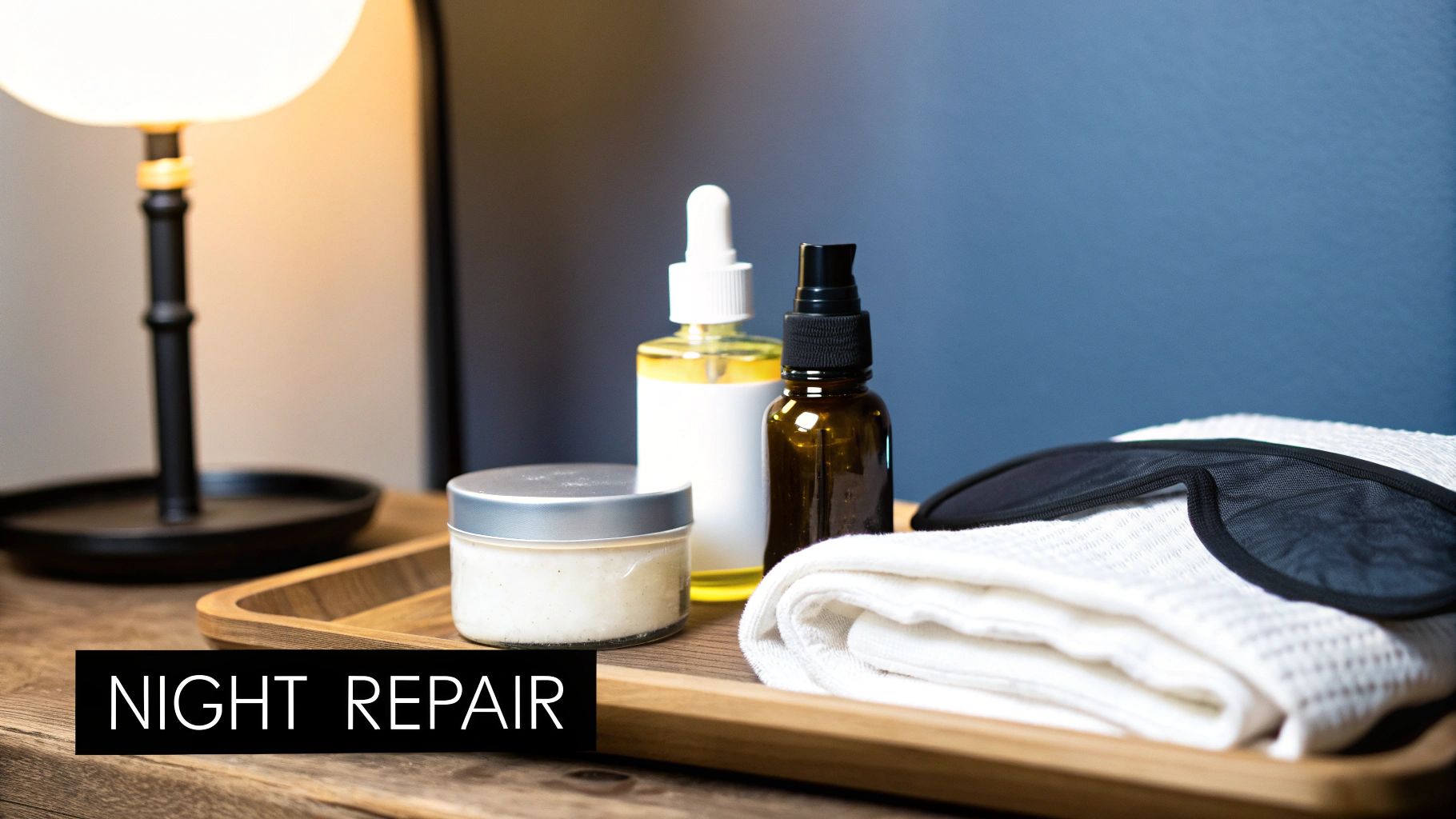
This PM routine is all about deep cleansing, targeted treatments, and sealing in moisture-without suffocating your T-zone or leaving your cheeks thirsty.
The Power of the Double Cleanse
The double cleanse is the cornerstone of any solid K-Beauty evening routine. It's a non-negotiable first step, especially if you wear makeup or sunscreen (which should be every day!). This two-part method ensures your skin is perfectly prepped for all the beneficial ingredients to follow.
-
First Cleanse (Oil-Based): Start with an oil cleanser or cleansing balm. Massage it onto dry skin to dissolve makeup, SPF, and the day's grime. Oil cleansers are brilliant because they work on the "like dissolves like" principle, breaking down stubborn, oil-based impurities without stripping your skin. Add a splash of water to emulsify it into a milky liquid, then rinse completely.
-
Second Cleanse (Water-Based): Now that the surface-level impurities are gone, follow up with a gentle, low-pH foam or gel cleanser. This step removes any leftover residue, sweat, and dirt, leaving your skin truly clean. It’s the key to making sure your pores are clear and ready to absorb the active ingredients in your serums.
Integrate Targeted Treatments and Exfoliation
With a clean slate, it's time to get specific. Nighttime is the perfect opportunity to use active ingredients and reparative treatments that work their magic best away from UV exposure.
For combination skin, this often means adding gentle exfoliation a few nights a week. It’s easy to overdo it-a common mistake that can compromise your skin barrier-but when used correctly, exfoliation is a game-changer for texture and clarity.
- BHAs (Beta-Hydroxy Acids): Salicylic acid is your best friend here. It's oil-soluble, meaning it can penetrate deep into pores to clear out congestion and reduce blackheads. It’s perfect for keeping that T-zone in check.
- AHAs (Alpha-Hydroxy Acids): Think glycolic or lactic acid. These are great for tackling dullness and uneven texture on your cheeks. They work on the surface to dissolve the bonds holding dead skin cells together, revealing brighter, smoother skin underneath.
Pro Tip: Don't go wild with chemical exfoliants. Start by using them just 2-3 times per week, and never on the same night as other strong actives like retinol. Pay attention to your skin-if you see redness or feel irritation, pull back.
On your non-exfoliating nights, your focus should be on repair and deep hydration. A serum with snail mucin is a K-beauty holy grail for good reason. It’s loaded with nutrients that hydrate, calm inflammation, and support cell repair, making it a fantastic choice for both the oily and dry parts of your face. Check out our curated collection of authentic K-beauty serums at Mirai Skin to find one that slots perfectly into your routine.
Seal It All In with a Barrier-Supporting Moisturizer
Your final step is to lock in all that hard work with a moisturizer that supports your skin barrier while you sleep. The texture is everything for combination skin. You need something that delivers lasting hydration to dry areas without feeling heavy or greasy on the T-zone.
Look for a non-comedogenic moisturizer or a sleeping mask. Gel-creams and lightweight lotions are usually your safest bet.
- For the T-Zone: A thin layer of a gel-cream is often all you need.
- For the Cheeks: Don't be afraid to apply a little extra here. You can even layer a richer cream just on the dry patches if they feel particularly tight.
Ingredients like ceramides, hyaluronic acid, and Centella Asiatica (Cica) are your heroes. They strengthen your skin's defenses, prevent transepidermal water loss overnight, and soothe any irritation. The right night cream ensures you wake up with skin that feels plump, comfortable, and back in balance.
Advanced K-Beauty Techniques for Combination Skin
Once you’ve nailed your core morning and evening routines, it’s time to level up. Think of these advanced Korean skincare techniques as the final layer of personalization for your combination skin-moving beyond a one-size-fits-all approach and into a smarter, more targeted strategy.
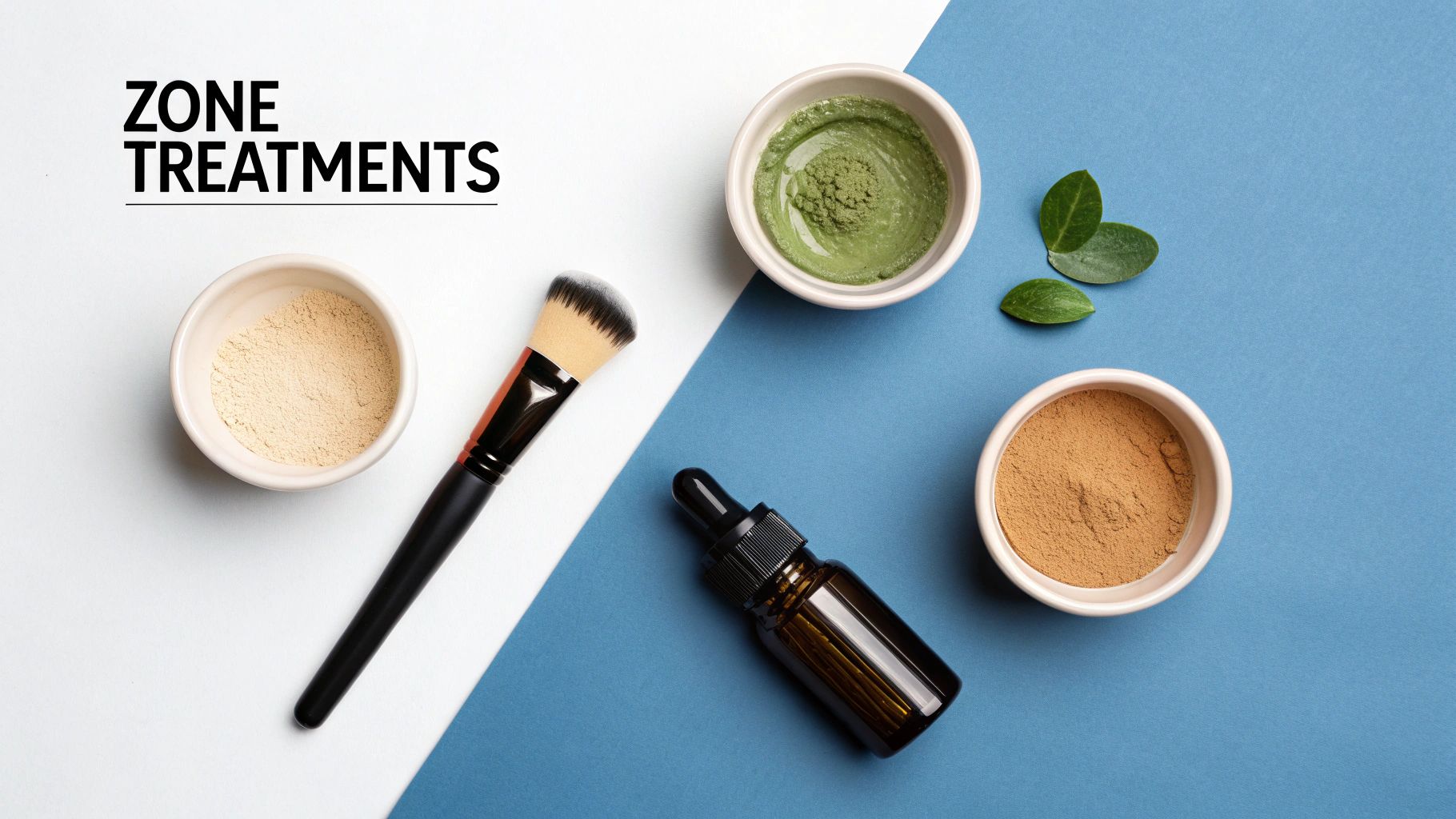
This is where you start listening to what different parts of your face are asking for and give each zone exactly what it craves. The result is a kind of skin harmony that a single routine can rarely achieve.
The Art of Multi-Masking
Multi-masking is a game-changer and feels like it was invented specifically for combination skin. Instead of spreading one mask all over your face, you apply different masks to different areas at the same time. This is how you tackle that oily T-zone and those dry cheeks simultaneously.
- For the Oily T-Zone: Apply a purifying clay or charcoal mask to your forehead, nose, and chin. These ingredients absorb excess sebum, deep clean pores, and help prevent blackheads.
- For the Dry Cheeks: While the clay mask is working its magic, treat your cheeks to a hydrating or nourishing mask. Look for sheet masks or cream formulas loaded with hyaluronic acid, ceramides, or snail mucin to quench thirst and calm any tightness.
It’s a simple, dual-action treatment that brings your entire face back into balance.
Precision with Zone Treating
Similar to multi-masking, zone treating applies that same targeted mindset to your daily serums and treatments. You don't have to slather every product everywhere; sometimes, a little precision goes a long way, especially with active ingredients.
For example, you could apply a BHA (salicylic acid) serum only to your T-zone to dissolve congestion on a night you're focused on pore clarity. At the same time, you can pat a deeply hydrating hyaluronic acid ampoule onto your cheeks to plump and moisturize those drier areas. This prevents you from drying out your cheeks while still giving your oily zones the potent treatment they need.
This targeted strategy lets you use stronger, more effective products without irritating the more sensitive parts of your face. It's all about working smarter, not harder, with your skincare.
Adapting Your Routine to the Seasons
Your skin doesn't stay the same all year long-it changes with the weather. The routine that feels perfect in humid summer months can leave your skin tight and thirsty in the winter. Getting adept at making seasonal tweaks is the key to keeping combination skin happy year-round.
Learning how to swap products and ingredients is a cornerstone of the K-beauty philosophy. Below is a simple guide to help you transition your routine between the seasons.
Seasonal Routine Adjustments for Combination Skin
| Season | AM Routine Tweak | PM Routine Tweak | Weekly Treatment Focus |
|---|---|---|---|
| Summer | Swap your cream moisturizer for a lightweight gel-based formula. Use a sunscreen with a mattifying finish to control shine. | Stick to light layers like watery toners and essences. Avoid heavy occlusives that can trap heat and sweat. | Increase clay or detoxifying masks to 1-2 times per week on the T-zone to manage increased oil production. |
| Winter | Add a hydrating mist to use throughout the day. Consider a slightly more nourishing moisturizer if your dry zones feel tight. | Switch to a richer, ceramide-infused moisturizer, or mix a drop of facial oil into your cream for your cheeks. Add a sleeping mask. | Focus on hydrating and nourishing treatments. Use a gentle exfoliating mask with LHA or enzymes to slough off flakes without irritation. |
Making these small adjustments ensures your skin gets what it needs, no matter what the weather is doing.
This kind of responsive skincare is why the K-Beauty market is growing so fast, projected to expand from USD 12.5 billion in 2025 to USD 16.15 billion by 2029. In Europe, a market valued at USD 2.7 billion in 2025, shoppers are drawn to the 'clean beauty' ethos of Korean brands that use natural extracts like green tea to control oil while nourishing dry patches. You can discover more insights about K-Beauty market trends on awisee.com.
How to Shop for K-Beauty Products
Walking into the world of K-Beauty is exciting, but let's be honest-it can also feel a little overwhelming, especially with combination skin. Finding the right products isn't just about picking a popular brand; it’s about learning to read labels and understanding which formulas will finally bring balance to your skin.
Think of this as your personal shopping guide. We’ll break down exactly what to look for in cleansers, toners, serums, and moisturizers so you can build a routine that actually works for you.
Decoding the Cleanser Aisle
Your first step sets the tone for everything else. For combination skin, the mission is simple: find a cleanser that gets rid of oil and grime in your T-zone without leaving your cheeks feeling tight and stripped. It’s a delicate balance, but it’s critical.
A huge red flag is any cleanser with harsh sulfates like Sodium Lauryl Sulfate (SLS). These are notorious for disrupting your skin’s moisture barrier. High concentrations of denatured alcohol are just as bad, as they tend to make both oily and dry areas worse over time.
Instead, look for gentle but effective formulas. Here's your cheat sheet:
- Low-pH Formulas: Stick to cleansers with a pH between 4.5 and 5.5. This is close to your skin's natural state and helps keep your barrier happy and healthy.
- Hydrating Surfactants: Look for gentle cleansing agents like Coco-Betaine or those made from amino acids. They clean your skin beautifully without that squeaky, uncomfortable feeling.
- Soothing Extracts: Ingredients like green tea extract are fantastic for controlling sebum while providing antioxidant protection. Centella Asiatica (Cica) is another hero for calming down redness and inflammation-perfect for unpredictable combination skin.
Here's the golden rule: Your cleanser should leave your skin feeling clean and refreshed, but still soft. If you wash your face and it feels tight, that's your sign to find a gentler option.
Selecting the Right Toner
Forget the harsh, alcohol-heavy astringents you might remember from your teenage years. In K-Beauty, toners are all about hydration. Their job is to put moisture back into your skin right after cleansing and prepare it to soak up all the goodness you apply next.
The best toners for combination skin offer watery, lightweight layers of hydration that won't feel sticky or heavy on your T-zone. A quick scan of the ingredients list is a must-if alcohol is one of the first few ingredients, put it back on the shelf. It'll just dehydrate your cheeks and can actually signal your T-zone to produce more oil.
Keep an eye out for these powerhouse ingredients:
- Hyaluronic Acid: This is a humectant that pulls moisture into the skin, giving you essential hydration without any oil.
- Glycerin: Another classic humectant that helps soften and plump up the skin.
- Birch Juice: It's packed with amino acids and minerals for a deep, refreshing dose of hydration.
- Propolis Extract: This ingredient is a gem for its antibacterial and anti-inflammatory properties. It helps keep breakouts away while nourishing the skin.
Finding Your Perfect Serum
The serum step is where you get to play and really customize your routine. Because serums are concentrated treatments, picking the right one with the right active ingredients makes all the difference.
Your goal here is to find a serum that can multitask-tackling both oil control and hydration at the same time. A common mistake is using a super-strong, drying serum all over, which just ends up irritating the drier parts of your face.
Niacinamide is pretty much the superstar ingredient for combination skin. This B vitamin is a true workhorse: it helps regulate oil production, makes pores look smaller, and strengthens your skin barrier. Another brilliant choice is a serum with snail mucin, which is famous for its ability to hydrate, repair, and soothe skin without ever feeling greasy.
You can browse a curated selection of authentic Korean serums perfect for combination skin right here at Mirai Skin.
Choosing a Moisturizer for Harmony
Finding the right moisturizer can feel like the final boss battle when you have combination skin. You need something that gives your dry zones lasting hydration without clogging pores or making your T-zone look like an oil slick.
The secret really comes down to texture. Heavy, rich creams made with ingredients like shea butter can be way too much for your T-zone. Instead, you'll want to focus on lightweight textures that hydrate effectively.
- Gel-Creams: These water-based formulas are amazing. They give a burst of hydration that sinks in quickly, leaving a fresh, non-greasy finish that's perfect for daily use.
- Lightweight Lotions: An emulsion-style moisturizer offers a bit more nourishment than a gel but still feels beautifully light on the skin. Look for ones with ceramides to help beef up your skin barrier.
When you’re reading ingredient lists, steer clear of heavy oils like coconut or mineral oil if they’re listed near the top, especially if you’re prone to congestion. Instead, look for hydrating heroes like squalane, hyaluronic acid, and beta-glucan. These give your skin the moisture it craves without the heavy feeling, leaving your whole face balanced and happy.
Common Questions About Combination Skin
Diving into Korean skincare for combination skin can bring up a lot of questions, but don't worry-you're not alone. We get these all the time at Mirai Skin. Let’s tackle some of the most common ones so you can fine-tune your routine like a pro.
Can I Use Facial Oils If I Have Combination Skin
Yes, absolutely! The trick is to be smart about which oils you use and where you apply them. Forget heavy, pore-clogging oils like coconut oil, especially anywhere near your T-zone.
Instead, reach for lightweight, non-comedogenic oils that work with your skin, not against it.
- Jojoba Oil: This one is a game-changer. Its molecular structure is so similar to your skin's natural sebum that it helps trick your skin into producing less oil, bringing everything into balance.
- Squalane: Squalane is feather-light and sinks in immediately, delivering moisture without a hint of grease. It’s perfect for giving dry cheeks a boost without overwhelming oily areas.
Try adding just a single drop to your nighttime moisturizer. Or, as a final step in your evening routine, gently press a tiny amount onto your cheeks for extra nourishment where you need it most.
How Long Until I See Results with a K-Beauty Routine
Skincare is a marathon, not a sprint. While your skin might feel more hydrated and look plumper almost immediately, the real, lasting changes take a bit more time.
Your skin goes through a natural renewal cycle that lasts about 28 to 40 days.
This means you really need to give any new routine at least 4-6 weeks to see a true difference. Be patient! That's when you'll start to notice more balanced oil production, a more even skin tone, and fewer breakouts. The best results are built with consistency.
Is the 10-Step Korean Skincare Routine Necessary Every Day
Definitely not. This is probably the biggest myth about K-Beauty! Think of the 10-step routine as a flexible menu you can order from, not a strict set of rules you have to follow every single day. The most important thing is to listen to what your skin is telling you.
For most people with combination skin, a solid daily routine of 4-6 core products is the sweet spot. That usually means a double cleanse at night, a toner, a targeted serum, a moisturizer, and of course, sunscreen every morning.
Treat steps like exfoliating or sheet masking as weekly treatments, not daily chores. Using them just 1-3 times a week is perfect.
My Oily T-Zone Is Also Flaky What Does That Mean
Ah, the classic sign of dehydrated skin. It's confusing, right? Your skin is so thirsty for water that your oil glands are working overtime to compensate for the dryness. The result is that frustrating combo of an oily sheen sitting on top of tight, flaky skin.
Whatever you do, don't reach for harsh, stripping products to fight the oil-that will only make things worse. The real solution is to focus on flooding your skin with lightweight, water-based hydration.
- Swap your current cleanser for a gentle, hydrating one that doesn’t leave your skin feeling squeaky clean or tight.
- Start layering watery products. An essence or a serum packed with hyaluronic acid will deliver moisture deep into the skin where it’s needed.
- Put away any alcohol-heavy toners or aggressive scrubs until the flakiness is gone.
This approach will help restore your skin's delicate water-oil balance, finally calming both the oiliness and the flakes.
Related Reading
Ready to build a routine that finally brings harmony to your combination skin? Explore our expertly curated collections at Mirai Skin and discover authentic Korean skincare designed to deliver real results. Find your perfect balance today at https://miari-skin.com.